
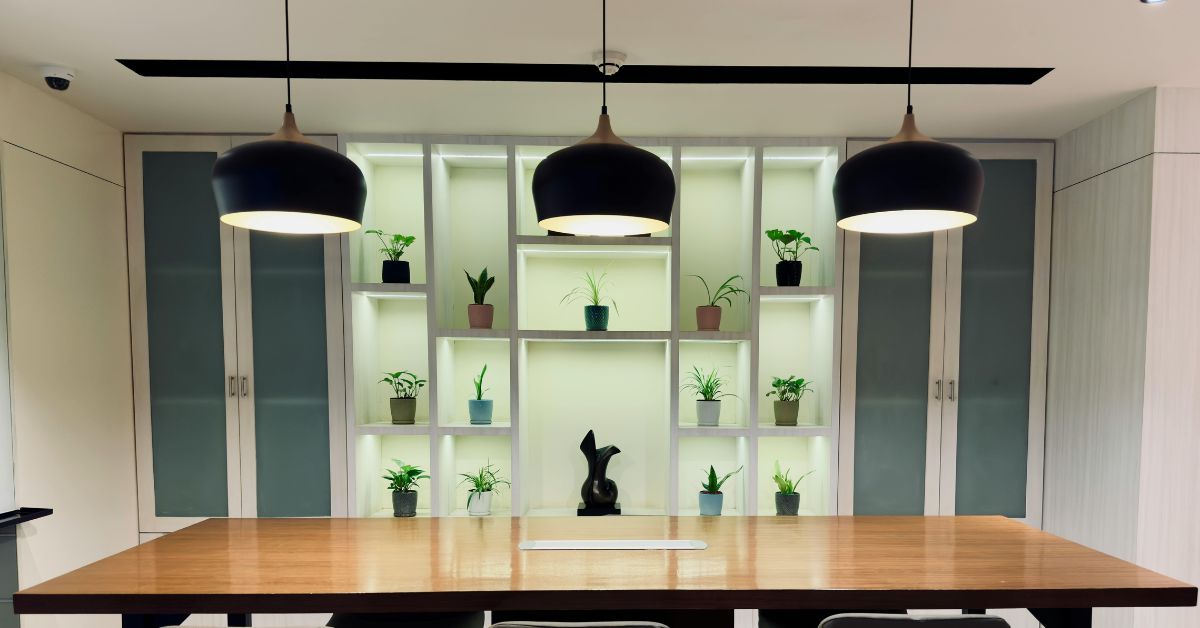
A great pendant turns your dining table into the room’s stage. When shopping for modern pendant lights for dining room, you’re balancing style, optics and real-world performance: how bright should the fixture be, what colour temperature flatters food and skin tones, how low should it hang, and how will it behave on a dimmer? This long-form, product-focused guide walks you through everything a new buyer needs to know — practical sizing rules, clear lumen math, control compatibility, recommended beam angles, installation and weight/ceiling safety, buying checklist and copy-paste RFQ lines so you can get exact, comparable quotes.
Read this to the end, and you’ll be able to walk into a showroom or email suppliers and know the right questions to ask — and the right answers to expect.
What “modern pendant lights for dining room” really means
“Modern pendant” is a broad design category. For this guide, when we say “modern pendant lights for dining room,” we mean fixtures with a contemporary aesthetic (clean lines, mixed materials, integrated LEDs or LED-ready sockets) that are primarily intended to hang over a dining table and deliver both task and mood lighting.
Common modern pendant forms:
- Single statement pendant (large disc, ring, or sculptural form).
- Linear multi-pendants (a row of small pendants or a linear bar) for long tables.
- Clustered pendants (group of small pendants at varying heights).
- Minimalist rod pendants (slim linear tubes or asymmetric arms).
Each form solves a different design and lighting problem — the following sections show how to pick the right one for your room and table.
Quick design rules — size, number, and placement
These are the go-to rules designers use for modern pendant lights for dining room:
- Pendant diameter for round/central fixtures: add the room length and width in feet, then use the sum (in inches) as a rough diameter.
- Example: 14 ft by 12 ft room → 14 + 12 = 26 → ~26 in (≈660 mm) diameter chandelier works as a starting point.
- For a dining table: pendant diameter ≈ 1/3 to 2/3 of table width for a single pendant.
- Example: 42 in (1067 mm) wide table → pendant diameter roughly 14–28 in (350–710 mm).
- Height above table: 30–36 in (760–915 mm) from table surface for standard 8–9 ft ceilings. Raise slightly for taller ceilings (add ≈3 in per extra foot of ceiling).
- For long tables: use a linear pendant length ≈ 2/3 to full table length, or 2–4 small pendants spaced evenly (pendant spacing = table length ÷ (n+1)).
- Keep the pendant centred over the table or shifted intentionally for banquette seating — alignment with the table and sightlines is essential.
Those scale rules help you choose a pendant that feels right visually. Next, we make it functionally right with lumen and beam calculations.
How bright should your modern pendant be? (lumen math, step-by-step)
Decide brightness by lumens and lux, not watts. Here’s a practical calculation you can use.
Step 1 — Choose the target lux (illuminance) for the dining table surface. For dining tables, a common target is 200–300 lux on the table surface for general dining; 300–400 lux if you also use the table for homework or crafts.
Step 2 — Measure the table area (A) in square metres.
- Example table: 2.0 m long × 0.9 m wide → A = 2.0 × 0.9 = 1.8 m².
Step 3 — Compute raw lumens needed on the table plane: Lumens_needed_plane = A × target_lux.
- Using 250 lux: 1.8 × 250 = 450. (Careful: units — this is 450 lumens per square metre? No — multiply properly:)
Wait — do the arithmetic digit-by-digit:
1.8 × 250 = (1 × 250) + (0.8 × 250).
1 × 250 = 250.
0.8 × 250 = 200.
Sum = 250 + 200 = 450 lumens required on the table plane.
Step 4 — Adjust for fixture losses and room reflections. Use a Maintenance Factor (MF) ≈ of 0.7 to account for fixture efficiency and surface losses. Therefore, total lumens to install = Lumens_needed_plane ÷ MF.
- 450 ÷ 0.7 = divide carefully: 450 ÷ 0.7 = 450 × (10/7) ≈ 450 × 1.428571… = 642.857… Round to ≈643 lumens.
Step 5 — Allocate lumens between the pendant and other ambient sources. Many dining set-ups aim to have the pendant supply 60–80% of the task light, with wall sconces, cove, or ambient downlights filling the remainder. If you choose 70% from the pendant: pendant lumens = 0.70 × 643 ≈ 450 lumens.
So in this example (2.0 × 0.9 m table, 250 lux target), a pendant producing about 450 lumens onto the table plane will get you close. In practice, choose a pendant with a rated output higher than that to account for beam spread and dimming headroom — pick an integrated LED or lamp that delivers 600–900 lumens (depending on beam angle and socket losses).
Important notes:
- If your pendant has a narrow beam (e.g., 20–30°), fewer lumens are needed because light is concentrated. For wide-diffuse pendants (60–120°), choose higher lumens to achieve the same table lux.
- For layered scenes, choose dimmable fixtures so you can set lower levels for ambient dining (100–150 lux) and raise them when needed.
This step-by-step math ensures your modern pendant actually lights the table instead of just looking pretty.
Beam angle & optics — why they matter
Beam angle changes how the lumens distribute across the table:
- Narrow beam (10–30°): concentrated spotlight effect — great for accenting the table center, but can create hot spots and high contrast. Use when you want a theatre-like focus.
- Medium beam (30–60°): a good balance for many pendants; provides a bright table surface with soft falloff.
- Wide beam (60–120°): diffused ambient spread — if your pendant is the main ambient source, wide beams help light the room as well as the table.
When choosing modern pendant lights for dining room, ask the supplier for beam angle and photometric files (IES). If using multiple small pendants, combine medium beams to ensure even coverage.
Colour temperature (CCT) and CRI — what flatters food and faces
For dining rooms, the mood is typically warm and welcoming:
- CCT: 2700K–3000K is most flattering for food and skin tones. 3000K gives a slightly more neutral feel without losing warmth. Avoid 4000K+ for intimate dining — it appears clinical.
- CRI: Choose CRI ≥ 90 if you care about accurate food and fabric colours. Lower CRI (80–85) saves money but reduces colour fidelity — avoid this at the main dining pendant.
- Dim-to-warm: a feature that makes light warmer as you dim (mimicking halogen). Excellent for dining ambience.
When asking suppliers, include CCT and CRI in specs: “3000K, CRI 92, dim-to-warm” is a clear product requirement.
Dimming & controls — how to ensure smooth behaviour
Dimming compatibility is a frequent headache. Here’s how to avoid it for modern pendant lights for dining room:
- Decide the control system: simple wall dimmer (triac/ELV), or system-level control (0–10V, DALI, or smart mesh). For wired renovations, DALI provides the most flexibility. For retrofit, Zigbee or Bluetooth Mesh options are easy.
- Match driver to dimmer: if the pendant uses an integrated LED driver, confirm the driver supports your dimmer type. Ask for a compatible dimmer list from the manufacturer.
- Test one fixture: always test a sample pendant on the actual dimmer before ordering multiples.
- Avoid mixed ecosystems: pick one primary control method for your dining zone. Mixing Wi-Fi bulbs with a DALI panel creates management headaches.
When you email suppliers, include this line: “Provide dimmer compatibility list and test a sample on our dimmer model X before bulk order.”
Materials, finish and maintenance — practical choices
Modern pendants combine metal, glass, fabric, and acrylic. Choose materials that age well in your environment.
- Metal finishes: brushed brass, matte black, chrome — choose a finish that complements dining furniture and can be professionally re-plated if needed.
- Glass & diffusers: opal or frosted glass gives soft, even light; crystal or glass with faceting creates sparkle but requires more cleaning.
- Fabric shades: warm and tactile, but can gather dust and stain; choose washable options or prefer glass in high-use homes.
- Maintenance: plan for dusting weekly and a gentle cleaning every 3–6 months. For crystal or glass pendants, ask the supplier about removable diffusers to simplify cleaning.
If you have pets or high kitchen activity, prefer sealed diffusers and finishes with protective clear coats.
Safety & installation — weight, canopy, and ceiling reinforcement
Large modern pendants can be heavy. Don’t skip the mechanics:
- Weight rating: check fixture net weight and ensure ceiling box and joists are rated for at least 2× static weight (safety factor).
- Mounting hardware: use rated steel hooks, reinforced ceiling boxes or a timber beam and a rated safety chain.
- Canopy & wiring: the canopy must hide wiring and provide access to the driver junction box. Avoid burying connections in plaster.
- Local code: use a licensed electrician for mains work; get certificates where required.
Ask the supplier: “What is the recommended mounting method and required ceiling reinforcement for this pendant (weight X kg)? Provide rated hardware in the quote.”
Styles that work in dining rooms — pairing looks to interiors
- Minimalist discs & rings: modern and sculptural—work well over rectangular tables; often integrate dim-to-warm LEDs.
- Clustered globes: informal and flexible—good for casual or mid-century modern interiors.
- Linear bars: ideal for long tables; provide even light across the surface.
- Sculptural/organic forms: make the pendant the art object—pair with neutral furniture to let it sing.
Choose a style that supports the room’s scale and ceiling height — avoid over-decorated fixtures in minimalist rooms and vice versa.
Buying checklist — what to demand from suppliers (copy-paste ready)
Use this checklist when requesting quotes for modern pendant lights for dining room:
- Model number and SKU.
- Total lumen output and efficacy (lm/W).
- Delivered lumens to the table plane (if available) and beam angle.
- CCT (Kelvin) and CRI value.
- Dimmability and compatible dimmers list.
- Driver location and replaceability.
- Fixture net weight and recommended mounting hardware.
- Finish options and protective coatings.
- Warranty details (LED module, driver, finish).
- Lead time and spare parts availability.
- Itemized price: fixture, canopy, mounting kit, labour for installation, and ceiling reinforcement cost.
Having all these fields in the RFQ produces apples-to-apples answers.
Installation & commissioning checklist for the site
Before handing over:
- Verify mounting hardware is rated and installed per the supplier’s instructions.
- Confirm the driver is accessible and the dimmer is programmed.
- Measure the lux at the table surface and confirm the dimming smoothness from 100% to the minimum.
- Check canopy finish for scratches and wiring neatly routed.
- Capture installation photos and label the circuit/dimmer on the DB.
An installer sign-off with these checks protects both buyer and supplier.
Maintenance: cleaning and long-term care
- Weekly: dust with a microfibre.
- Monthly: wipe diffusers with a damp microfibre if accessible.
- Quarterly: check for loose fittings and retorque fixings.
- Annually: check driver and dimmer behaviour, replace any drifted LEDs or drivers as needed.
For crystal or faceted glass pendants, consider a professional deep clean annually if in a dust-prone kitchen/dining area.
Quick FAQs (short, practical answers)
Q: How low can I hang a pendant without blocking views?
A: 30–36 in (760–915 mm) above the table surface is standard; if you have tall diners or a low ceiling, use a slim-profile pendant or raise it slightly.
Q: Should I choose integrated LEDs or replaceable bulbs?
A: Integrated LEDs give a sleeker look and superior efficacy; choose them only if the driver is replaceable or accessible.
Q: Can I use multiple pendants over a round table?
A: Yes — clusters can work beautifully; ensure combined lumens meet your target, and spacing is symmetric.
Final checklist — before you buy any modern pendant lights for dining room
- Have you calculated the required lumens per table area?
- Is CCT set to 2700–3000K and CRI ≥ 90 for dining?
- Did you request the beam angle and IES file?
- Is the driver accessible and dimmer-compatible?
- Have you checked the total weight and required ceiling reinforcement?
- Did the supplier provide itemised quote including installation & hardware?
- Is there a maintenance plan and spare parts availability?
- Have you scheduled a mock-up or test install?
Tick these boxes, and you’ll be ready to buy a pendant that looks as good as it performs.
Brands & showrooms to try (try before you buy)
Try well-known lighting lines for build quality and good datasheets — they’re useful references when comparing options in local showrooms. For example, check offerings from Philips for technical clarity and approachable smart solutions, and explore budget-to-design options at IKEA for lamp styles and finish trials. Always see fixtures lit at scale.
Conclusion — making the final choice
Choosing modern pendant lights for dining room is both an aesthetic and technical decision. Start with scale and placement, do the lumen math for the table, pick flattering CCT and high CRI, insist on dimmer compatibility and driver access, confirm ceiling load and mounting, and include maintenance and spare parts in the purchase. With the sizing rules, RFQ text and buying checklist in this guide, you’ll be able to specify exactly what you want and get reliable quotes — and most importantly, enjoy dinner under beautifully controlled light.