
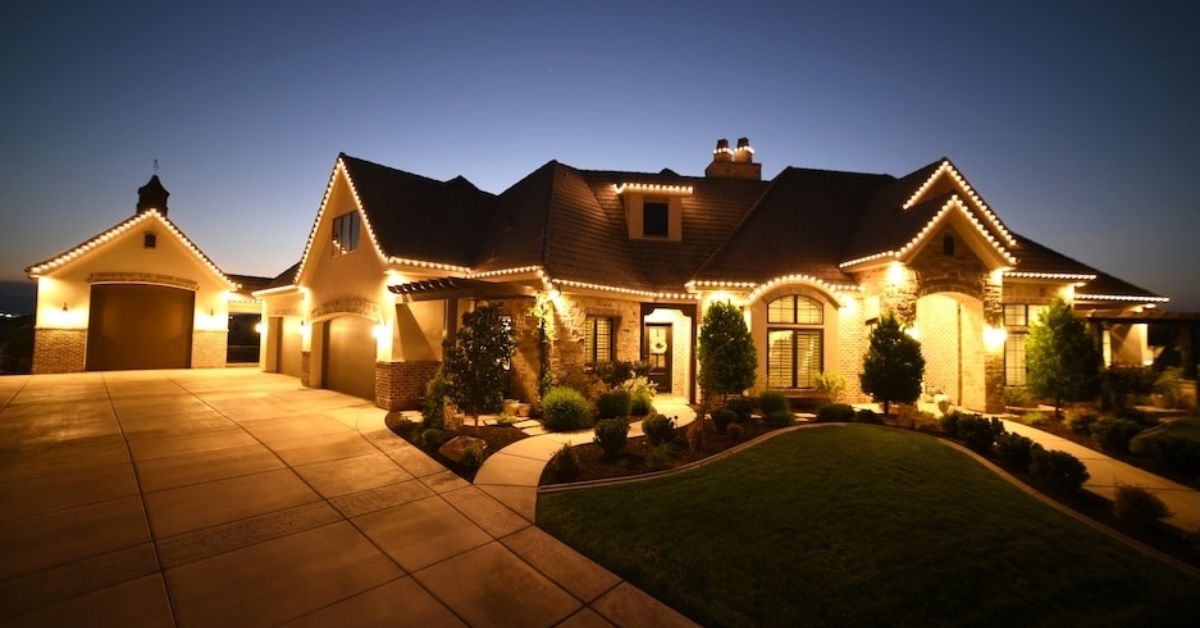
If you’re building, renovating, or simply upgrading, a good lighting plan for house will save money, time, and headaches. This long-form, product-oriented guide walks a new buyer through everything: the measurable specs to demand, room-by-room lux targets and fixture recipes, control systems and dimming compatibility, siting and mounting tips, wiring and conduit best practices, budgets and lifecycle math, sample RFQ language you can copy-paste, and a printable checklist so tradespeople do the job you expect.
Below you’ll find actionable steps and clear numbers — not fluffy design talk — so you can brief electricians, interior designers, or lighting supply showrooms confidently and get the results you want.
Why a thoughtful lighting plan for house matters
A lighting plan is more than picking pretty pendants. A proper lighting plan for house does five things:
- Ensures the right light levels for tasks and comfort (measured in lux).
- Avoids glare and visual fatigue with correct optics and UGR ratings.
- Reduces energy use and maintenance through efficient fixtures and controls.
- Minimizes disruption by planning conduit, zone wiring, and driver access during construction.
- Preserves resale value by using high-quality, serviceable products and coherent scenes.
In short: a good lighting plan for house makes a home safer, more beautiful, and cheaper to run.
Start with numbers: the core metrics your plan must include
When you write a lighting plan for house, put these numbers into every specification and quote:
- Lux (lx) — target illuminance at the task plane. Example targets: living 150–300 lx; kitchen counters 300–500 lx; home office 300–500 lx; bedroom 100–200 lx.
- Lumens (lm) — light output per fixture. Always choose lumens, not watts, when comparing brightness.
- CCT (Kelvin) — choose 2700–3000K for warm living zones, 3000–3500K neutral, 4000K for crisp task areas.
- CRI (Color Rendering Index) — aim for CRI ≥ 90 for kitchens, bathrooms, wardrobes, and any area where color matters.
- Efficacy (lm/W) — higher is more efficient; modern LEDs are commonly 90–140 lm/W.
- L70 lifetime — rated hours until light output reaches 70% of initial; target ≥50,000 hours for home installs.
- UGR/flicker — for visible ceiling fixtures, look for low UGR (<19) and flicker <5% where sensitive occupants or video will be present.
- IP rating for wet or exterior zones — IP44 minimum for bathrooms, IP65+ for exposed exterior fittings.
Put these metrics at the top of your lighting plan for house document so every supplier returns apples-to-apples quotes.
The fundamental approach: layer, zone, control
Every good lighting plan for house follows three principles:
- Layer lighting — Ambient (general), Task (work surfaces), Accent (art/features). Layering creates depth and usability.
- Zone control — Group lights by function and room so you can run scenes (e.g., “Dinner”, “Movie”, “Work”).
- Control strategy — Decide on dimming and smart-control protocols early (DALI/0–10V for new builds; Zigbee/Bluetooth mesh for many retrofits).
Designing layers and zones first makes product selection and conduit runs straightforward.
Room-by-room lighting plan for house
Below are practical, copy-paste recipes for common rooms. Each includes target lux, recommended fixtures, typical lumen ranges, CCT/CRI guidance, and control notes — all ready to drop into your plan.
Living Room
- Target lux: 150–250 lx ambient; 300–500 lx for reading spots.
- Fixtures: recessed downlights (ambient), floor/table lamps (task), adjustable spots or picture lights (accent). Cove or wall-washing LED strips add depth.
- Lumens per downlight: 700–1,200 lm, depending on spacing.
- CCT/CRI: 2700–3000K, CRI ≥ 90 for textiles/art.
- Controls: scene-capable dimmer, local scene switches, and optional smart hub.
- Note: Use the dim-to-warm feature if you wantan amber-at-low-level ambience.
Dining Room
- Target lux: 200–300 lx at the table surface.
- Fixtures: focal pendant/linear chandelier over table, supplemented by wall washers or recessed ambient.
- Lumens: pendant 1,200–2,000 lm for medium tables.
- CCT/CRI: 2700K–3000K, CRI ≥ 90.
- Controls: dimmer with scene presets for intimate dining or bright entertaining.
Kitchen
- Target lux: 300–500 lx on counters and prep areas.
- Fixtures: recessed ambient + under-cabinet linear strips for task; pendants over island for style and task.
- Lumens: under-cabinet strips 1,000–1,400 lm/m; downlights 800–1,200 lm each.
- CCT/CRI: 3500–4000K neutral; CRI ≥ 90 for accurate food coloration.
- Controls: task circuits on separate dimming/relay; motion or presence sensors for pantry/storage.
Home Office
- Target lux: 300–500 lx at desk plane.
- Fixtures: linear suspended or diffuse recessed ambient + adjustable desk lamp.
- Lumens: fixture to deliver even 300–500 lx; consult photometrics.
- CCT/CRI: 4000K neutral; CRI ≥ 90 if color work is performed.
- Controls: occupancy sensors and daylight harvesting if by a window; make sure dimming is flicker-free.
Bedroom
- Target lux: 100–200 lx ambient; bedside 300 lx for reading.
- Fixtures: warm ambient (downlights or pendant) + bedside task lights + cove or toe-kick mood lighting.
- CCT/CRI: 2700K for settling, 3000K for reading; CRI 80–90.
- Controls: bedside scene switches and app/voice control; avoid heavy blue at night.
Bathroom & Vanity
- Target lux: 300–500 lx at the mirror.
- Fixtures: vertical vanity lights at eye height on either side of the mirror + recessed ambient.
- CCT/CRI: 3500–4000K; CRI ≥ 90.
- IP rating: IP44 minimum in zones near water.
- Controls: timers or occupancy for short visits; consider anti-fog heater options for mirrors.
Hallways, Stairs & Exterior
- Target lux: 100–200 lx hallways; 50–150 lx outdoor paths; porch 100–200 lx.
- Fixtures: wall-washers for hallways; step lights for stairs; IP65 floodlights and path lights for exteriors.
- CCT/CRI: 2700–3000K outdoor for warm ambience; 4000K for security areas.
- Controls: motion sensors, timers, and a photocell for dusk-to-dawn operation.
Add these room entries to the core of your lighting plan for house; they form the specification backbone.
Photometry & layout: when to insist on IES files
For larger rooms, open-plan areas, or where uniformity matters (kitchens, offices), ask suppliers for IES photometric files and a lux map. A proper lighting plan for house will include a calculated lux grid so you can verify the proposed fixture types and spacings will meet the target lux without hot spots or dark zones.
Ask vendors for a CAD layout with:
- Fixture locations and aims.
- Lux contour map at the task plane.
- Mounting heights and beam angles.
This reduces guesswork and prevents costly rework.
Controls: choosing the brain of your lighting plan for house
Controls are where functionality, flexibility, and energy savings combine. Decide early whether to use:
- DALI / DALI-2 — professional digital control with addressability, diagnostics, and scene recall; ideal for new builds and large zones.
- 0–10V — simple analog control used widely for linear strips and drivers.
- Triac / ELV — wall dimmers compatible with many domestic installs (test compatibility).
- Wireless mesh (Zigbee/Thread/Bluetooth Mesh) — perfect for retrofit or when running control cabling is expensive; pick one ecosystem and stick with it.
- Smart bulbs vs smart drivers: Use smart bulbs for lamps and local fixtures; for whole-house installs, prefer smart drivers or luminaires for better reliability and energy efficiency.
For a robust lighting plan for house, map zones to control points and show how scenes will be recalled (wall button, app, voice).
Wiring, conduit, and service access: future-proof your plan
A smart lighting plan for house includes physical infrastructure that makes future changes simple:
- Conduits to key fixture locations — run empty 20–25 mm sleeves to pendant and wall locations so wiring can be upgraded later without opening the ceiling.
- Access panels or driver boxes — place drivers in accessible locations (attic, closet, service void) for later replacement without ceiling damage.
- Dedicated lighting circuits — separate major lighting loads from sockets for simpler control and fault isolation.
- Labeling and documentation — mark circuits, groups, and switches at both ends and include them in the handover pack.
Plan these small details now — they’re cheap during construction and expensive later.
Dimming compatibility & testing: avoid the classic failure mode
A surprising number of site issues come from mismatched dimmers and LED drivers. In your lighting plan for house:
- Require suppliers to provide a list of compatible dimmer models they have tested.
- Test one complete circuit with the actual dimmer and fixture before committing to a bulk purchase.
- Prefer drivers that support the control protocol you’ve chosen (e.g., DALI for commercial-level control or ELV for simple installs).
- Document dimmer models and firmware versions in the handover pack.
Testing avoids flicker, poor low-end dimming, and buzzing — common headaches on many projects.
Product checklist: what to demand in your RFQ
When you draft supplier requests as part of your lighting plan for house, include this product checklist, so quotes are comparable:
- Model number, total lumens, and efficacy (lm/W).
- CCT and CRI.
- Driver type and model; dimming protocol supported.
- L70 lifetime and warranty period.
- Flicker percent, UGR rating, and beam angle.
- IP rating for wet/outdoor zones.
- IES files and photometric reports, where applicable.
- Installation accessories (mounting hardware, transformers, junction boxes).
- Lead time and spares availability.
A clear RFQ produces clear responses — and clear comparisons.
Budgeting & lifecycle costs in your lighting plan for house
Don’t think only about upfront cost. Include lifecycle thinking:
- Upfront: fixture cost, installation, and patching/painting if ceilings are worked on.
- Running costs: use efficacy (lm/W) and expected hours to estimate annual kWh.
- Maintenance: driver replacements, spare trims, and cleaning.
- Replacement cycles: LEDs last long, but drivers and electronics sometimes need servicing.
Example: a 900 lm fixture at 90 lm/W consumes 10 W. At ₹10/kWh, running 4 hours/day costs ≈ ₹146/year per fixture. Multiply across your planned fixture count for a realistic annual energy budget.
Include TCO (total cost of ownership) lines in your plan and tender documents.
Commissioning, mock-ups & handover
A professional lighting plan for house includes commissioning steps:
- Mock-up key zones — install a sample of the lighting recipe (finishes, furniture, textiles) to confirm the look.
- Dimming & scene commissioning — tune dimmers and scenes with the occupants present.
- Photometric verification — measure lux in key spots and compare to targets.
- Handover pack — supplier datasheets, dimmer lists, spare parts inventory and a maintenance log.
Insist on these steps in your contract to avoid disputes later.
Maintenance & spares — plan for easy upkeep
Include a small maintenance plan in your lighting plan for house:
- Quarterly visual checks and lens cleaning.
- Annual driver health checks and a spare driver or two from the same batch.
- Keep spare lamps/trims and a labeled box with model numbers and batch IDs.
- Document installation photos and serial numbers for warranties.
A little planning saves a lot of later trouble.
Useful product references & standards
When you shop, try fixtures in person where possible and rely on reputable manufacturers for data. Examples to investigate include Philips and IKEA for a starting point; if you’re in India, check energy labelling or incentive programs from the Bureau of Energy Efficiency.
Printable checklist: the essential items for your lighting plan for house
- Room-by-room lux & CCT targets documented.
- Fixture types & lumens per position specified.
- Controls & protocols selected (DALI / 0–10V / Zigbee / other).
- Conduits and driver access points mapped.
- RFQs issued with product checklist and IES request.
- Mock-up installed for key zones before bulk order.
- Commissioning and handover are included in the contract.
- Spare parts & maintenance budget allocated.
Stick this checklist in your project folder and use it when approving quotes and samples.
Closing: make your lighting plan for house actionable
A great lighting plan for house is measurable, documented, and tested. Use the room-by-room lux targets, insist on spec sheets and IES photometrics where needed, plan controls early, and make driver access part of the structural plan. That’s how you get beautiful, functional lighting that lasts.