If you’re searching for an LED Lighting Shop in West Delhi, you’re likely planning a home upgrade, office retrofit, or lighting project that needs dependable, energy-efficient illumination. West Delhi’s market offers many LED fixtures — from living-room downlights and designer pendants to industrial high-bays and outdoor floodlights. This guide covers everything a new buyer needs to know: product types, technical specs, energy-saving calculations, installation best practices, warranty and service expectations, budgeting, and how to pick the right supplier.
Why pick a local LED lighting shop?
Visiting a nearby LED Lighting Shop in West Delhi has clear advantages: you can inspect build quality, compare finishes side-by-side, get immediate advice from experienced staff, and often secure installation services and faster warranty support. Local sellers know Delhi’s climate and electrical realities — they’ll recommend IP ratings for outdoor fixtures and proper surge protection for power lines prone to surges. Buying locally also saves shipping time and allows you to examine spare-part availability and demo units in person.
What products will you find?
A reliable LED Lighting Shop in West Delhi typically stocks a wide range of fixtures:
- Downlights & recessed lights — living rooms, corridors, and kitchens.
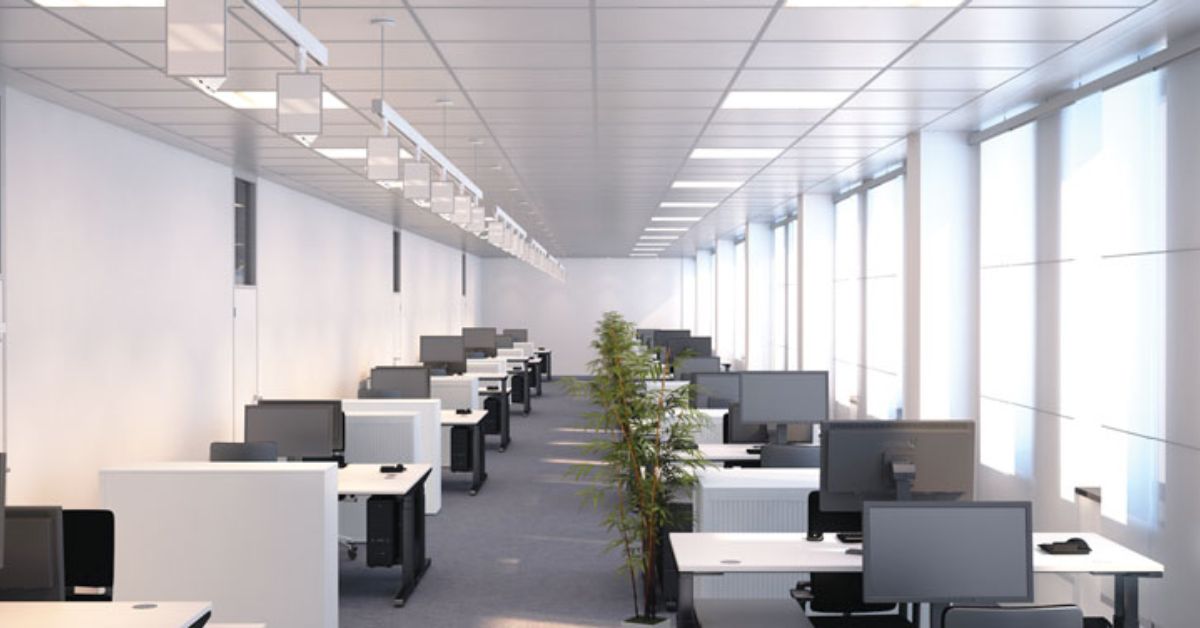
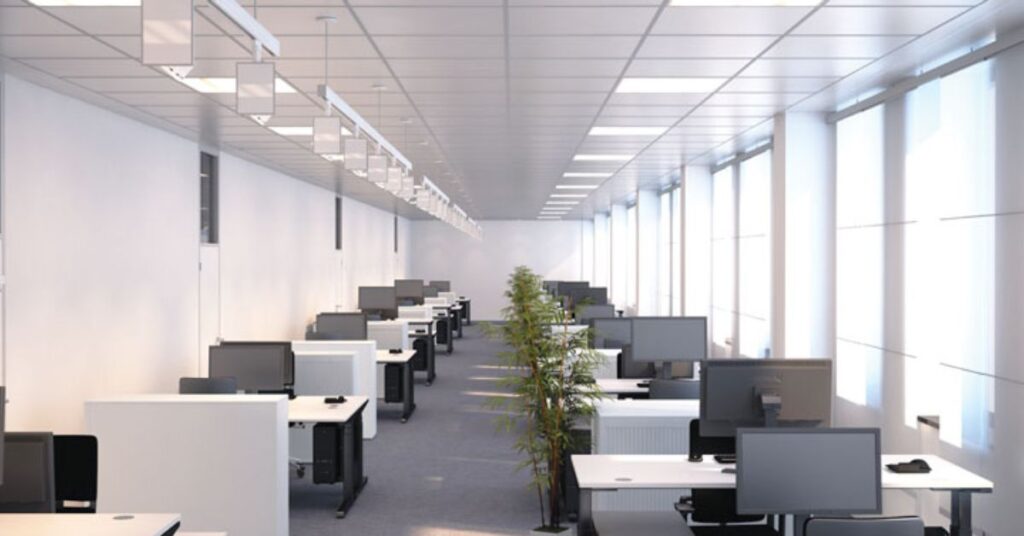
- Panel lights & troffers — offices and commercial spaces.
- Decorative pendants & chandeliers — dining areas, lobbies, and hotels.
- Track lighting & spotlights — galleries, retail displays, and kitchens.
- High-bay and warehouse lights — for factories, warehouses, and showrooms.
- Floodlights & area lights — for facades and security lighting.
- Landscape, bollard & in-ground lights — gardens, walkways and exterior accents.
- LED strips & linear systems — cove lighting, under-cabinet, and architectural lines.
- Street lighting & solar LED solutions — for municipal and remote area projects.
A good showroom will have sample installations so you can see beam angles, color temperatures, and light distribution in real-life setups.
Key specifications every buyer must check
When you visit an LED Lighting Shop in West Delhi, insist on seeing technical specifications. The top items to verify:
- Lumens (lm): The light output — compare lumens (not watts) to judge brightness.
- Lumen efficacy (lm/W): Shows efficiency; modern goods typically deliver 100–160 lm/W.
- CCT (Correlated Color Temperature): 2700–3000K (warm), 3500–4000K (neutral), 5000K+ (cool/industrial).
- CRI (Color Rendering Index): Aim for CRI ≥ 80 for homes; CRI ≥ 90 for retail/art applications.
- IP rating: For outdoor use in Delhi, IP65 or higher is recommended for exposed fixtures.
- Driver quality: Branded drivers with over-current, thermal, and short-circuit protection provide longer life.
- LM79 / LM80 / IES files: For commercial or architectural projects, request photometric reports.
- Rated life (hours): Typical range 25,000–75,000 hours, depending on product quality and thermal design.
- Warranty: 2–5 years is common — check whether drivers and LEDs are covered separately.
- Material & finish: Die-cast aluminium, powder-coating, and stainless trims last longer in outdoor environments.
Ask to take datasheets home or get them emailed so you can compare fixtures across brands.
How to compare lumens and power
Many shoppers still compare by wattage; instead, focus on lumens and lm/W:
- Downlight example: 600–1,200 lm is typical (8–15W LED, depending on efficacy).
- Panel light example: 2,000–4,000 lm (20–40W).
- Bollard/pathway: 300–1,200 lm (6–20W).
- Floodlights: 1,000–20,000 lm (10–200W).
Calculate required lumens for rooms (or ask the shop for a lux calculation) and then choose fixtures that deliver the target lumens efficiently.
Color temperature and mood — choosing the right CCT
CCT influences mood and functionality:
- 2700K–3000K (warm): Cozy, ideal for living rooms and bedrooms.
- 3500K–4000K (neutral): Balanced for kitchens and work areas.
- 5000K+ (cool): For security, industrial tasks, and high-visibility needs.
A quality LED Lighting Shop in West Delhi will let you compare 2700K vs 4000K samples so you can see how the color renders in your space.
CRI — why color rendering matters
CRI (Colour Rendering Index) measures how accurately colors appear under the light source. For most residential and retail use, aim for CRI ≥ 80. For jewelry stores, galleries, clothing retail, or artwork, CRI ≥ 90 gives truer color reproduction. Ask the showroom to show samples of fabrics, paint swatches, and fruit under different CRI fixtures to judge visually.
Power supplies & drivers — don’t skimp here
The LED driver is the ‘engine’ of the luminaire. Look for:
- Branded driver names (e.g., those from known electronics manufacturers).
- Protections: short circuit, over-voltage, and over-temperature.
- Dimmability options: 0–10V, DALI, trailing-edge, or PWM compatibility.
- Surge protection or recommendation to install an SPD for the building.
A cheap fixture with a poor driver will fail early; a reputable LED Lighting Shop in West Delhi will explain driver specs clearly.
IP ratings and outdoor durability
Delhi’s dust and monsoon seasons demand correct protection levels. Recommended:
- IP44 — splash-proof; suitable for covered porches.
- IP54 — dust-protected and splash-resistant; ok for semi-exposed areas.
- IP65 — dust-tight and jet-water resistant; suitable for most exposed outdoor fixtures.
- IP67 / IP68 — temporary or continuous immersion; used for in-ground or submerged fixtures.
Also consider material — powder-coated aluminium and stainless trims resist corrosion better than painted steel.
Smart lighting & controls
If you want automation, look for:
- Dimmable fixtures with compatible controllers.
- Wireless solutions (Bluetooth Mesh, Zigbee, Wi-Fi) for app-based scenes and scheduling.
- Sensors for occupancy, daylight harvesting, and motion detection.
- Central control systems for large commercial installs with DALI or other standards.
A knowledgeable LED Lighting Shop in West Delhi will show demo apps and explain wireless range considerations for walls and terraces.
Solar, battery backup & emergency lighting
Given occasional power interruptions, solar or battery-backed LED systems can be practical:
- Prefer lithium batteries with BMS for lifespan and reliability.
- Use MPPT charge controllers for efficient solar charging.
- Confirm runtime guarantees and battery replacement policies.
For emergency lighting, ensure compliance with local safety codes — the shop should advise on escape route luminance and test procedures.
Installation best practices
Good installation extends product life:
- Hire certified electricians who know earthing and local code.
- Use outdoor-rated conduits and cable glands for exterior fixtures.
- Don’t bury drivers in cramped cavities; provide ventilation for heat dissipation.
- Seal cable entries and junction boxes with suitable gaskets and silicone.
- Install surge protection at distribution boards in areas with frequent spikes.
Ask your LED Lighting Shop in West Delhi if they include installation or partner with registered installers.
Maintenance: keep it performing
A simple maintenance routine improves lifespan:
- Wipe lenses and heat sinks every 6 months; more often in dusty seasons.
- Inspect seals/gaskets after monsoon; replace brittle parts.
- Check drivers for discoloration or swelling.
- Keep records: purchase date, batch numbers, instalment details, and service contacts.
Many reputable shops also offer annual maintenance contracts for projects and gated communities.
Energy savings — quick math
Example: Replace ten 60W incandescent bulbs (600W total) with LED equivalents totaling 90W. If lights run 6 hours/day:
- Daily consumption saved = (600W − 90W) × 6h = 3,060 Wh = 3.06 kWh.
- Monthly (30 days) ≈ 91.8 kWh. At ₹8/kWh → ₹734 saved per month.
- Annual saving ≈ ₹8,808 — fast payback on many mid-range fixtures.
A professional seller can produce project-specific ROI estimates.
Warranty and after-sales expectations
Understand warranty scope: many manufacturers cover LEDs and drivers separately. Clarify whether the warranty includes labor for replacement, or only parts. A trustworthy shop will provide a clear procedure for warranty claims and local servicing. Keep invoices and serial numbers — they’re required for claims.
What to avoid when buying
Watch out for these red flags:
- No datasheets or missing technical documentation.
- Unbranded drivers and vague life-hour claims.
- Extremely low prices with minimal or no warranty.
- No local service or installer network for after-sales.
- Salespeople are unable to explain lumen output or photometric distribution.
Questions to ask at the showroom
When you visit, ask:
- Can I see the datasheet and photometric IES/LM files?
- Which brands of LED chips and drivers are used?
- Is the fixture dimmable, and which dimmers are compatible?
- What exactly does the warranty cover (LED/driver/labor)?
- Do you provide installation and after-sales service?
A good LED shop in West Delhi will answer these confidently and provide documentation.
Choosing between DIY and professional installation
DIY is fine for low-voltage LED strips and small decorative work. For mains fixtures, outdoor wiring, and commercial installs, hire professionals to ensure safety, compliance, and optimal performance.
Financing, bulk discounts, and procurement tips
For larger contracts or refurbishments:
- Ask for phased payment options or project finance.
- Request bundled pricing that includes fixtures, installation, and a maintenance plan.
- Confirm lead times for special-order finishes or custom luminaires.
Vendors that support lighting layouts, CAD/IES files, and site visits tend to be more experienced and reliable.
Eco-friendly disposal & recycling
LEDs are more eco-friendly than older lamps, but electronics still require proper disposal. Many suppliers participate in recycling programs — ask if they accept old fixtures or can advise on e-waste collectors.
Conclusion
Choosing the right supplier makes all the difference between a lighting installation that looks good on day one and one that performs reliably for years. Prioritize products with transparent specifications, reputable drivers and chips, solid warranties, and local service. If you’d like a room-by-room lighting plan, a detailed cost estimate, or a shortlist of fixtures for a specific project, please tell me your room dimensions, use-case, and budget, and I’ll create a tailored plan — ready to hand to a showroom or installer.