
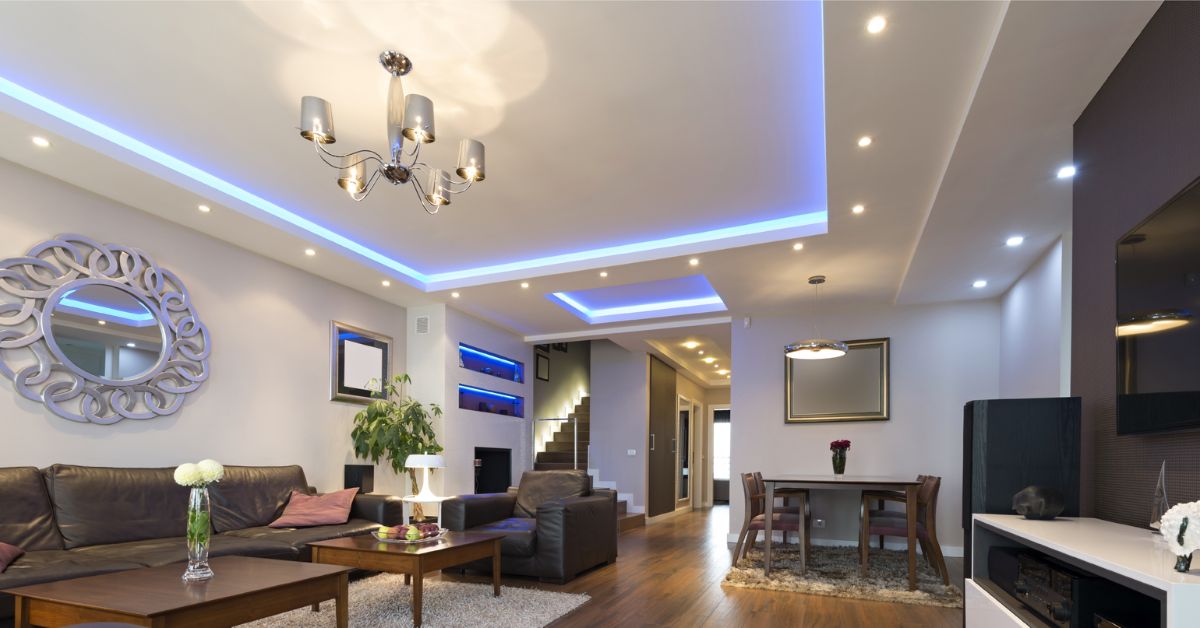
Why good home lighting matters
Good lighting changes how a home feels and functions. The Best Lights for Home:
- Make spaces feel larger, cozier, or more energetic depending on your goals.
- Reduce eye strain during tasks like reading or cooking.
- Highlight artwork, textures, and architectural features.
- Allow flexible use of spaces (work, rest, cooking, socializing).
- Cut energy costs when you choose efficient LEDs and controls.
Think of lighting as layers: ambient (general), task (focused), and accent (decorative). Combining layers is one of the clearest signs you’re using the Best Lights for Home approach.
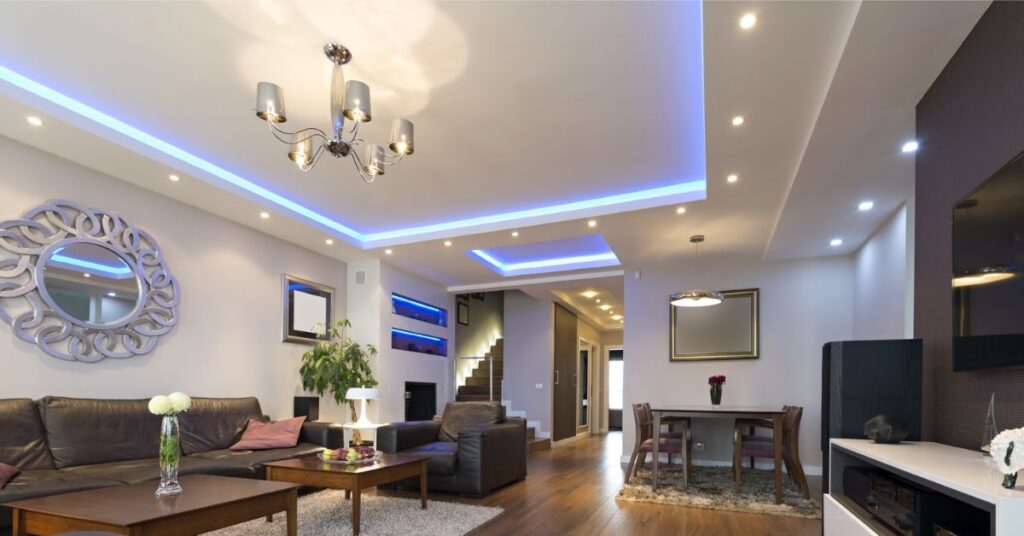
Core specs every buyer should understand
Before you buy, look at a product’s spec sheet. The Best Lights for Home make these numbers easy to find.
- Lumens (lm) —how much light a fixture emits. Higher lumens = brighter.
- CCT (Correlated Color Temperature) —measured in Kelvin (K). Warm light (2700–3000K) feels cozy; neutral (3500–4000K) feels balanced; cool (≥5000K) feels clinical. For most homes, 2700–4000K is ideal, depending on the room and mood.
- CRI (Color Rendering Index) is a scale to 100 that shows how accurately colors appear. Aim for CRI 80+; CRI 90+ for art, textiles, or design-focused rooms.
- Efficacy (lm/W) —lumens per watt; higher numbers mean lower electricity use. Modern home LEDs commonly range from 80–140 lm/W.
- Dimming & Controls —look for compatibility with dimmers (triac, 0–10V) or smart systems (Bluetooth, Zigbee, Wi-Fi).
- Beam Angle —narrow beams (spotlights) highlight objects; wide beams (downlights, panels) give general light.
- Lifespan & Warranty —rated hours (e.g., L70 50,000 hrs) and warranty length matter for long-term value.
- Flicker & Glare —low flicker and good diffusers improve visual comfort.
Knowing these makes it easy to compare fixtures and identify the Best Lights for Home for your needs.
Types of home lights and when to use them
No single fixture fits every room. The Best Lights for Home often combine different fixture types.
1. Ceiling-mounted ambient lights (flush, semi-flush, recessed)
Great for general illumination in bedrooms, hallways, and kitchens. Choose diffused covers for soft light; use recessed downlights for cleaner ceiling lines.
2. Pendant lights
Perfect over dining tables, kitchen islands, or entryways. Pendants are both functional and decorative — they can be statement pieces.
3. Chandeliers
Use where you want drama: foyers, dining rooms, or master bedrooms. Modern chandeliers can be surprisingly energy-efficient when fitted with LED modules.
4. Track & spotlighting
Flexible for highlighting artwork, shelving, or changing display areas. Track systems let you reposition heads without rewiring.
5. Wall sconces
Add layered light and help reduce ceiling-only glare. Nice for corridors, beside beds, or framing mirrors.
6. Task lamps (desk, reading, under-cabinet)
Task lighting is essential in kitchens, study nooks, and bedside areas. The Best Lights for Home include adjustable task lamps with CCT control and good CRI.
7. Cove & indirect lighting
Hidden strips or linear fixtures that wash ceilings and walls create a soft, luxurious glow and reduce harsh shadows.
8. Smart bulbs and integrated LED fixtures
Smart bulbs replace traditional lamps; integrated fixtures have built-in LED modules with long life and often richer control options (tunable white, scenes).
9. Outdoor & security lighting
Choose IP-rated fixtures and motion sensors for porches, driveways, and gardens.
Combining these types thoughtfully is how you arrive at the Best Lights for Home for each space.
Room-by-room recommendations
Below are practical setups and spec targets so you can choose fixtures like a buyer who knows what matters.
Living Room
- Goal: flexible for TV, reading, and socializing.
- Recommended: Layered lighting — recessed ambient lights or a central pendant, wall sconces for mood, and a floor lamp near seating for reading.
- Specs: 200–300 lux typical; 2700–3000K for cozy glow; CRI 90 for accurate colors on fabrics/art.
- Product tips: Look for dimmable fixtures and a tunable floor lamp (3000–4000K) for scene setting.
Kitchen
- Goal: bright, shadow-free task areas.
- Recommended: Recessed downlights for ambient + under-cabinet LED strips for counters + pendant over island.
- Specs: 300–500 lux at counter; 4000K neutral white is common to aid food prep; CRI 90+ for true food colors.
- Product tips: Choose IP44-rated strips for splash-prone areas; ensure under-cabinet lights have narrow beams and even diffusion.
Dining Room
- Goal: a focused table light that’s flattering.
- Recommended: Pendant or chandelier centered above table + dimmable ambient.
- Specs: 2700–3000K warm light; CRI 90 for food and skin tones.
- Product tips: Use a pendant with adjustable height and dim-to-warm options to shift color temperature as you dim.
Bedroom
- Goal: restful, layered lighting for reading and dressing.
- Recommended: Central ambient dimmable fixture + bedside task lamps + wardrobe lighting.
- Specs: 2700–3000K for warm comfort; bedside lamps with adjustable output and CRI 90.
- Product tips: Consider smart bulbs or a tunable-white ceiling fan-light to match circadian cycles.
Home Office / Study
- Goal: reduce eye strain and support concentration.
- Recommended: Bright ambient (3500–4000K) + adjustable desk lamp with glare control.
- Specs: 300–500 lux at task plane; CRI 90 for accurate color.
- Product tips: The desk lamp should be flicker-free and offer CCT and brightness adjustments.
Bathroom
- Goal: safe, even lighting for grooming.
- Recommended: Vanity lights at eye height + recessed ambient.
- Specs: IP44 for damp areas; CRI 90+ and 3000–4000K for accurate skin tones.
- Product tips: Avoid single overhead lights that create shadows on the face.
Hallways & Stairs
- Goal: safe navigation and subtle ambience.
- Recommended: Wall sconces or recessed step lights with motion sensors.
- Specs: 100–200 lux; warm 2700–3000K; consider occupancy sensors for energy saving.
Outdoor (porch, garden)
- Goal: safety, security, and curb appeal.
- Recommended: Motion-sensor floodlights, path lights, and warm accent fixtures.
- Specs: IP65 for exposure; warm 2700–3000K for welcoming look; consider warm-white LEDs to preserve plant and skin appearance.
Each room’s recommendations will help you zero in on the Best Lights for Home for your specific needs.
Smart lighting & human-centric options
Smart lighting does more than convenience — it helps match light to activity and time of day.
- Tunable white (CCT control): shift color temperature from cool (alerting) to warm (relaxing). A hallmark of modern Best Lights for Home systems.
- Scenes & schedules: automate “morning”, “movie”, or “dinner” lighting.
- Occupancy & daylight sensors: cut wasted hours and lower bills.
- Integration: choose bulbs/systems compatible with your smart ecosystem (Alexa, Google, HomeKit).
- Local vs cloud: local control improves reliability and privacy.
If you want circadian-friendly lighting, set cooler light in active morning hours and warmer, dimmer light in the evening — that’s a practical way to use the Best Lights for Home technology.
Energy, sustainability & cost of ownership
Good lighting saves money long-term.
- Choose high-efficacy LEDs (≥80 lm/W) to reduce energy use.
- Factor in controls — dimmers, timers, and sensors usually pay back their cost in reduced bills.
- Check driver quality — better drivers mean longer life and stable output.
- Consider replaceable modules — integrated fixtures with replaceable LED boards are easier to maintain.
- Look for certifications (energy labels, safety standards) for trustworthy quality.
A slightly higher upfront cost for efficient, well-controlled lighting often returns savings in 2–5 years.
Installation & layout tips
- Plan lighting layers before buying. Draw a simple floor plan and mark fixtures.
- Avoid glare by positioning fixtures so they don’t reflect on TV or monitor surfaces.
- Use consistent CCT within zones — don’t mix warm and cool lights in the same room unless intentional.
- Test with temporary bulbs — try setups before finalizing.
- Hire an electrician for wiring changes, dimmers, and built-in fixtures. Safety first!
Following these tips helps ensure you actually get the Best Lights for Home performance after installation.
Buying checklist: how to choose a product
When you’re comparing models, use this checklist:
- Lumen output and lm/W (efficacy).
- CCT range and whether it’s tunable.
- CRI (aim CRI 80+, 90+ for key rooms).
- Dimmability & control compatibility.
- Beam angle and diffusion.
- IP rating for damp/outdoor areas.
- Warranty length and service support.
- Driver replacement policy and spare parts availability.
- Price per lumen and expected energy usage.
- Reviews and sample photos in real homes.
This checklist will help you pick fixtures that qualify as the Best Lights for Home for your budget and taste.
Maintenance & troubleshooting
- Clean fixtures periodically — dust reduces output.
- Replace drivers instead of entire fixtures if possible.
- Watch for flicker — persistent flicker can indicate a driver or dimmer mismatch.
- Keep spare bulbs/drivers especially for specialty fixtures.
Good maintenance extends life, ensuring your chosen fixtures remain among the Best Lights for Home for years.
Frequently asked questions
Q: What color temperature is best for a home?
A: There’s no single best. Use warm (2700–3000K) for relaxing areas, neutral (3500–4000K) for kitchens and workspaces, and tunable white where you want flexibility.
Q: Are smart bulbs worth it?
A: Yes, if you value schedules, scenes, or remote control. For simplicity, smart switches can be easier for guests to use.
Q: What CRI should I pick?
A: CRI 80 is fine for general spaces; CRI 90+ for kitchens, art, and areas where color matters.
Q: Are integrated LED fixtures better than replaceable bulbs?
A: Integrated fixtures often have better performance and lifespan, but replaceable bulbs are easier to switch if technology changes.
Final checklist before you buy
- Define the purpose for each room.
- Choose target lux and CCT for each zone.
- Shortlist fixtures by lumens, CRI, and dimmability.
- Confirm control compatibility and installation needs.
- Get quotes and ask vendors for photometric plans if you’re doing a full-room retrofit.
Conclusion
Selecting the Best Lights for Home is a mix of objective specs and personal taste. Focus on the numbers that matter — lumens, CCT, CRI, efficacy — while designing layered lighting that suits how you live. Prioritize dimmability, quality drivers, and sensible warranties. With the product-oriented recommendations and checklists above, you can confidently pick fixtures that make your home look better, feel better, and run more efficiently.