
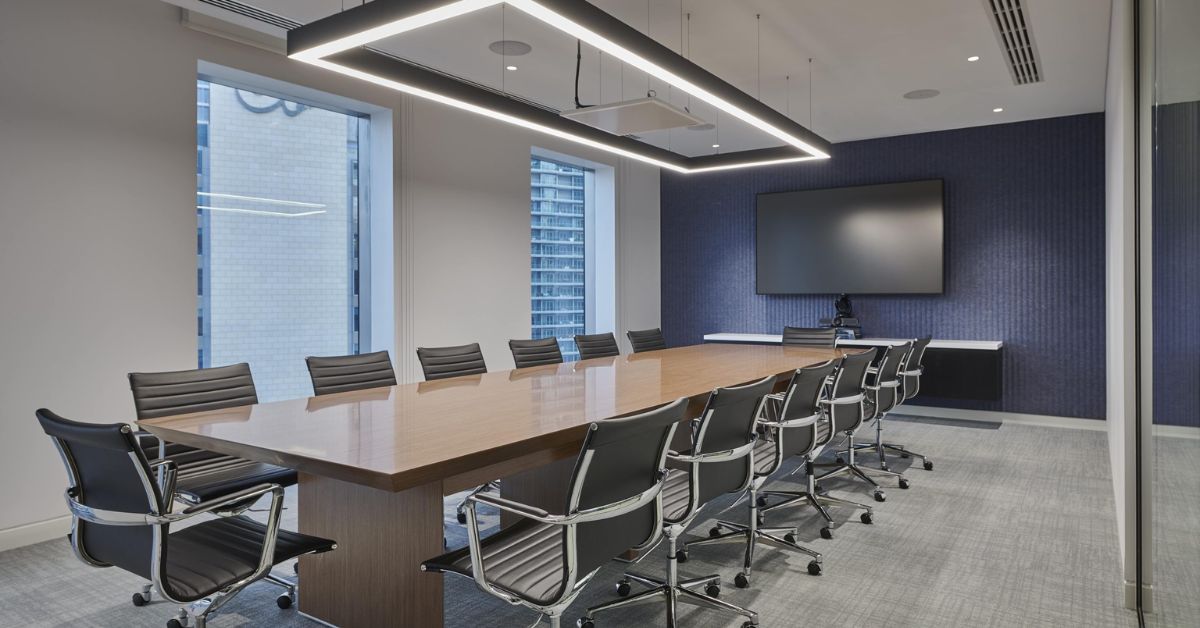
Why good office lighting matters
Great lighting is both functional and psychological. The Best Lights for Office:
- Reduce eye fatigue and headaches by providing uniform illumination and reducing glare.
- Help regulate alertness and circadian rhythms when tuned correctly throughout the day.
- Improve perceived quality and professionalism of a workspace (important for client-facing areas).
- Lower long-term operating costs through efficient LEDs and smart controls.
Designing with human needs and measurable specs (lux, CCT, CRI, UGR) is how you move from “just bright” to the actual Best Lights for Office in your space.
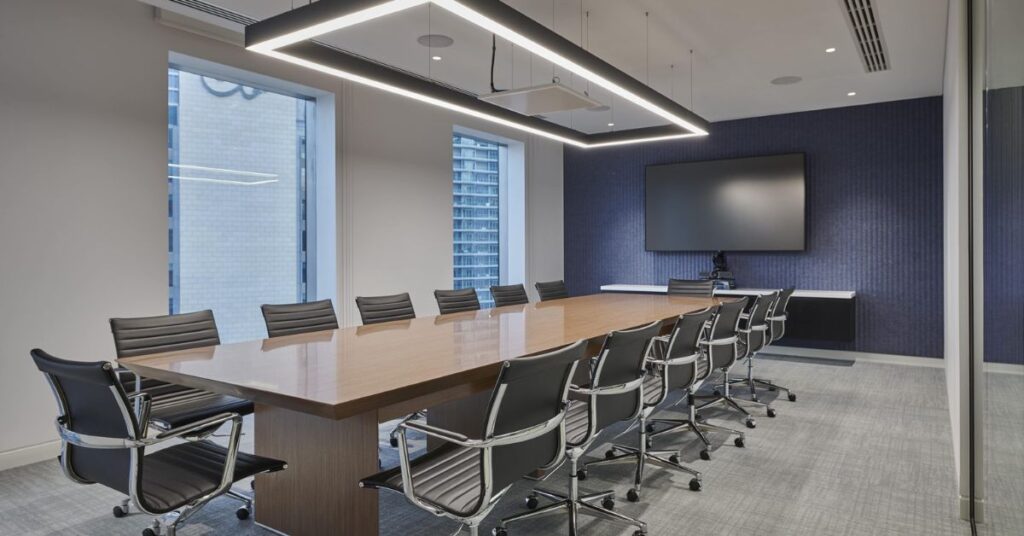
Core specs every buyer must understand
When choosing fixtures, good manufacturers provide clear spec sheets. The Best Lights for Office will make these numbers easy to find.
Lumen output and lux
- Lumens (lm) measure the light a fixture emits.
- Lux measures light falling on a surface (lumens per m²). Offices typically aim for 300–500 lux at desk level for general tasks; detail work may require 500 lux or more.
- For planning, calculate how many lumens you need per square metre and select fixtures whose total lumens meet that target.
Correlated Color Temperature (CCT)
- CCT is measured in Kelvin (K). Warm light ~2700–3000K; neutral ~3500K; cool/daylight ~4000–5000K.
- For most offices, 4000K (neutral white) offers a good balance: it feels bright and attentive without the clinical harshness of 5000K. Meeting rooms and relaxation areas may use 3500K for a warmer tone.
Colour Rendering Index (CRI)
- CRI measures color fidelity on a 0–100 scale. For offices, aim for CRI 80+, and CRI 90+ where accurate color perception matters (design studios, product inspection). Good CRI improves clarity and comfort.
Efficacy (lm/W)
- Efficiency is lumens per watt. Modern LED fixtures commonly run 90–150 lm/W. Higher efficacy reduces energy use — a core trait of the Best Lights for Office.
Glare & Uniformity
- UGR (Unified Glare Rating) is often listed for commercial fixtures; lower is better. For office workstations, aim for UGR <19 to avoid direct glare.
- Uniform illuminance across the room reduces eye strain and helps visual comfort.
Flicker & Dimming
- Low flicker (high stability at dim levels) is important. Check the flicker percentage or flicker index if you or occupants are sensitive.
- Dimmable drivers (DALI, 0–10V, or phase) and controls make your lighting flexible and energy-efficient.
Lifespan & Warranty
- Look at L70 ratings (e.g., 50,000 hours) and manufacturer warranty (3–7 years typical). The Best Lights for Office combine long rated life with a clear warranty and accessible driver replacements.
Types of office lights (and when to use them)
No single product rules every office. The Best Lights for Office are usually a combination that matches function and layout.
1. LED Panel Lights / Troffers
- Ideal for suspended ceilings (600×600, 1200×300). Provide uniform ambient light.
- Look for: high lm/W, CRI 80–90, low UGR options, and consistent CCT.
- Use for: general open areas and grid ceilings.
2. Linear Suspended LEDs
- Long, slim fixtures that hang above desks or aisles. Create clean, modern lines and excellent uniformity.
- Look for: lumen packages per metre, asymmetric optics to reduce glare, integrated driver, and IP/protection if required.
- Use for: open-plan desks, corridors, collaborative benches.
3. Recessed Downlights
- Best for accenting zones, circulation, and reception areas. Can pair with panels for layered lighting.
- Look for: tight beam control, trim finish choices, good CRI, and compatibility with dimmers.
4. Task Lamps & Desk Lighting
- Adjustable task lamps are essential for individual control. Good desk lamps deliver directional light and reduce contrast.
- Look for: adjustable CCT & dimming, glare control, and stable mounting. In many setups, the Best Lights for Office include a mix of ambient panels and personal task lamps.
5. Pendant Lighting
- Decorative and functional — pendants are often used over meeting tables or reception desks. Choose for aesthetics and targeted illumination.
6. Track Lighting
- Flexible for spaces with regularly changing displays or zones. Use LED track heads with good beam control for focal lighting.
7. Wall Washers & Cove Lighting
- Great for softening walls, reducing contrast, and creating a premium feel. Usually supplemental to ambient lighting.
8. Emergency & Exit Lighting
- Required in many buildings. Choose integrated emergency drivers or separate units per local code.
No single fixture is perfect — the Best Lights for Office in practice will combine ambient panels, linear task fixtures, and desk lamps with appropriate controls.
Product checklist: what to look for
Product checklist — what to look for in the Best Lights for Office:
- Clear lumen output and efficacy (lm/W).
- CCT options (tunable if possible) and CRI rating.
- UGR value or low-glare optics.
- Dimmability & control protocol (DALI, Bluetooth, Zigbee, 0–10V).
- Flicker percentage or index.
- Rated lifetime (L70) and warranty period.
- Driver accessibility and replaceability.
- Certifications: safety marks and energy efficiency listings.
- Mounting options and IP rating if near kitchen/bath or dusty env.
- Price per lumens and long-term maintenance cost.
Product-oriented suggestions by use case
Here are practical product suggestions to help pick the Best Lights for Office by specific use case. Rather than brand models, I give spec-driven picks you can use to shortlist products.
A. Home office (single desk)
- Goal: focus, comfort, and simple installation.
- Recommended setup: 4000K LED panel or small pendant for ambient + adjustable desk lamp (tunable white).
- Look for: desk lamp with CCT control 3000–5000K, CRI 90 for color fidelity, flicker-free electronics.
- Budget range: moderate — a good desk lamp + panel is a small fraction of commercial installs.
B. Open-plan office (10–100 people)
- Goal: uniform illumination, low glare, easy controls.
- Recommended setup: linear suspended fixtures above bench rows + recessed panels for general areas; task lamps for hotspots.
- Specs to aim for: average 300–400 lux at desk level, CRI 80–90, UGR <19, efficacy ≥100 lm/W.
- Controls: occupancy sensors, Zoning, and daylight harvesting for perimeter desks.
C. Meeting rooms & boardrooms
- Goal: comfortable, flexible lighting for presentations and discussions.
- Recommended setup: dimmable panels or pendants + adjustable accent lighting; blackout option for AV.
- Specs: 3500–4000K, CRI 90+ preferred for accurate skin tones, dimming to very low levels for presentations.
D. Reception & client areas
- Goal: first impression and layered lighting.
- Recommended setup: warm-neutral CCT (3500–4000K), accenting with wall washers or pendants, and task lighting at desks.
- Specs: focus on finish and glare control; lux can be a bit lower than task areas, but the accent needs higher lux.
E. Design studios/product inspection
- Goal: colour accuracy and high visual acuity.
- Recommended setup: CRI 95+ fixtures, 4000–5000K depending on workflow, evenly distributed lighting to avoid shadows.
- Specs: high CRI and consistent spectral power distribution.
Smart controls & human-centric lighting
For many buyers, the Best Lights for Office are now smart: they offer tunable white (adjustable CCT), occupancy sensing, daylight harvesting, and scheduling. Benefits:
- Tunable white lets you shift from cooler, alerting light in the morning (e.g., 4000–5000K) to slightly warmer in the afternoon (3500K) to reduce evening alertness.
- Occupancy sensors & scheduling reduce wasted run hours and save energy.
- Daylight harvesting dims fixtures near windows when natural light is sufficient.
- Choose control systems compatible with your building management — gateways with open protocols (DALI, BACnet, Zigbee), future-proof installs.
Energy & sustainability: what to prioritize
Choosing energy-efficient fixtures is part of finding the Best Lights for Office. Prioritize:
- High efficacy (≥100 lm/W) to lower electricity consumption.
- Good thermal management to protect LED life and driver reliability.
- Dimmability and zoning to reduce waste during off-peak hours.
- Recyclable materials and replacement drivers to lower lifecycle impact.
Factor in total cost of ownership: LEDs save on energy and maintenance, but plan for controls and sensors to maximize savings.
Installation & layout tips
A proper layout is what separates well-installed fixtures from the Best Lights for Office candidates.
- Spacing & mounting height: Linear fixtures typically mount 0.8–1.2 m above desks for even distribution; panels should be placed to avoid direct reflections on screens.
- Avoid direct reflections: Position fixtures so the direct source isn’t reflected on monitors. Use diffusers, baffles, or asymmetrical optics.
- Layer lighting: Use ambient (general) + task + accent rather than a single uniform source. Layering increases flexibility and comfort.
- Test before finalizing: If possible, mock up one zone and try it for a week — fine-tune lux levels and CCT before rolling out.
Maintenance & warranties
Prioritize fixtures with solid warranties and accessible drivers — those are traits of the Best Lights for Office over the long run.
- Driver accessibility simplifies maintenance (you can replace rather than remove the whole fixture).
- Warranty: Look for multi-year warranties (3–7 years).
- Cleaning: maintain diffusers and lenses; dust reduces output.
- Spare parts: supplier availability and local service matter for rapid turnaround.
Budgeting & ROI
Short-term costs can be higher for the Best Lights for Office, but energy savings and reduced maintenance often repay the premium within 2–5 years, depending on hours of operation and electricity costs.
When calculating ROI, include:
- Fixture cost + controls + installation.
- Expected energy savings (lm/W difference).
- Maintenance & replacement savings.
- Potential rebates or incentives (check local energy programs).
Four quick case scenarios
Small home desk (10–12 m²): A 600×600 mm LED panel (4000K, 3000 lm) + an adjustable desk lamp (tunable CCT, CRI 90) gives focused light without glare — a compact version of the Best Lights for Office philosophy.
Open-plan (50 desks): Linear 1.2m suspended LEDs above bench rows, panels in circulation, occupancy sensors, and daylight dimming — balanced uniformity and savings.
Boardroom (12 people): Dimmable ceiling panels with separate pendant over table, tunable white for meeting modes, and blackout for AV creates a multi-functional space.
Reception & display area: Cove lighting or wall washers to highlight branding, combined with pendant accents and warm-neutral CCT to feel welcoming.
Frequently asked questions
Q: What are the best lights for office tasks like paperwork or long screen use?
A: Aim for fixtures that deliver 300–500 lux at desk level, CRI 80–90, 3500–4000K CCT, and low UGR. Combine ambient panels with a desk lamp for individual control.
Q: Can warm lights be used in the office?
A: Yes—for relaxation zones, lounges, and reception areas. For task areas, neutral to cool (3500–4000K) is more common. The Best Lights for Office often mix CCTs by zone.
Q: Do I need tunable white lighting?
A: Not always, but tunable systems are recommended if you want to follow human-centric lighting strategies (supporting alertness in the morning and winding down later).
Q: Is CRI 80 OK?
A: CRI 80 is acceptable for most administrative and meeting spaces. Choose CRI 90+ for design, product inspection, or places where color judgment is critical.
Q: How do I avoid screen glare?
A: Use indirect lighting, position fixtures to avoid reflections, keep luminance around screens lower than surrounding areas, and use anti-glare monitor filters if necessary.
Final checklist before you buy
- Confirm target lux levels for each zone.
- Compare lumen output and lm/W across shortlisted fixtures.
- Check CRI and CCT options; prefer CRI 80+ (90+ for critical work).
- Verify UGR value (UGR <19 for desk areas).
- Ensure compatibility with your chosen control system.
- Review warranty, driver access, and maintenance plan.
- Ask for a mockup or photometric layout from suppliers (shows predicted lux and uniformity).
Conclusion
Choosing the Best Lights for Office is a practical, measurable process — not a guessing game. Focus on real specs (lumens, CCT, CRI, UGR, efficacy), layer your lighting (ambient + task + accent), add controls for flexibility and savings, and prioritize durability and service. Whether you’re building a cozy home office or specifying fixtures for a large open-plan workplace, this product-oriented approach will help you select lighting that supports comfort, productivity, and long-term value.