
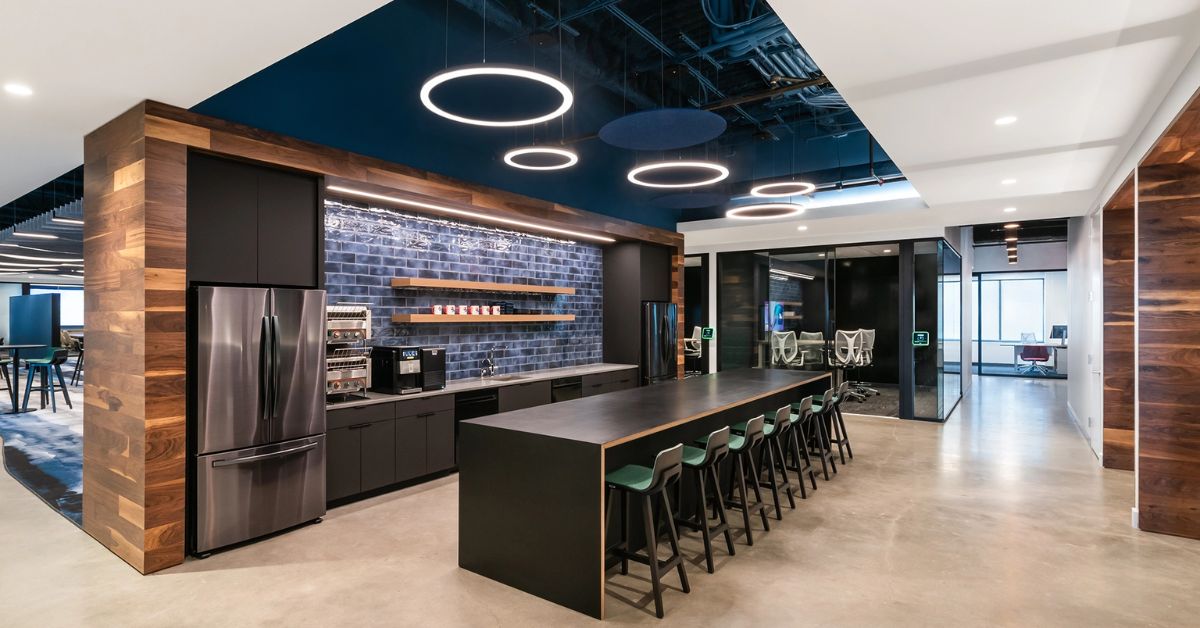
Why choose Cove lighting?
Cove lighting is more than decoration — it changes perception and function:
- Ambience & mood: Cove lighting creates soft, glare-free ambient light that’s excellent for lounges, bedrooms, and hospitality spaces.
- Perceived space: An illuminated ceiling appears high, and rooms feel more expansive.
- Accent & architectural emphasis: It highlights coves, cornices, tray ceilings, and architectural lines without visible fixtures.
- Energy efficiency: With LED strips and drivers, cove lighting can be both attractive and economical.
- Flexibility: Tunable white and RGB/RGBW LED options let you change mood and color for events.
If you want visually pleasing, layered lighting that doesn’t scream “look at me” but subtly transforms a space, Cove Lighting in Delhi is a top choice.
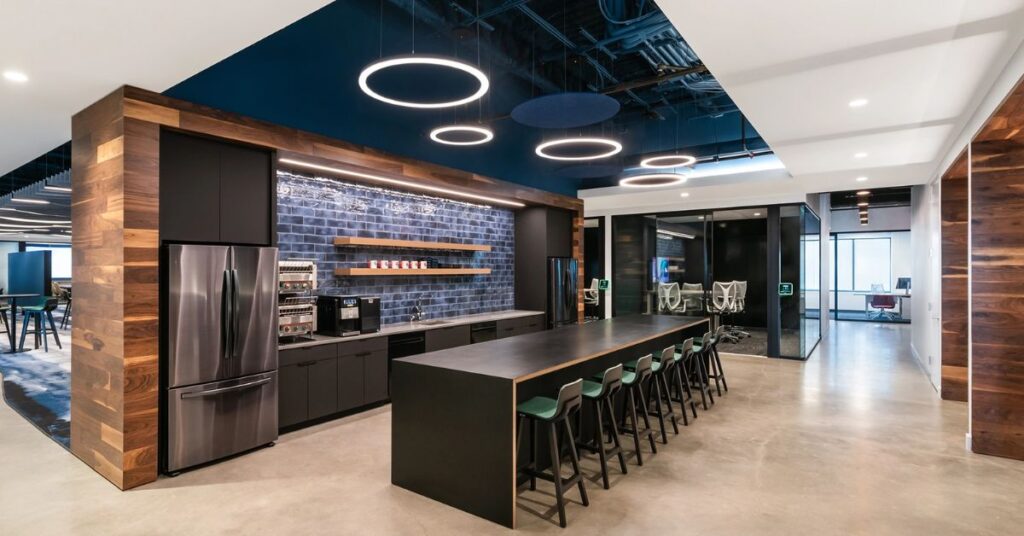
Common cove lighting systems — what the market sells
When shopping for Cove Lighting in Delhi, you’ll encounter these product groups:
- Aluminium profiles (channels) + LED strips — The most common, modular option. Profiles hold the LED strip and diffuser and provide heat sinking. Profiles come in recessed or surface-mounted variants and many finishes.
- Prewired cove fixtures — Factory-made linear luminaires designed for cove installations with integrated drivers and optics. They’re faster to install but typically pricier than strips + profiles.
- Flexible linear LED modules — Harder-wearing than ordinary strips; suited for curved coves. They’re often IP-rated for moisture.
- Backlit panels / indirect troffers — For large tray ceilings where a continuous luminous field is desired, not a narrow wash.
- Tunable white / RGB/RGBW systems — Contain addressable drivers or control gear for dynamic color and temperature control.
For most Delhi residential and commercial jobs, aluminium profiles with high-quality LED strips are the sweet spot: affordable, serviceable, and widely available. If you need very long continuous runs without visible seams, consider prewired linear fixtures.
Key technical specs every buyer should demand
Don’t buy by appearance. Ask for these numbers when comparing products for Cove Lighting in Delhi:
- Lumens per metre (lm/m) — The most important number for strips. It tells you how much light the strip produces per metre. Typical ranges: 200–2,000 lm/m depending on density and LED package.
- Lumens per watt (lm/W) — Efficiency metric. Higher lm/W lowers running cost. Good commercial strips are 100 lm/W+; residential strips may be slightly less.
- Color Temperature (CCT) — Measured in Kelvin. Common choices: warm (2700–3000 K), neutral (3000–3500 K), cool (4000–5000 K). Tunable white systems range from 2700 to 6500 K.
- CRI (Color Rendering Index) — Shows color fidelity. For cove lighting in living areas, aim for CRI 80+; for retail, hospitality, and places where color matters (art, textiles), CRI 90+ is preferred.
- IP Rating — For indoor cove lighting in dry areas, IP20 is OK. For bathrooms, kitchens, or outdoor overhangs, pick IP44, IP65, or higher as needed.
- Beam control & diffuser type — Diffusers impact the wash quality. Frosted diffusers give smooth distribution; micro-prism or opal diffusers reduce strip hotspots.
- Dimmability & control compatibility — Confirm driver and strip support for the dimming protocol you plan to use (TRIAC, 0–10V, DALI, DMX, or wireless mesh systems like Casambi/Bluetooth).
- Driver type and location — Central or inline drivers? Remote drivers are often preferable for heat reasons; check if driver replacement is easy.
- Power consumption (W/m) — For cabling and transformer sizing.
- Warranty & L70 — L70 tells you life expectancy; ask for L70 hours and a warranty (2–5 years typical for good brands).
- CRI, SDCM / MacAdam step — For color consistency across long runs, ask for SDCM ≤ 3 to avoid visible color shifts.
Insisting on datasheets with these numbers makes specification and comparison easy and prevents surprises.
Design basics: how to plan a cove
Cove lighting design happens at two levels: the architectural cove and the lighting specification.
1. Decide the cove geometry
- Recess depth: For a smooth wash, recess the strip 40–100 mm away from the visible lip, depending on the strip’s beam and diffuser. Deeper recesses hide the strip more completely.
- Cove height: Higher coves create a softer wash; a 100–300 mm cove height is common, but taller coves give more diffuse light.
- Mounting surface: Ensure the cove’s mounting surface is flat, and reflective surfaces near the cove won’t cause glare or unevenness.
2. Select strip and diffuser
- High lumen strips for strong ambient light (2000 lm/m+ if you want the cove to be the main room light).
- Moderate lumen strips (400–1000 lm/m) for accent or supplementary ambient.
- Diffuser profile: Use opal/frosted diffusers to blend LED points into a continuous line.
3. Compute lumens
Decide desired lux on the ceiling or wall. A quick rule: for a comfortable ambient cove wash, aim for 100–300 lux on the ceiling area immediately adjacent to the cove. Use lumens per metre × run length and account for losses (diffuser and reflection) to pick strip density.
4. Aim and finish
- If the cove washes the ceiling, aim for an even upward angle — avoid pointing light directly into the room.
- For wall-wash coves, a narrower beam and closer mounting create sharper vertical textures.
Planning like this helps your contractor order the right strip density and profile so your Cove Lighting in Delhi looks intentional, not DIY.
Color temperature and CRI — choosing what looks best
Choosing CCT and CRI for Cove Lighting in Delhi affects mood and function:
- 2700–3000 K (warm) — cozy, flattering for living rooms and hospitality.
- 3000–3500 K (neutral-warm) — versatile; works well in most homes and offices.
- 4000–5000 K (cool/neutral) — crisp, helpful for task-focused areas or contemporary minimal interiors.
- Tunable white (2700–6500 K) — gives flexibility: warm for evening relaxation, cool for daytime tasks. Especially valuable in hotels and multipurpose spaces.
If you’re lighting artwork or fabric-heavy interiors, choose CRI ≥90 to preserve material colors and textures. For most cove uses, CRI 80–90 balances cost and quality.
Dimming, control systems, and smart features
Controls make cove lighting much more useful:
- Basic dimming: TRIAC or 0–10V dimming for simple scene-setting. Ensure strips and drivers are compatible to avoid flicker.
- Networked controls (DALI, DMX): Ideal for commercial and hospitality settings where scenes and zoning are required. DALI permits daylight harvesting rules and scheduling.
- Wireless mesh (Casambi, Bluetooth, Zigbee): Great for retrofits — don’t require heavy control wiring and work well for multiple small runs.
- Tunable white & color control: Requires dedicated drivers and controllers; DMX or smart gateways handle dynamic color scenes.
- Motion & daylight sensors: For energy saving, cove light can stay low and boost only when needed.
When buying Cove Lighting in Delhi, match the control protocol to your electrician’s experience. Wireless is easy to retrofit; DALI is robust for new builds.
Installation tips — practical Delhi-focused advice
Installation quality determines how long cove lighting looks great.
- Thermal management: Strip LEDs generate heat. Use aluminium profiles as heat sinks and avoid burying drivers in airtight voids. Heat shortens LED life.
- Cable runs: Plan 12–24 V DC runs carefully — voltage drop matters. For long runs, use higher-voltage strips or distributed drivers.
- Driver placement: Place drivers in ventilated service voids, not inside the cove where heat builds up. Make drivers accessible for replacement.
- Sealing & moisture: In Delhi kitchens, bathrooms, or balconies, choose IP65-rated strips and profiles and seal cable entries to prevent dust/moisture ingress.
- Finish quality: Paint cove surfaces with matte paint to reduce glare and hotspots. Reflective surfaces can cause uneven wash.
- Test before closing: Always test full-length runs at night before final plaster or paint; small angle changes can significantly alter the wash.
Working with a contractor familiar with local practices in Delhi will avoid common mistakes like undersized drivers, poor cable gauge choices, and inadequate sealing.
Maintenance & longevity — keep your cove glowing
Cove lighting is low-maintenance, but a plan helps:
- Dusting & cleaning: In Delhi’s dusty environment, clean diffusers every 3–6 months. Dust reduces light output and slightly changes color temperature over time.
- Driver checks: Inspect drivers annually; replace if you see dimming or flickering. Keep spare drivers for long runs or critical areas.
- Strip replacement plan: High-quality strips last 30,000–50,000 hours. For long runs, plan replacement in modules to minimize disruption.
- Seal inspection (moisture-prone areas): Check gaskets post-monsoon to ensure IP seals still work.
A small maintenance checklist handed to household help or the facility manager extends the charm and life of your Cove Lighting in Delhi investment.
Budgeting & procurement — where to buy and what to ask
When buying Cove Lighting in Delhi, your main channels are showrooms, electrical wholesalers, lighting distributors, and online. Tips:
- Ask for datasheets and LM/m figures — insist on numbers, not just watts.
- Request sample reels and diffusers — see color and wash in person.
- Get a sample night-fit for long runs or feature coves — small mistakes show up only in real conditions.
- Compare total installed cost — fixture + profiles + drivers + controls + labour; cheap strips can cost more when rewired or replaced early.
- Warranty & spares — ensure the seller provides driver spares and offers local warranty servicing in Delhi.
For large projects (hotels, offices), ask vendors for photometric layouts and references from recent Delhi installations.
Design examples — practical inspirations
- Living room tray ceiling: Recessed 80 mm cove with 800 lm/m, 3000 K strips behind an opal diffuser for soft ambient lighting. Add dimming for an evening mood.
- Restaurant wall cove: Narrow top cove washing textured wall with 1200 lm/m, CRI 90, and tunable white to shift mood between day and night.
- Office perimeter cove: Continuous 400 lm/m, 3500 K, DALI control for daylight harvesting and presence-based dimming.
- Bedroom headboard cove: Low-power 200 lm/m warm white (2700 K) on a separate dimmable circuit for night reading and mood.
These product-focused examples help you brief a contractor or showroom salesperson quickly.
Buying checklist — take this to the showroom
- Desired function (ambient vs accent) and target lux for ceiling/wall.
- Required run length and profile type (recessed / surface / prewired).
- LED strip spec: lm/m, W/m, CCT, CRI, IP rating.
- Diffuser type and profile finish selected.
- Driver type and dimming protocol (TRIAC/0–10V/DALI/Wireless).
- Voltage drop plan and cable gauge for long runs.
- Sample reel and diffuser tested in situ at night.
- Warranty, L70 hours, and service/driver spares confirmed in Delhi.
- Itemized installation quote (profiles, strips, drivers, controls, labour).
Bring this checklist to ensure your Cove Lighting in Delhi purchase matches your expectations.
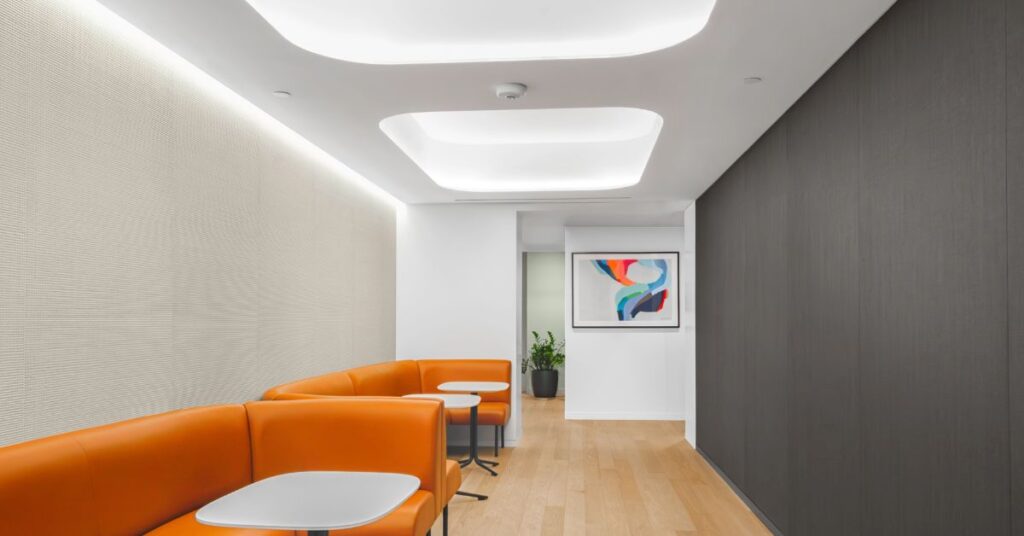
Common pitfalls & red flags
- Buying strips by wattage only (no lm/m).
- No photometric data or sample test for large runs.
- Choosing a very high CCT without considering the room finishes.
- Hidden drivers stuffed into airtight voids (overheating risk).
- No local warranty or spares in Delhi.
If the supplier can’t provide datasheets or a dimming demo, treat the quote cautiously.
Frequently Asked Questions (FAQ)
Q: What CCT is best for a living room cove?
A: 2700–3000 K for a warm, relaxing atmosphere; 3000–3500 K for a neutral look.
Q: Will I see LED dots through the diffuser?
A: With a good opal diffuser and adequate recess depth (40–80 mm), LED dots are generally invisible and give a continuous wash.
Q: Can I retrofit cove lighting into an existing cornice?
A: Yes — using slim edge-lit strips or low-profile profiles, but check thermal clearance and driver access first.
Q: Do I need IP-rated strips for balconies?
A: Yes — for exposed balconies, choose IP65+ rated strips and sealed profiles to handle rain and dust.
Final thoughts — make it intentional
Cove lighting transforms spaces subtly but powerfully. For Cove Lighting in Delhi, focus on lm/m, CCT, CRI, diffuser quality, and proper driver/thermal planning. Work with a contractor who tests and runs at night, provides driver spares, and documents as-built wiring. With careful specification and the checklist above, your cove will be a calm, flattering light source that lasts years and barely shows its seams.