
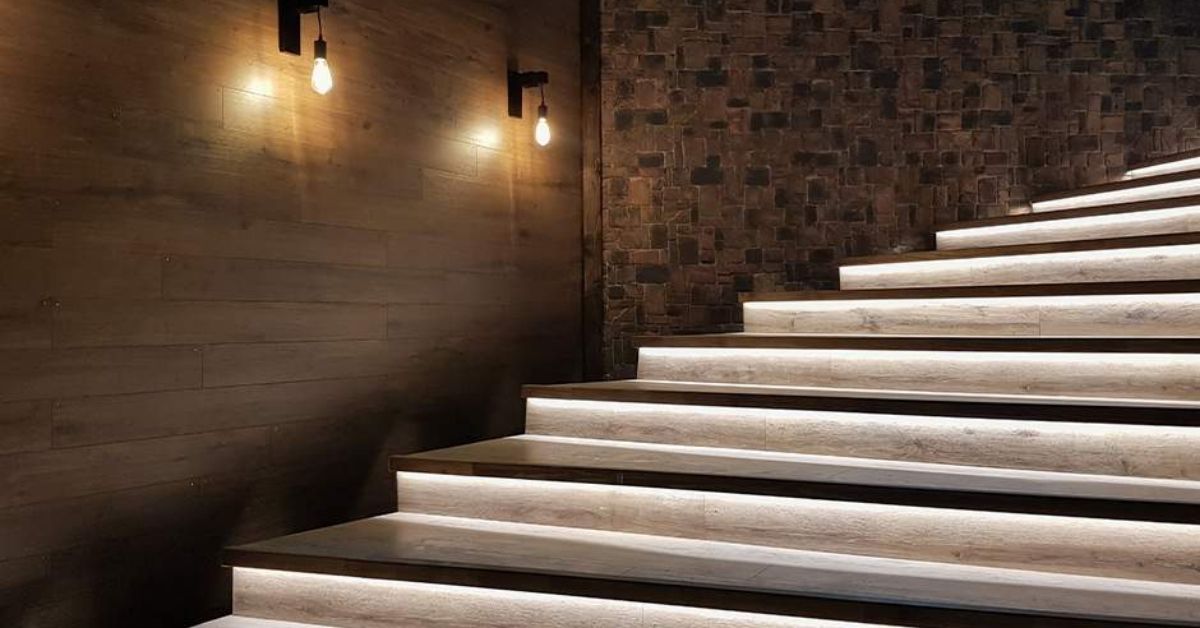
Why step lighting matters (safety, appearance, and value)
Step lighting isn’t just decorative. Proper Step Lighting in Delhi does three things well:
- Safety: It reduces trip hazards by clearly defining risers and treads. Good step illumination lowers the risk of falls on stairs and uneven walkways.
- Aesthetics: The right fixtures enhance architectural lines — subtle washes or crisp risers can transform a plain staircase into a visual feature at night.
- Property value and usability: Well-lit external and internal steps increase usable hours for gardens, terraces, and commercial entrances — a small lighting investment frequently improves perceived property value.
In Delhi, where dust, monsoon rains, and seasonal temperature swings are real concerns, pick fixtures built for the outdoors and rated for water and dust ingress if they’re near entrances or uncovered terraces.
Common types of step lighting and where to use them
Choosing the correct form factor is the first product decision a buyer makes when shopping for Step Lighting in Delhi. Here are the common types you’ll see and their best uses:
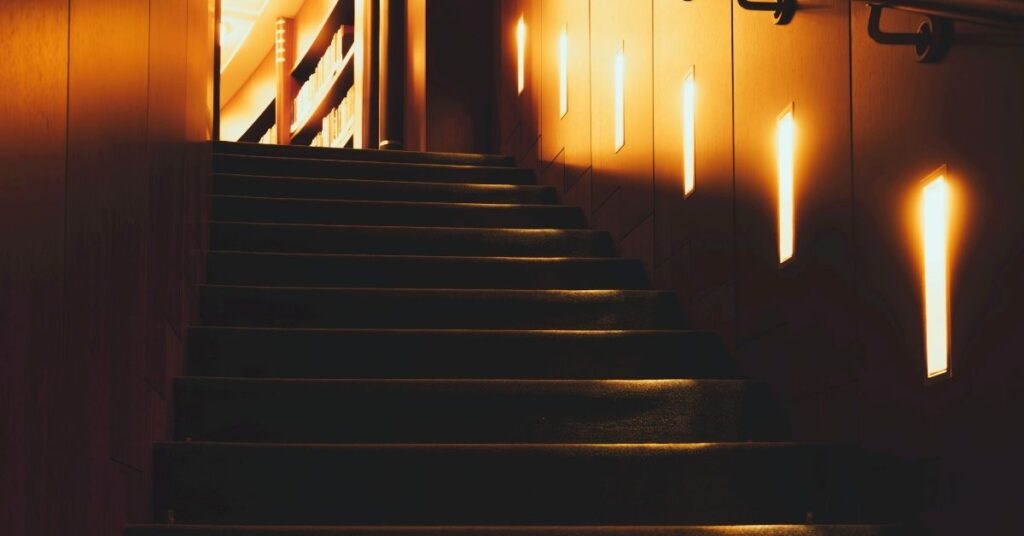
- Recessed step lights (wall-mounted): Installed into the riser or side wall, these give focused downlight onto the tread and are ideal for staircases with solid risers. They’re unobtrusive and provide precise illumination.
- In-grade / recessed floor lights: Embedded in the stair nosing or side of a step — great for outdoor paths and public plazas. These need high IP and IK ratings to handle water and foot traffic.
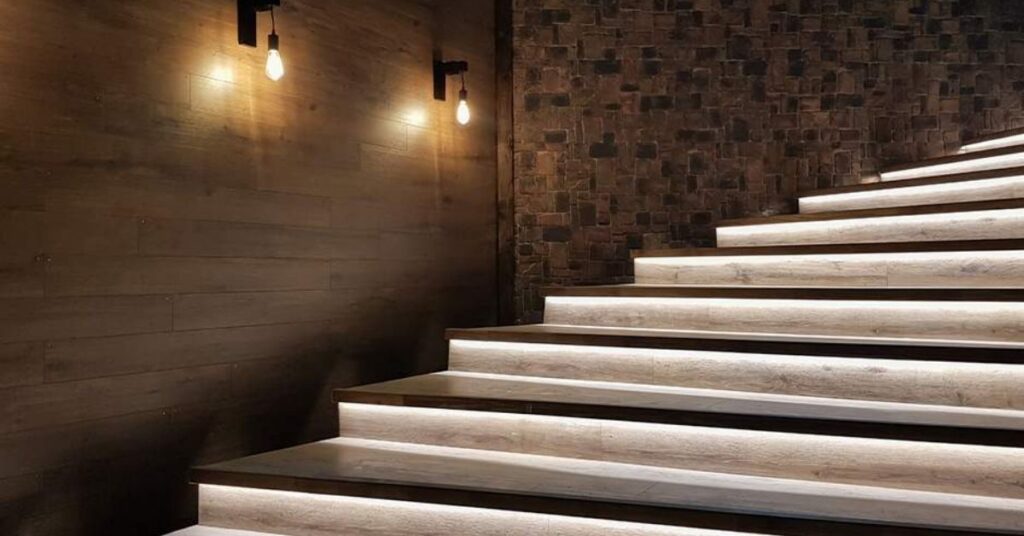
- Under-step strip lighting: LED linear strips concealed under the lip of the tread for a modern, continuous glow. Best in dry, covered staircases and for aesthetic-focused installations.
- Spike/stake lights near steps: Used in garden edges to illuminate low steps and adjacent planting; more of a soft wash than a crisp tread light.
- Surface-mounted step lights: Quick to install on walls or risers where recessing isn’t possible; they project light onto treads while remaining compact.
Each type has pros and cons: recessed lights look clean but need cut-outs and more careful installation; in-grade fixtures are robust but must be specified to withstand foot traffic and water ingress.
Key technical specs every buyer must demand
A good product selection starts with reading the datasheet. For Step Lighting in Delhi, insist on the following specifications for each fixture:
- Lumens (total light output): For small step lights, you’ll usually see 50–300 lumens per fixture, depending on the application. Don’t buy by wattage alone — lumens tell you the actual amount of light.
- Beam angle & optics: Narrow beams (15–30°) give crisp tread highlights; wider beams (60–120°) wash whole treads and adjacent areas. Opt for shielded optics to reduce glare.
- Color temperature (CCT): 2,700–3,000 K for warm accent lighting; 3,000–4,000 K for functional clarity. Use the same CCT across a staircase for visual consistency.
- CRI (Color Rendering Index): CRI 70–80 suffices for most outdoor steps; CRI 80–90 is better if nearby finishes or materials need accurate rendering.
- IP Rating: Minimum IP65 outdoors is a safe baseline in Delhi, particularly where the fixture might face rain or high-pressure cleaning. In-grade fixtures should be IP67 or higher.
- IK Rating: If fixtures are within reach or under footfall, look for IK07–IK10 impact resistance. Public spaces should use higher IK-rated products.
- Driver quality & surge protection: Outdoor fittings should include drivers that tolerate voltage swings and have surge protection — Delhi has occasional line voltage instability.
- Materials & finishes: Corrosion-resistant bodies (anodized aluminium, marine-grade stainless steel) and UV-stable polycarbonate or tempered glass lenses extend lifetime in outdoor Delhi conditions.
- Warranty & service: Prefer 3–5 year warranties and locally available spare drivers or replacement modules.
Never accept a fixture without a datasheet showing lumens, IP/IK, CCT, and L70 lumen maintenance. These are the figures that predict long-term performance, not the glossy product photos.
How bright should step lights be — lumen targets and design rules
One of the biggest mistakes buyers make is over-lighting or under-lighting steps. Use these practical targets for Step Lighting in Delhi:
- Residential indoor steps (ambience + safety): 50–100 lux on the tread surface; typical fixtures deliver 50–150 lumens each, depending on spacing.
- Exterior residential steps: 50–150 lux on the tread surface. Use slightly higher lux near entrances and landings.
- Public/commercial steps: 100–200 lux for higher safety margins, especially in high-traffic or accessible routes.
- Garden pathway adjacent steps: 10–50 lux for a soft guiding light — combined with bollards or pathway lights.
Spacing and mounting height determine how many fixtures you need. A practical rule: mount wall-recessed step lights at a height of 100–150 mm above the tread and space them one per step or every other step depending on lumen output. For in-grade fixtures, center them close to the step edge and ensure their beam covers the tread uniformly.
Always test a sample fixture on-site at night — photos and showroom lighting won’t tell you how the fixture performs on your stairs.
Color temperature & visual comfort
Color temperature influences visibility and mood. For most Step Lighting in Delhi projects:
- Warm white (2700–3000 K): Creates a cozy, upscale look — good for residential terraces and hospitality settings.
- Neutral white (3000–3500 K): Balances color fidelity and comfort — widely used for entries and semi-formal areas.
- Cool white (4000–5000 K): Provides crisp visibility for high-security, industrial, or some public installations.
Avoid mixing multiple CCTs on the same run of steps. Mixed temperatures look inconsistent and can confuse depth perception. If you want both task clarity and a warm ambiance, use neutral/warmer ambient lighting with cooler task accents sparingly.
Solar vs mains-powered step lights — which to pick in Delhi
Both solar and mains-powered Step Lighting in Delhi have roles. Here’s how to choose:
Solar step lights
- Pros: No trenching or cabling; resilient to local power outages. Good for remote garden steps or temporary needs.
- Cons: Performance depends on sun exposure; Delhi’s dusty air and shaded courtyards can reduce charging efficiency. Batteries age (2–5 years typically) and require replacement. Choose units with replaceable Li-ion batteries and adequate panel wattage.
Mains-powered step lights (230V or low-voltage 12/24V)
- Pros: Consistent output night after night; higher lumen options and better dimming/control integration. Easier to include in centralized lighting control systems.
- Cons: Higher upfront installation costs (wiring, conduits, transformers) but lower lifecycle headaches.
For permanent, frequently used steps — especially near entrances and public areas — mains-powered fixtures typically deliver a more reliable and controllable solution. For smaller garden projects or where cabling is impractical, choose high-quality solar fixtures with clear battery and autonomy specs.
Materials, finishes, and durability for Delhi’s climate
Delhi’s seasonal dust and monsoon demand durable materials for your step lighting:
- Body material: Powder-coated aluminium and AISI 316 stainless steel resist corrosion. Avoid cheap zinc alloys outdoors.
- Lens: Tempered glass or UV-stable polycarbonate; glass is scratch resistant, polycarbonate tolerates impact better.
- Gaskets & seals: Silicone gaskets are better than low-grade rubber; seals should be replaceable.
- Finish: Matte or textured finishes hide dust and scratches better than glossy chrome.
When you ask a supplier for Step Lighting in Delhi, inspect sample finishes and gaskets. Cheap coatings blister and corrode quickly when exposed to Delhi’s pollution and monsoon humidity.
Controls, sensors, and smart features
Adding controls to step lighting can enhance safety and save energy:
- Photocells (dusk-to-dawn): Automatically turn lights on after sunset — very common and practical.
- Motion-activated step lighting: Keep a low-level path glow and increase output when someone approaches; excellent for energy savings in low-traffic gardens.
- Centralized control & zoning: For apartment complexes or hotels, integrate step lights into a BMS or lighting control network for scheduling and remote diagnostics.
- Dimming & scenes: Dimmable LED drivers let you create night-safe low-level illumination and brighter modes for events.
If you’re installing mains-powered Step Lighting in Delhi, ask electricians to provide separate circuits or addressable drivers so you can group and dim runs independently.
Installation best practices and safety
Poor installation kills even quality products. Follow these practical rules when installing Step Lighting in Delhi:
- Licensed electricians only: Ensure work follows local electrical codes and uses RCDs/earth leakage protection for outdoor circuits.
- Correct cut-outs and drainage: For in-grade fixtures, make sure drainage is provided to avoid water pooling — a slight slope away from the fixture prevents standing water.
- Use conduit for buried cabling: Protect outdoor cables from rodents and mechanical damage. Use UV-stable, outdoor-rated cables for exposed runs.
- Thermal considerations: Drivers must be installed where they can dissipate heat; don’t bury drivers inside airtight niches. Heat shortens a driver’s life.
- Aim and test at night: Install fixtures provisionally, then test aim and coverage after dark before final fixing. Small changes in angle often make a large visual difference.
- Accessibility for maintenance: Install with future replacement in mind — drivers and seals should be serviceable without major demolition.
Document as-built locations and wiring — this pays dividends for maintenance and future upgrades.
Maintenance — a small plan that keeps lights bright
Step lights usually require low maintenance, but a little care extends life, especially in Delhi:
- Quarterly cleaning: Wipe lens surfaces to remove dust and pollen that cuts output.
- Check seals after monsoon: Replace any gaskets that harden or crack.
- Inspect for corrosion: Touch up or replace flaky coatings early to prevent more serious damage.
- Battery replacement (solar): Plan for battery swaps every 2–5 years, depending on quality and usage.
- Keep spares: Keep a couple of spare drivers and lenses for critical entries to minimize downtime.
A simple maintenance checklist for building staff or household help keeps Step Lighting in Delhi performing reliably.
Buying options in Delhi — showrooms, contractors, and online
Where to source Step Lighting in Delhi:
- Lighting showrooms: Best for checking finish and beam patterns. Ask for in-store demos or to borrow samples for a night test on-site.
- Landscape and electrical contractors: Provide turnkey solutions including cabling, trenching, and warranty service. Good for large projects.
- Online marketplaces: Convenience and price, but verify seller credentials and warranty handling in Delhi.
- Direct from manufacturers or authorized distributors: Often better for bulk procurement and longer warranties.
When comparing quotes, include installation, conduit, junction boxes, and commissioning — many contractors quote only fixtures and surprise buyers with installation add-ons later.
Buying checklist — print and take to the showroom
- Target lux level defined for treads and landings.
- Fixture schedule with lumens, CCT, beam angle, IP, and IK ratings.
- Material and finish specified (stainless / aluminium/glass).
- Power source defined (mains vs solar) and wiring plan included.
- Driver specifications and surge protection confirmed.
- Warranty (3–5 years) and local service details verified in Delhi.
- The installation scope, including trenching, conduits, and commissioning itemized.
- A sample night test was arranged before final ordering.
Take this checklist when evaluating suppliers and installers for Step Lighting in Delhi.
Common pitfalls & red flags
Avoid these traps when buying step lighting in Delhi:
- Buying by wattage only: If a vendor quotes “3 W” without lumen figures — walk away.
- No IP/IK ratings listed: Especially for in-grade and outdoor fixtures — insist on documented ratings.
- Cheap solar units with tiny panels: They underperform within months in dusty or shaded Delhi conditions.
- No local warranty support: Replacing drivers can be difficult without local spares.
- Poor sealing or thin finishes: Signs of future corrosion and water ingress.
If a supplier can’t provide datasheets or test samples, treat the offer as high risk.
Frequently Asked Questions (FAQ)
Q — What IP rating should I insist on for outdoor step lights?
A — For exposed outdoor Step Lighting in Delhi installations, insist on at least IP65; choose IP67 for in-grade fixtures that may face standing water.
Q — Can I mix solar and mains step lighting on the same stair run?
A — It’s possible, but not recommended for visual consistency. Mixed sources can vary in color temperature and brightness; if you must, choose high-quality solar fixtures that match the CCT and lumen output of mains fixtures.
Q — How often will solar battery packs need replacing?
A — High-quality Li-ion batteries typically last 2–5 years, depending on charging cycles and ambient conditions.
Q — Is it better to light every step or every second step?
A — Lighting every step gives uniform clarity but costs more. For residential runs, lighting every second step often suffices if fixtures are brighter; for public or high-risk areas, light every step.
Final thoughts — making the right buy
Good Step Lighting in Delhi is a small investment with a big impact on safety and curb appeal. Prioritize lumens, IP/IK ratings, and driver quality over low prices. Test samples on-site at night, maintenance plan, and work with licensed electricians for safe, durable installations. With thoughtful specification and the checklist above, you’ll get step lights that perform reliably season after season — and look great while doing it.