If you’re planning store upgrades or opening a new retail space, the right lighting turns browsers into buyers. This guide gathers the best shop lighting ideas into one practical manual: how to light window displays, pick the correct colour temperature for merchandise, design accent and ambient layers, choose fixtures (track, linear, pendants, downlights), plan controls and dimming, meet energy goals, and write RFQs that lead to apples-to-apples quotes. It’s written for busy shop owners, interior designers and facility managers who want product-oriented, actionable advice — not generic wish lists.
Below you’ll find tested layouts, lux targets, product checklists, installation tips, and a maintenance plan that guarantees your chosen shop lighting ideas will keep your store looking fresh and selling more every season.
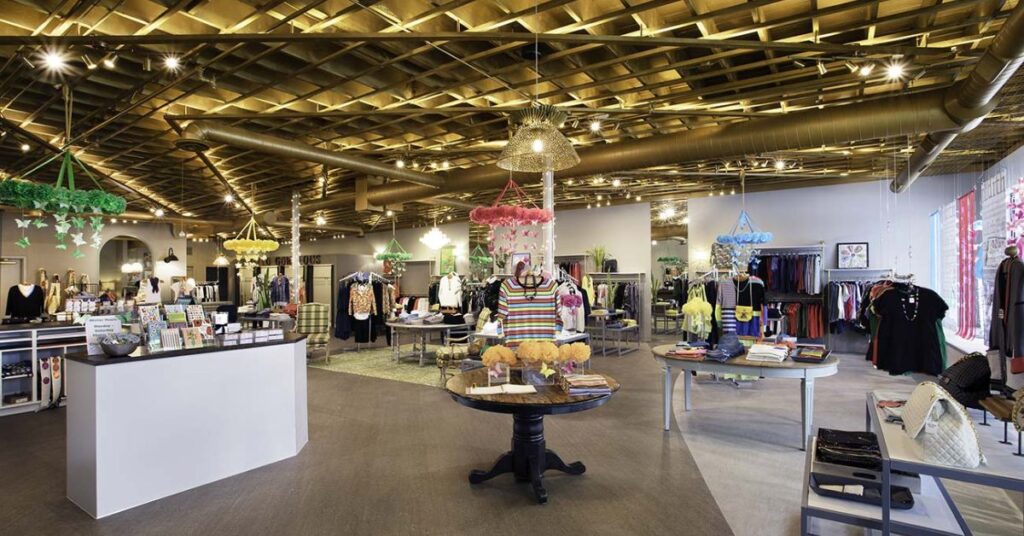
Why lighting is the most important visual merchandising tool
Good shop lighting ideas do more than make a space bright. They:
- Highlight products and guide sightlines.
- Create mood and define zones (premium area, sale racks, fitting rooms).
- Improve perceived product quality — colour accuracy (CRI) affects buying decisions.
- Reduce returns — customers see true colours under high-CRI lights.
- Lower energy and maintenance costs with efficient LED solutions and good controls.
Before you buy dozens of fixtures, set clear goals: do you want drama for a new collection, consistent product rendering for a boutique, or cost-effective illumination for a supermarket? Your goals shape which shop lighting ideas will work.
The lighting layers every shop needs (and shop lighting ideas to use)
Treat lighting like sound design: build layers that work together.
- Ambient/general lighting — uniform background illumination. Use efficient linear modules, troffers, or wide-beam downlights.
- Task lighting — focused illumination for counters, checkouts, and workstations. Use directional downlights or linear task fixtures.
- Accent lighting — makes product pop (spotlights, track heads, micro-spots). This is where many winning shop lighting ideas happen.
- Decorative lighting — pendants and chandeliers create brand identity and focal points.
- Window & window-reveal lighting — the first impression; invest here for big returns.
- Back-of-house & safety lighting — efficient, simple, and code-compliant.
A basic retail rule: allocate about 50–60% of total lumens to ambient, 20–30% to accent, and 10–20% to task/checkout, adjusting by store type.
Lux targets and product placement — numbers that matter
If you want serious shop lighting ideas, use numbers, not guesses. Below are typical retail lux targets (illuminance at the product plane):
- Supermarket/grocery aisles: 300–500 lx (produce & specialty counters higher).
- Clothing showroom/boutique: 300–600 lx ambient; 800–1,200 lx for feature zones.
- Jewellery/watches: 1,000–3,000 lx on display cases with high CRI and controlled glare.
- Home décor/furniture: 200–400 lx ambient; accent 600–1,000 lx on feature pieces.
- Electronics & appliances: 500–1,000 lx at demo stations for product detail.
- Fitting rooms: 300–500 lx, CRI ≥ 90 and even vertical illuminance for flattering reflection.
Use the simple calculation to size fixtures: Installed lumens required = Area × Target lux ÷ Maintenance factor (≈0.7). That tells you how many lumens the fixtures must deliver — not just their wattage.
Colour temperature & CRI — match the product, not your preference
One of the most overlooked shop lighting ideas is CCT & CRI matching:
- CCT (Kelvin): For clothing and most retail use 3,000–3,500K (warm-neutral) for pleasant skin tones and cozy displays; use 4,000K (neutral white) in hardware, electronics, or areas needing crisp detail. For groceries, 3,000–3,500K keeps produce looking fresh.
- CRI (Colour Rendering Index): Always CRI ≥ 90 for apparel, textiles, paint, and jewellery. Lower CRI (<80) will wash out reds and blues, leading to returns and unhappy customers.
Choose tunable white fixtures for multi-use stores: set 4,000K for bright daytime merchandising, 3,000K for evening ambience.
Fixture types & when to use them — practical shop lighting ideas
Here are common fixtures and their best use-cases in retail:
- Track lighting (adjustable spot heads): ideal for rotating displays and seasonal windows. High flexibility — move heads as merchandising changes.
- Adjustable downlights (recessed or surface): good for ambient and accent; choose low-glare trims (baffles or deep-set).
- Linear LED suspended fixtures: excellent for aisles, open plan shops, and modern boutiques — provides even ambient light and strong brand aesthetics.
- Spotlights & micro-spots (gimbal heads): for jewellery, art, and product islands requiring tight beams (10–30°).
- LED strips & cove lighting: accent shelving, wall niches and cabinetry — use diffusers for even washes.
- Pendant and decorative fixtures: create focal points above cash wraps and seating zones.
- Facade & signage lighting: tombstone or back-lit signs with even luminance increase walk-past conversion.
- Emergency & exit lighting: code required and must be reliable; LED options reduce maintenance.
When listing shop lighting ideas for your store, mix fixed linear ambient with track accenting — it’s a proven combo.
Window displays — the single highest ROI shop lighting idea
Your window is the billboard; invest accordingly.
- Use high CRI, high-output spotlights with narrow beams to sculpt mannequins and key props.
- Include a key light (primary highlight), fill light (softens shadows), and rim/back light (separates subject from backdrop).
- Vary CCT to match campaign mood — warm for natural fibres, neutral for tech products.
- If security allows, use motorized winches and timers so windows turn on at dusk and off after hours for energy savings.
A dramatic window with two or three well-aimed spotlights often yields more sales per square metre than many other investments.
Lighting controls & smart strategies — important shop lighting ideas
Controls multiply the value of fixtures. Consider:
- Zoning & scene control: schedule bright merchandising scenes during peak hours and softer ambience for evenings.
- Dimming & tunable white: dim-to-warm for evening events; tunable systems for seasonal adjustments.
- Occupancy sensors: smart for storage rooms, restrooms, and back-of-house.
- Daylight harvesting: in façades and skylit stores, reduce electric light when daylight suffices.
- Centralized lighting management (DALI / DALI-2): enables addressable control, energy reporting and per-fixture commissioning — ideal for chains and multi-store rollouts.
- Remote diagnostics: detect lamp failures and driver issues before staff notice them.
A control system also helps your shop lighting ideas adapt quickly for promotions and seasonal changes with no rewiring.
Energy & maintenance — practical plans for retail owners
Good shop lighting ideas must include total cost thinking:
- Choose high-efficacy LEDs (≥100 lm/W where possible) to reduce running costs.
- Select replaceable drivers/modules: reduce downtime and avoid full fixture replacement.
- Stock spare modules: keep common driver and lamp spares for quick swaps.
- Use timers and controls to minimize run hours (especially façade and back-of-house lighting).
- Schedule quarterly cleaning of lenses and windows — dust reduces output dramatically.
Calculate payback: estimate kWh saved × tariff, subtract premium cost to find simple payback — retail lighting often pays back in 1–3 years, depending on hours of operation.
A few tested shop lighting ideas by store type (layouts and quick specs)
Below are ready-to-use recipes you can hand to a lighting supplier.
Clothing boutique (30 m²)
- Ambient: 6 × recessed 920 lm downlights (3000K, CRI 92), spaced for even coverage.
- Accent: track with 6 adjustable 800 lm spots (3000K) for mannequins and feature wall.
- Fitting room: 2 × vertical vanity lights 3000K CRI 95, 300–400 lx at mirror.
- Controls: scene switch (Shop, Window, Evening), DALI interface for future scaling.
Electronics & appliances (open 100 m²)
- Ambient: continuous linear suspended fixtures (4000K) providing 400 lx uniformity.
- Task/demos: downlights (36°) 1,000 lx at demo counters.
- Signage: LED backlit signs with 4,000K neutral white.
- Controls: daylight harvesting near the storefront, occupancy in storage.
Jewellery store (50 m²)
- Ambient: low ambient 200–300 lx to keep a luxury mood.
- Display cases: dedicated micro-spots (CRI 95+, 3,000K) with 1,500–3,000 lx on facets.
- Accent: wall washers for brand imagery.
- Controls: DALI with individual fixture control for showcase fine-tuning.
These recipes are practical shop lighting ideas you can adapt by area and ceiling height.
Visual merchandising & glare control — shopper comfort matters
Glare reduces comfort and perception of value. Use these tactics:
- Use baffles, deep-set downlights or louvres for low-glare trims.
- Aim spots at 30–45° from the viewer line to avoid direct view into the emitter.
- For floor-to-ceiling displays, use stepped accenting so luminance transitions smoothly.
- Pay attention to specular highlights on glossy merch; control beam spread and intensity.
Comfortable lighting encourages longer dwell time — one of the simplest, most profitable shop lighting ideas.
Procurement checklist & RFQ template — copy-paste and send
Use this product-oriented RFQ to get clear, comparable supplier quotes for your shop lighting ideas:
RFQ — Retail Lighting Package
Scope: Supply & install lighting for [store name], area [m²], ceiling height [m].
- Ambient: supply × linear/ recessed fixtures, delivered lumens per fixture, CCT 3,000K, CRI ≥ 90, efficacy ≥ 100 lm/W, L70 ≥ 50,000 hrs, driver accessible.
- Accent: supply × track heads, beam 10/24/36°, tunable aiming, delivered lumens per head, CRI ≥ 95 for feature zones.
- Window: supply × high-output spotlights, rated for continuous use and motorized timing.
- Controls: DALI lighting control panel, DALI-2 drivers, scene plates, scheduling, and remote diagnostics.
Include itemized pricing (fixtures, drivers, control system, installation, testing), IES files, dimmer compatibility list, lead times and 5-year warranty terms.
This RFQ makes vendors commit to hard numbers — the only reliable way to compare shop lighting ideas.
Installation & commissioning — key steps to make lights perform
- Confirm as-built ceiling heights and layout before finalizing fixture counts.
- Install dimming/control wiring a week before fixtures to verify topology.
- Do a mock-up: install sample fixtures in the show window and key zones; approve lighting designers’ photometric layout.
- Commission: measure lux targets with a calibrated lux meter, adjust aim angles, and program scenes.
- Handover: obtain as-built IES, wiring diagrams, fixture serials and control logins.
Commissioning converts good shop lighting ideas into repeatable, sale-boosting reality.
Maintenance plan (simple & effective)
- Daily: quick visual check of the window and main display lights.
- Weekly: dusting and glass cleaning.
- Quarterly: photometric checks and re-aiming accent lights.
- Annually: driver and emergency test, replace worn gaskets, check control firmware.
A modest maintenance budget preserves the performance of your shop lighting ideas and reduces emergency downtime.
FAQs — quick answers to common retailer questions
Q: Are track lights better than recessed?
A: Track offers flexibility and is ideal for fast-changing merch. Recessed gives a clean ambient look — often both are combined.
Q: How important is CRI?
A: Crucial for colour-sensitive retail (fashion, paint, food). Always ask for a CRI ≥ 90 for selling the product accurately.
Q: Should I use tunable white?
A: Highly recommended if your store doubles as an event space or changes evening ambience often.
Closing: turning shop lighting ideas into sales
Great shop lighting ideas combine science with creativity: the right lux, accurate colour, layered fixtures, smart controls and disciplined maintenance. Start with your merchandising goals, choose CCT and CRI to present products honestly, invest in accent lighting for key items, and put a control strategy in place so lights adapt to time, season and event.