
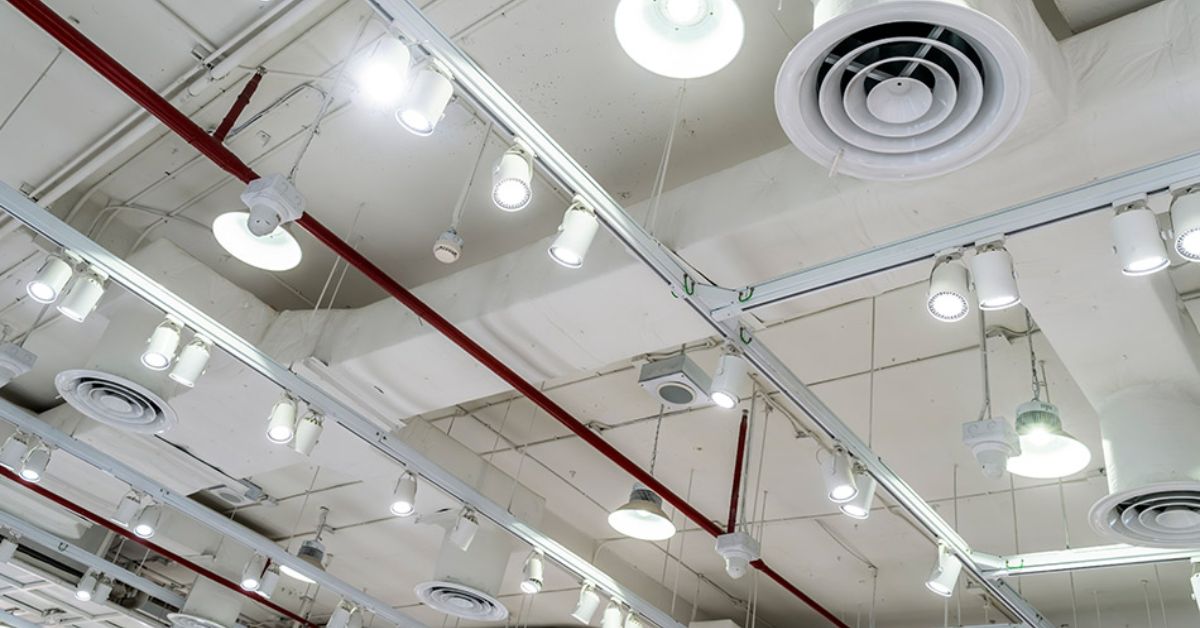
Why lighting maintenance matters
Good maintenance keeps lights reliable, energy-efficient, and safe. Whether you manage a home, showroom, office, or retail space, Proactive Lighting Maintenance: Common Problems & Fixes will:
- Save money by extending fixture life and reducing emergency replacements.
- Improve comfort and visual quality — poor light quality affects mood and productivity.
- Prevent safety risks like overheating, short circuits, or trip hazards.
- Keep emergency and exit lighting compliant and functional.
This guide focuses on product-oriented, actionable fixes (bulbs, drivers, lenses, controls) so you can make confident buying and repair decisions.
The quick diagnostics checklist (first 90 seconds)
When a light misbehaves, do this first — safe, fast, and usually revealing. This is your triage for Lighting Maintenance: Common Problems & Fixes:
- Is it the bulb? Swap a known-good bulb into the fixture (power off when changing). If it works, the lamp was the issue.
- Check the breaker & switch. Confirm the circuit is live and the wall switch is functional. Reset tripped breakers.
- Is it dimmer-related? Many LED bulbs are incompatible with older dimmers — try a non-dimmable replacement or test the fixture on a different circuit.
- Does the fixture flicker? Flicker often points to driver issues, loose wiring, or incompatible dimmers.
- Smell & heat: Any burning smell or unusual heat? Turn off the power and call a professional.
These quick steps cover many entries in Lighting Maintenance: Common Problems & Fixes and prevent unnecessary part purchases.
Common problems — what they look like and what to check
Below are the most frequent failures covered under Lighting Maintenance: Common Problems & Fixes, with product-oriented fixes.
1. Bulb/blinking/partial failure
Symptoms: Fixture is dark, dim, or blinks intermittently.
Likely causes: Burnt-out bulb, poor lamp seating, wrong bulb type, or end-of-life for integrated modules.
Fixes & products:
- Replace with an identical or higher-quality bulb from a trusted supplier. For LEDs, choose bulbs with a rated lifetime (L70) and low flicker specs.
- If replacing a lamp in a recessed fixture, also check the socket (e.g., E27, GU10) and replace it if corroded. Sockets and lamp holders are inexpensive and widely available.
- For LED retrofit modules, confirm the driver and module compatibility; often, the driver must be replaced rather than the module.
2. Flicker or strobing
Symptoms: Noticeable flicker, especially when dimming or at power-on.
Likely causes: Poor-quality LED driver, loose wiring, incompatibility with the dimmer, or voltage instability.
Fixes & products:
- Measure with a simple non-contact voltage tester or a plug-in flicker meter for accuracy (recommended for facilities).
- Replace cheap LED lamps with low-flicker certified models. Look for lamps advertising <5% flicker or wide frequency stability.
- If the issue is with a fixture with an internal driver, replace the driver with a compatible high-quality constant current or constant voltage driver (match voltage, current, and dimming protocol).
- For dimmer issues, upgrade to an LED-compatible dimmer or a smart driver (0–10V, DALI) depending on system needs.
3. Buzzing, humming, or noise
Symptoms: Audible noise from fixtures or dimmer switches.
Likely causes: Magnetic transformers, incompatible dimmers, or failing drivers.
Fixes & products:
- Replace old magnetic transformers (common with halogens) with electronic transformers rated for LEDs or change to LED drivers.
- Swap the dimmer for a quiet, LED-compatible electronic dimmer.
- For linear fluorescent fixtures, ballast replacement (or LED retrofit kits) resolves noise and improves efficiency.
4. Color shift or inconsistent color temperature
Symptoms: Lights look warmer or cooler over time, or fixtures of the same model show different tones.
Likely causes: Low-quality LEDs, mismatched batches, or aging drivers.
Fixes & products:
- Buy lamps/LED modules from reputable lines with stable CCT specs (e.g., 2700K, 3000K, 4000K). Avoid mixing batches; buy enough for a whole zone at once.
- Replace aging integrated modules rather than mixing old and new lamps.
- For premium installations, use products with tight CCT bins and CRI 90+.
5. Reduced output / dimming over time
Symptoms: Light seems dimmer even though the lamp is on.
Likely causes: Dust on lenses, lumen depreciation (L70), driver degradation, or voltage drop.
Fixes & products:
- Clean lenses, diffusers, and reflectors with recommended cleaners — many LED fixtures use acrylic or polycarbonate, so avoid alcohol-based cleaners unless vendor-approved.
- Replace worn drivers; check thermal management — overheating shortens LED life, so good heat sinks and ventilation matter.
- Verify supply voltage and wiring gauge; long runs with undersized conductors can cause voltage drop and dimming.
6. Outright fixture failure (no power)
Symptoms: The entire fixture is dead; replacing the lamp doesn’t help.
Likely causes: Faulty driver, wiring fault, switch/breaker, or control module failure.
Fixes & products:
- With the power off, inspect the internal wiring for loose connections or burn marks. Use wire nuts or proper terminal blocks for secure reconnection. If you’re not trained, call an electrician.
- Replace the driver with a model that matches the original specifications (voltage, current, dimming protocol, IP rating if outdoors).
- For smart fixtures, check the control module or gateway; sometimes a firmware reset or replacement of the hub fixes the problem.
7. Motion sensor or photocell issues
Symptoms: Lights stay off, stay on, or behave erratically with occupancy/dusk sensors.
Likely causes: Sensor misalignment, dirt, wiring issues, or incorrect settings.
Fixes & products:
- Clean sensor lenses and reposition sensors to avoid false triggers (e.g., HVAC airflows).
- Check the sensor settings (time delay, sensitivity, ambient light threshold) and adjust as needed.
- Replace aging PIR or microwave sensors; consider upgrading to smart wireless sensors with flexible scheduling.
8. Corrosion & water ingress (outdoor lighting)
Symptoms: Corroded fittings, intermittent operation, visible moisture inside fixtures.
Likely causes: Failed gaskets, degraded seals, poor IP-rated fixtures.
Fixes & products:
- Replace gaskets and reseal with manufacturer-recommended silicone.
- Use higher-IP-rated fixtures (IP65+) for exposed areas. Stainless steel hardware and marine-grade finishes resist corrosion.
- Keep spare drivers in a dry enclosure and, if necessary, mount drivers in separate, weatherproof boxes.
Tools, parts & products you should have on hand
A product-oriented approach to Lighting Maintenance: Common Problems & Fixes means having the right spares and tools. Here’s a practical kit:
- LED spare bulbs (same CCT and CRI) — keep 10–20% extra of common SKUs.
- Replacement drivers (matched voltage/current, spare driver per fixture family).
- Socket/holder spares (E27, GU10, G13, etc.) and lamp clips.
- Basic electrician’s kit: insulated screwdrivers, wire strippers, multimeter, continuity tester, and non-contact voltage detector.
- Wire connectors & terminal blocks: quality-rated, insulated, and sized to code.
- Cleaning supplies: microfibre cloths, mild detergent, lens-safe cleaner, compressed air.
- Sealing kit: silicone sealant, gasket tape for IP-rated fixtures.
- Portable lux meter: for validating output and confirming maintenance targets.
- Flicker meter or oscilloscope (for larger facilities) to detect driver or dimmer instability.
Buy spares from trustworthy suppliers and store them in a dry, labeled cabinet for easy access.
Preventive maintenance schedule (product-oriented)
A regular schedule reduces emergency work and extends life. Here’s a practical preventive schedule to include in facility checklists for Lighting Maintenance: Common Problems & Fixes:
- Weekly: Walk the facility; note non-working lights and obvious damage.
- Monthly: Clean high-use fixtures and check emergency lights and exit signs.
- Quarterly: Inspect fixture mounts, sensors, and accessibility of drivers; test dimmers and scene recall.
- Biannually: Replace bulbs in high-risk areas, test emergency battery runtime, and perform photometric checks in critical zones.
- Annually: Full audit — lux map verification, driver testing, and spare parts inventory replenishment.
Document each maintenance action in a log (date, action, part replaced, who performed it). This log is indispensable for warranty claims.
Safety first: what you must not DIY
Some fixes are fine for homeowners; some are not. For Lighting Maintenance: Common Problems & Fixes, do not attempt:
- Rewiring mains circuits without a licensed electrician.
- Repairs that involve opening sealed fixtures under warranty — that can void coverage.
- High work at height without proper fall protection and two trained people.
- Modifying emergency lighting or fire-rated systems without certified technicians.
When in doubt, stop and call a professional. Your safety and insurance compliance matter more than saving on a contractor’s fee.
When to call a pro — the clear handoff rules
Call a licensed electrician or lighting professional if any of the following occur:
- Burning smell, smoke, or visible scorch marks.
- Repeated breaker trips localized to lighting circuits.
- Complex control systems (DALI, BACnet) need reprogramming.
- Structural mounting problems for heavy fixtures.
- Fire alarm or emergency lighting failures require certification.
A documented, professional handoff makes future maintenance easier and preserves warranties.
Cost considerations & life-cycle thinking
When buying replacement parts or new fixtures, consider the total cost of ownership:
- Upfront cost vs. lifecycle cost: High-quality LED modules and drivers cost more initially but often reduce electricity and replacement costs.
- Energy savings: Higher lm/W yields lower energy bills. Use your lux targets and operating hours to estimate savings.
- Warranty & service: A longer warranty and local support reduce downtime and unexpected expenses.
Ask suppliers for L70 life, warranty terms, and driver replacement policies to make an informed purchase.
Final checklist: a quick reference for buyers
- Do you have labeled spares for your most-used lamp types?
- Are drivers and critical parts stocked and accessible?
- Is there a logged preventive maintenance schedule?
- Are dimmers and controls compatible with installed fixtures?
- Do you have an up-to-date emergency lighting test record?
- Is a licensed electrician on-call for code-level repairs?
If yes to most items — congratulations. You’ve implemented practical Lighting Maintenance: Common Problems & Fixes that reduce failures and keep spaces well-lit.
Conclusion
Lighting upkeep is not glamorous, but it is essential. This guide, Lighting Maintenance: Common Problems & Fixes, gives you product-focused, actionable steps: how to diagnose common faults, which parts to buy, how to schedule maintenance, and when to call professionals. With the right spares, tools, and a preventive schedule, most lighting problems are routine to fix — and much cheaper to prevent.