
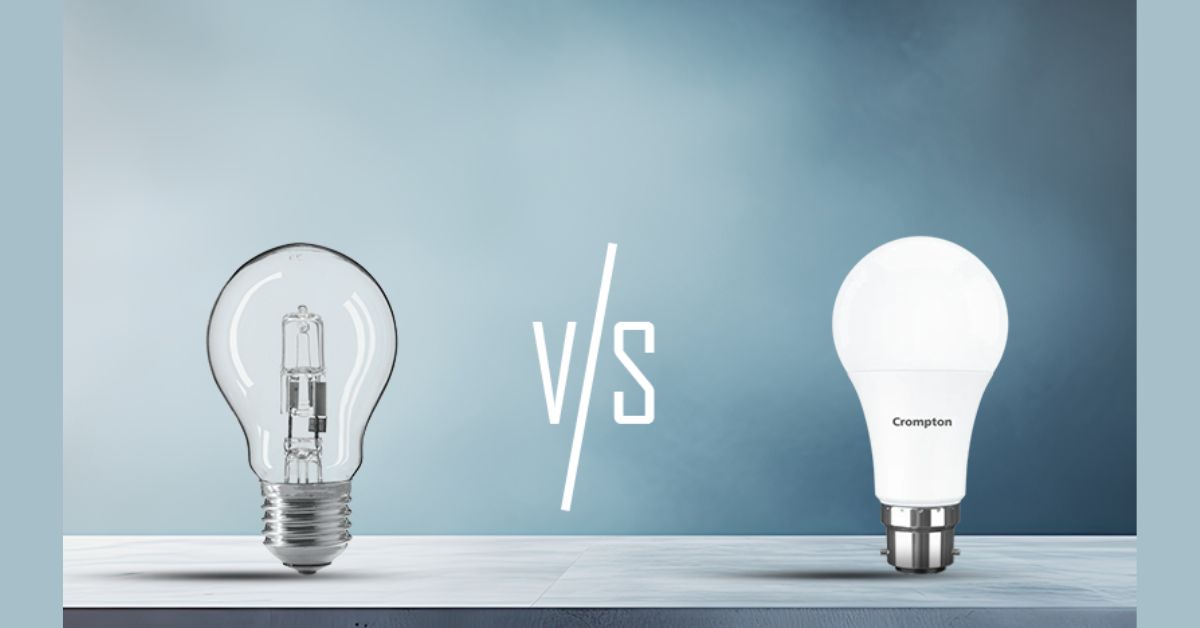
When you type LED vs Halogen: Energy & Cost Savings into a search bar, what you’re really asking is: “Will switching to LED pay off, and how do I pick the right product?” This guide answers that question end-to-end with product-oriented detail: how LEDs and halogens compare in light output, colour, heat and lifetime; how to calculate real energy and money savings; what to watch for when retrofitting fixtures; and concrete examples and RFQ lines you can use when buying.
Read on, and by the time you reach the checklists, you’ll know the real-world math, which lamp types to choose for each application, and exactly what to ask vendors so the phrase LED vs Halogen: Energy & Cost Savings becomes a confident buying decision — not a gamble.
Quick TL;DR (if you’re in a hurry)
- LEDs use much less energy for the same light (typically 60–90% less than halogen).
- LEDs last far longer (10,000–50,000+ hours vs ~2,000 hours for halogen).
- Upfront LEDs cost more, but lower power draw + longer life → fast payback (often <1 year in many daily-use scenarios).
- LEDs run cooler, improving fixture life and cutting air-conditioning load in conditioned spaces.
- For retrofit, choose LED replacements that match lumen output, beam angle, and dimmer compatibility to avoid glare, flicker or fitment problems.
Keeping LED vs Halogen: Energy & Cost Savings in mind, this guide walks you through the numbers and shopping steps.
How halogen and LED technology differ (product basics)
Halogen bulbs are incandescent lamps with a halogen gas that increases filament life and brightness. They produce a continuous spectrum of light (nice colour rendering), but they are inefficient: most energy is released as heat rather than light.
LEDs (Light Emitting Diodes) are solid-state devices that produce light by electroluminescence. LEDs are far more efficient (lumens per watt), and manufacturers can tune them for colour temperature (CCT) and colour rendering (CRI).
Key product comparisons:
- Efficacy (lm/W): Typical halogen: 10–20 lm/W. Typical modern LED lamps: 80–150+ lm/W.
- Life (hours): Halogen: ~1,500–2,500 hrs. LED: 15,000–50,000+ hrs (L70-rated).
- Heat: Halogen gets very hot; LED runs cooler (but needs heat sinking).
- Dimming: Halogen dim smoothly with legacy triac dimmers; LEDs require compatibility checks (triac-rated LED bulbs or LED drivers).
- Form factor: LEDs come as direct replacements (GU10, MR16, R7S, PAR), integrated fixtures, and retrofit modules.
Those product facts form the foundation for understanding LED vs Halogen: Energy & Cost Savings.
Real energy and cost math (simple, practical examples)
Numbers matter. Below are carefully calculated, realistic examples so you can see the savings.
Example A — Single lamp, daily use
- Scenario: Replace a 50W halogen spotlight with a 10W LED that provides similar lumens/beam.
- Operating hours: 5 hours/day → 1,825 hours/year.
- Electricity rate: ₹10 / kWh (example; replace with your local rate).
Calculations (digit by digit):
- Power saved per hour = 50 W − 10 W = 40 W = 0.040 kW.
- Annual kWh saved = 0.040 kW × 1,825 h = 73.0 kWh.
- Annual energy saving = 73.0 kWh × ₹10/kWh = ₹730 / year.
If the LED bulb costs ₹400 and the halogen costs ₹50, the extra upfront cost = ₹350.
- Payback = 350 / 730 ≈ 0.48 years (~5.7 months).
So in this common example, the LED pays back in under six months.
Example B — 100 identical lamps (retail/office)
- Annual kWh saved = 73.0 × 100 = 7,300 kWh.
- Annual energy saving = ₹730 × 100 = ₹73,000 / year.
- Upfront extra cost (100 × ₹350) = ₹35,000.
- Payback = 35,000 / 73,000 ≈ 0.48 years again — same math, just scaled.
Life-cycle (25,000 hours) comparison
- Halogen life ~2,000 hrs → replacements needed for 25,000 hours ≈ 13 bulbs. At ₹50 each total = ₹650.
- LED one-time cost = ₹400.
- Over a long life, LED is cheaper for both energy and lamp cost, before you even count labour and disposal.
These examples show why the phrase LED vs Halogen: Energy & Cost Savings translates to measurable ROI in nearly any setting where lamps are used several hours per day.
Hidden savings: reduced heat and maintenance
Heat reduction: halogens dump most energy into heat. In an air-conditioned office or shop, that extra heat increases cooling loads. Replacing halogen with LED reduces the cooling demand and lowers HVAC energy cost — a secondary saving that often goes uncounted but can be meaningful.
Maintenance savings: halogens burn out often; LEDs last far longer. Fewer ladder climbs, lower labour costs for replacement, and fewer emergency outages are important in retail, hotel and commercial environments — and they matter when you compare LED vs Halogen: Energy & Cost Savings from a total-cost perspective.
Light quality: lumens, CRI and beam control
When choosing LEDs to replace halogen, match three product aspects:
- Lumens, not watts. Halogen 50W might give 600–800 lumens; pick an LED that delivers the same lumens with a similar beam angle.
- Colour temperature (CCT). Halogens are warm (~2700K). Many shoppers prefer warm LEDs for ambience; pick 2700–3000K to match.
- Colour rendering (CRI). High CRI (≥90) LEDs reproduce colours more faithfully — crucial for retail, kitchens and design studios. Good LEDs can match halogens’ colour rendering if you pick CRI-rated products.
Beam control is important for spotlights and accenting. Halogen MR16s often had tight beams; LED MR16/GU10 replacements offer interchangeable optics — verify lens/beam angle specs to avoid “flattened” product displays.
All these are product-oriented answers to the question LED vs Halogen: Energy & Cost Savings — because a wrong LED (wrong beam, low CRI) can cost you sales or visual comfort even if it saves energy.
Retrofit tips: what to check before switching
Retrofitting halogen fixtures with LED lamps is common — here’s what buyers must verify:
- Base and fit: GU10, MR16, R7S, GY6.35, etc. — pick the correct LED form factor.
- Voltage & driver: Many halogen fixtures use 12V transformers. Use LED replacements compatible with the transformer, or replace the transformer with an LED driver. For 230V halogen fixtures, choose LED lamps rated for mains.
- Dimming compatibility: If you have legacy triac dimmers, buy LED lamps explicitly marked “triac-dimmable” or upgrade dimmers to LED-compatible models. Always test one lamp before bulk buying.
- Lumen & beam match: Match lumen output and beam angle for the intended effect.
- Thermal & fixture design: LEDs need heat sinking — ensure enclosed fixtures allow sufficient airflow, or choose an LED designed for enclosed use.
- Power factor & harmonics: For commercial installs, specify PF > 0.9 and low THD in drivers to avoid power quality issues.
- Safety & standards: Ask for safety marks and compliance data.
Following these steps avoids common retrofit failures and ensures the savings you calculate under LED vs Halogen: Energy & Cost Savings are actually achieved.
Dimming, controls and compatibility
One of the most common user frustrations in LED vs Halogen: Energy & Cost Savings transitions is dimming behaviour.
- Halogens dim smoothly with legacy dimmers because the current reduces filament temperature gradually.
- LEDs are electronic. In many cases, you need either an LED-compatible triac dimmer or a driver using 0–10V / DALI / phase control specifically designed for LEDs.
- Recommendation: Buy lamps and drivers that list the dimmer models they’re compatible with, or work with your electrician to upgrade dimmers. Test a handful first.
Good controls (DALI, programmable drivers, daylight harvesting, occupancy sensors) can multiply the energy savings reported in LED vs Halogen: Energy & Cost Savings examples.
Environmental and safety considerations
- Disposal: halogen bulbs contain a tungsten filament but no hazardous mercury; however, frequent replacements increase waste. LEDs contain electronic components — recycle through electronics recycling programs.
- Heat & fire safety: halogens run hot and have more fire risk in proximity to fabrics or insulation. LEDs run cooler and are safer in many applications.
- Light pollution & wildlife: LEDs often have high blue content unless you select warm CCTs. Use warm LEDs outdoors to reduce impact on wildlife.
These factors affect long-term costs (insurance, compliance, community relations) you should fold into the decision behind LED vs Halogen: Energy & Cost Savings.
Buying checklist — specs to demand from suppliers
When requesting quotes or shopping, include these product specs to get apples-to-apples comparisons:
- Lumen output (lm) and efficacy (lm/W).
- CCT (Kelvin) and CRI (≥80; ≥90 where colour matters).
- Rated life (L70 hours) and warranty (years).
- Dimmability and compatible dimmer models (if needed).
- Beam angle and lens/optics details.
- Driver specs: input voltage, PF, THD, dimming protocol, IP rating.
- Certifications: safety markings and energy labels.
- Price per lumen and total installed cost (lamp + driver + labour).
If you’re in India, also check for energy labelling or incentive schemes from the Bureau of Energy Efficiency when planning large retrofits.
Product recommendations
- Accent spotlight (retail): LED GU10/MR16, 300–600 lm, beam 15–30°, CRI ≥90, 2700–3000K.
- Downlight (office): 8–20W LED downlight, 80–120 lm/W, UGR-rated lens for glare control, 3500–4000K, CRI 80–90.
- Floodlight (security): 30–150W LED flood, IP65, >100 lm/W, 4000K, with motion sensor option.
- Decorative replacement (home): LED lamps rated for enclosed fixtures, dim-to-warm feature for warm ambience (2700K at full, 2200K at low).
Global brands such as Philips and many reputable local manufacturers produce good options — always cross-check specs rather than brand alone.
Frequently asked questions
Q — Will LEDs always look different from halogen?
A — Good LEDs with CRI ≥90 and 2700K CCT can look very similar to halogen. The beam quality and dimming behaviour are the keys.
Q — Are MR16 LED replacements always compatible with my transformer?
A — Not always. Check for transformer compatibility or replace with an LED driver.
Q — Do LEDs flicker?
A — Cheap LEDs and poor drivers can flicker, especially with incompatible dimmers. Specify low flicker (<5%) and test samples.
Final checklist before you switch (practical)
- Measure current bulb lumens and operating hours.
- Get the electricity rate (₹/kWh or local currency) for calculations.
- Request LED samples and test them in situ for beam, colour and dimming.
- Include driver/dimmer compatibility in RFQ.
- Ask for L70 life and warranty.
- Calculate simple payback and TCO, including labour and disposal.
Conclusion: the real answer to “LED vs Halogen: Energy & Cost Savings”
If your decision hinges on energy and cost, LEDs win in nearly every measurable way: lower energy consumption, far longer lifespan, lower maintenance, reduced heat load and quicker payback. The critical work for buyers is to choose the right LED product — correct lumen output, beam angle, CRI and dimming compatibility — so you harvest the real savings without sacrificing light quality.