
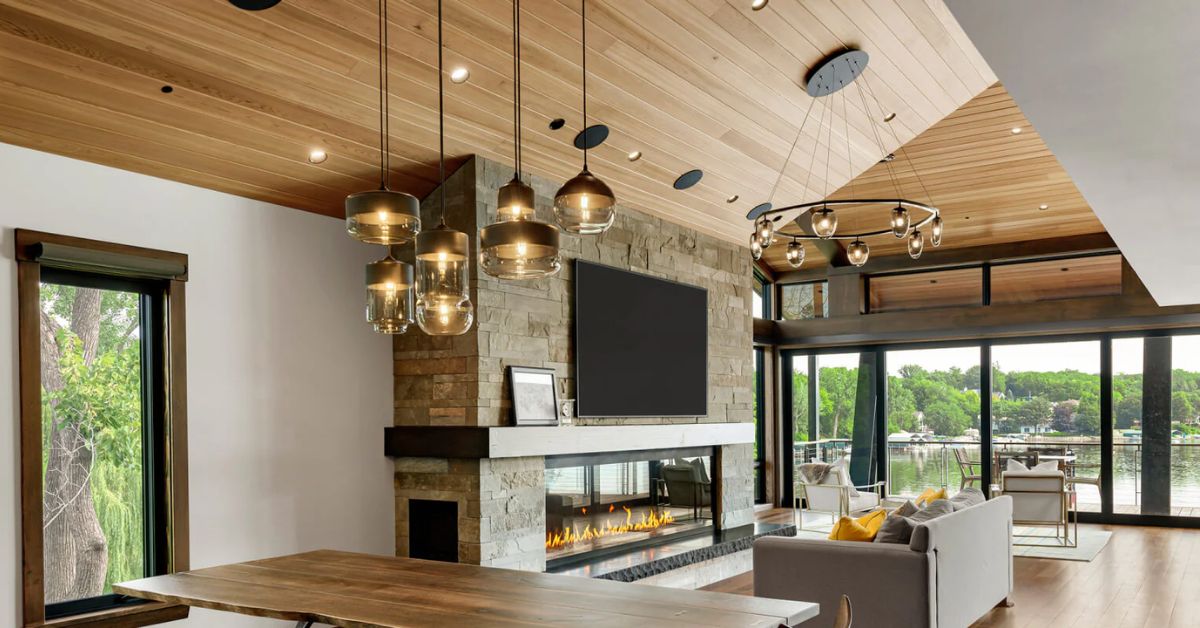
If you searched for the best LED chandeliers 2026, you want a chandelier that looks stunning and performs reliably for years. This guide walks through everything a new buyer needs to know: how LED chandeliers differ from older technologies, the technical specs that matter, room-by-room sizing, smart and dimming features, realistic energy and ROI math, installation and safety notes, maintenance, warranty, and buying tips — plus a practical checklist to use in showrooms or when ordering online.
I’ll use plain language, step-by-step calculations where needed, and product-oriented advice so you can short-list confidently and avoid buyer’s remorse.
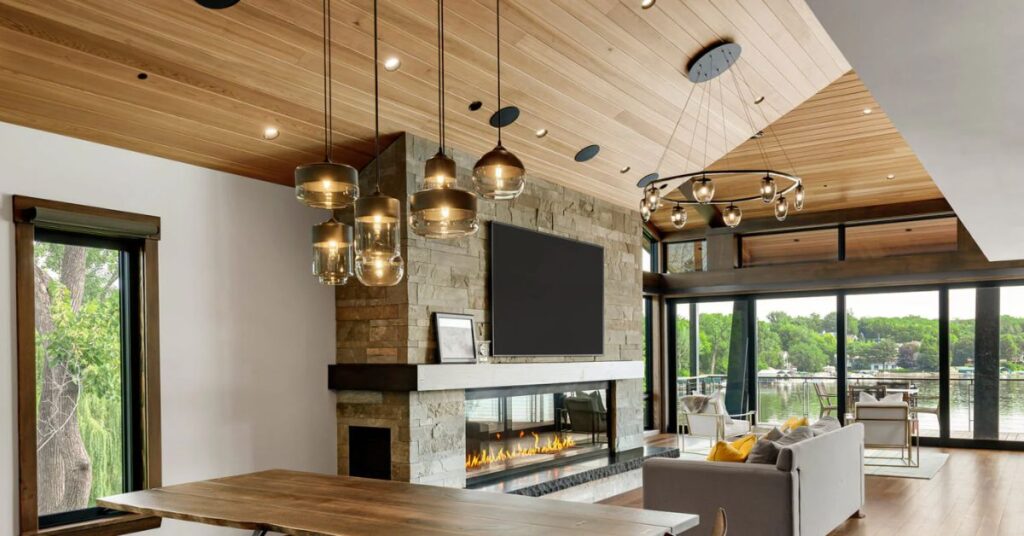
Why choose an LED chandelier in 2026?
LEDs are now the default lighting source for chandeliers for good reasons. When considering the best LED chandeliers 2026, buyers should care about:
- Efficiency: LEDs deliver far more lumens per watt than older halogen or incandescent sources.
- Long life: L70 ratings of 35,000–100,000 hours are common, reducing replacement cost and ladder work.
- Optical control: Modern LED modules pair with lenses and diffusers to create clean, glare-controlled light — essential in chandeliers with exposed elements.
- Form factor freedom: LEDs allow slimmer arms, integrated rings, and sculptural designs not possible with bulky bulbs.
- Smart integration: Most new LED chandeliers support dim-to-warm, tunable white, or RGBW control that can be integrated into smart-home systems.
Put simply, the best LED chandeliers 2026 blend style with measurable performance, not just a pretty photo.
What to look for — the specs that separate good from great
When you’re comparing candidates for best LED chandeliers 2026, insist suppliers provide clear numbers — not vague marketing claims. The key specs to compare:
- Total lumen output (lm)
- This tells you how much light the chandelier will produce. Don’t judge by wattage — judge by lumens.
- Efficacy (lm/W)
- Higher lm/W means lower running cost. Modern integrated chandeliers commonly run 80–140 lm/W; premium modules can be higher.
- CCT (Correlated Color Temperature)
- Measured in Kelvin. For living areas, pick 2700–3000K (warm), for kitchens or offices, 3500–4000K (neutral). Tunable white is a big advantage.
- CRI (Color Rendering Index)
- Look for CRI ≥ 90 for living rooms, dining, and areas where colour fidelity matters. Higher CRI (95+) is desirable for luxury finishes.
- Beam control & optics
- Does the fixture have diffuse lenses, reflectors, or focused COBs? For chandeliers, optical design determines whether the fixture sparkles or causes diode hotspots.
- Dimming compatibility
- Check supported dimming protocols (triac/ELV, 0–10V, DALI, Zigbee, Bluetooth). Ask for a compatibility list for dimmers and smart hubs.
- Flicker & surge protection
- Low flicker (<5%) matters for video calls and sensitive occupants. Surge protection in the driver protects against mains spikes.
- Serviceability
- Are LED modules and drivers replaceable? The best LED chandeliers 2026 will allow driver replacement without full fixture removal.
- L70 rated life & warranty
- Look for L70 ≥ 50,000 hours and a warranty of 3–7 years, depending on the manufacturer.
When a showroom gives you these numbers side-by-side, comparison shopping becomes objective.
How to size a chandelier — a practical method
Buyers often ask: “How big should my chandelier be?” Here’s a practical sizing rule you can use when evaluating the best LED chandeliers 2026.
Rule A — For a dining table:
- Add the length and width of the table in inches, and use that sum (in inches) as a guideline for chandelier diameter.
- Example: 72 in × 36 in table → 72 + 36 = 108 in diameter guideline (so a 28–36 in chandelier often fits visually because you typically use smaller than the sum; adjust by room).
- For metric: total room dimension rule (see next).
Rule B — For room proportion:
- Add room length and width in feet, and use the sum in inches as the chandelier diameter. Or simply use 1/3 to 2/3 of the room width as a quick check.
Rule C — Light level (lumens):
- Use the room area × target lux to estimate total lumens needed, then allocate a portion to the chandelier. Example calculation (step-by-step):
- Room area = 20 m².
- Target lux for dining/living ambient = 200 lux.
- Required lumens on the plane = Area × Lux = 20 × 200.
- 20 × 200 = 4,000 lumens.
- Apply maintenance/fixture losses (use factor 0.7): 4,000 ÷ 0.7 = ≈5,714 lumens needed.
- If you want the chandelier to provide 60% of the ambient, chandelier lumens = 0.6 × 5,714 = 3,429 lumens.
- So when comparing models, look for chandeliers delivering ~3,400 lm in this example. (Do the math carefully for your room.)
This is the same approach interior designers use — mix lumens and scale to choose the best LED chandeliers 2026 for your space.
Styles & types: which LED chandelier suits which room?
LED technology enables many forms. Here’s a buyer-oriented taxonomy to match style to function while shopping for the best LED chandeliers 2026.
- Ring & ring-cluster chandeliers
- Modern, minimal lines; great for open-plan living and stairwells. Choose diffused lenses and CRI 90+.
- Linear chandeliers
- Perfect for long dining tables or kitchen islands. Look for asymmetric optics to reduce glare on the surface.
- Crystal-style LED chandeliers
- Contemporary crystal with integrated LED modules or tiny LED sources. Insist on optical quality in the crystals to avoid cloudy sparkle.
- Sculptural & artistic chandeliers
- Statement pieces that double as art. These often use low-profile LED strips or small modules; ensure serviceability.
- Mini-chandeliers / multiple-pendant clusters
- Flexible for modern spaces and small dining nooks. Choose tunable white for versatility.
- Traditional multi-arm chandeliers (LED retrofitted or integrated)
- Keep the classic look with modern LEDs; for retrofit, ensure driver placement and heat management are addressed.
When evaluating style, always test the actual light output — some crystal chandeliers look dazzling unlit but reveal hot spots when LEDs are not properly diffused.
Smart features & control — what’s worth paying for in 2026
Smart control is no longer gimmicky; it’s expected. For the best LED chandeliers 2026, look for:
- Dimmable & dim-to-warm capability — warm colour as you dim, for cozy dining scenes.
- Tunable white (2700–6500K range) — useful if the chandelier must serve both tasks and mood.
- App & voice control compatibility — Alexa, Google Assistant, Apple HomeKit (if local network control is important).
- Mesh connectivity (Zigbee, Bluetooth Mesh, Thread) or DALI for commercial installs — better reliability than single-device Wi-Fi bulbs.
- Scene recall & local scheduling — local (hub-based) scenes ensure the chandelier still responds if the internet is down.
- Energy reporting (in hubs) — useful for large homes to track consumption.
If you plan whole-home lighting integration, prefer chandeliers that support the chosen protocol natively or via a recommended gateway.
Energy & cost: example ROI for a buyer
Let’s compare operating costs between an older halogen chandelier and a modern LED chandelier — carefully, digit-by-digit, so the numbers are trustworthy.
Scenario: Replace a decorative 200W halogen chandelier with an integrated LED chandelier that produces equivalent light but uses 60W.
- Hours per day: 4 hours (typical living/dining).
- Annual hours: 4 × 365 = 1,460 hours.
- Power saved per hour: 200 W − 60 W = 140 W = 0.140 kW.
- Annual kWh saved: 0.140 kW × 1,460 h = 204.4 kWh.
- Electricity cost: suppose ₹10 / kWh (replace with local rate).
- Annual monetary saving: 204.4 kWh × ₹10 = ₹2,044 / year.
Upfront cost difference: LED chandelier costs ₹20,000; halogen replacement costs ₹5,000 → extra upfront = ₹15,000.
- Simple payback: 15,000 ÷ 2,044 ≈ 7.34 years.
Note: This is a conservative example. For chandeliers used more hours (say 6–8 hours/day) or at higher electricity costs, payback periods shrink. Also factor in maintenance savings (no bulbs to replace) and reduced cooling load from lower heat output — both push the real payback shorter.
When evaluating the best LED chandeliers 2026, run this math for your local rates and expected use hours.
Installation & safety: practical notes for buyers
Installing a chandelier is not just about the chain and hook. For safe, reliable results, confirm the following before purchase:
- Weight & ceiling support: heavy chandeliers need a rated structural support box or reinforced joist. Don’t use plaster anchors alone.
- Service access: ensure drivers and wiring junctions are accessible for future replacement without removing the entire fixture.
- Qualified electrician: always use a licensed electrician — they check earthing, circuit protection, dimmer compatibility, and load ratings.
- Dimmers: if you plan to dim, install compatible dimmers per the fixture’s specification (test a sample first).
- Fire & insulation clearances: Some fixtures require clearance from insulation; check the installer guide.
- Smart hub placement: for wireless chandeliers, place the hub within effective range and out of metal enclosures that block mesh networking.
A good installer will provide a short commissioning checklist (verify dimming, scene recall, and driver voltages) — ask for it.
Maintenance & warranty — keeping your chandelier beautiful
The best LED chandeliers 2026 will come with service-forward design. When buying, confirm:
- Driver replacement policy: Are drivers proprietary or standard? Can a local electrician source spares?
- Spare parts & finishes: crystals, diffusers, or decorative elements may get damaged — does the manufacturer supply spares?
- Cleaning instructions: Many finishes require specific cleaners; avoid abrasive solvents on metal or glass.
- Warranty coverage: confirm years of warranty on LEDs and drivers separately; premium lines often give 5 years.
- Maintenance schedule: recommended cleaning frequency and driver checks — follow the supplier’s advice.
A chandelier that is easy to service will remain a joy, not a problem.
Where to try models and brands (local showrooms & demos)
When you shop for the best LED chandeliers 2026, seeing them lit is crucial. Visit reputable showrooms that showcase light fixtures in context (dining mockups, stairwells). Consider visiting brand or multi-brand showrooms to compare finishes and live lighting behaviour.
Final buying checklist — the one-page cheat sheet
Use this checklist in showrooms or before ordering online to ensure you choose one of the best LED chandeliers 2026 for your home:
- Total lumens listed — matches your required lumens.
- Efficacy (lm/W) provided.
- CCT and CRI specified (CRI ≥ 90 for living/dining).
- Dimming and smart protocol compatibility are listed.
- Flicker % or flicker-free claim available.
- L70 life rating and driver warranty stated.
- Driver & LED module replaceable (serviceability).
- Weight and required ceiling reinforcement documented.
- Local spares and service availability confirmed.
- Price, lead time, and installation cost (itemized) provided.
- On-site demo or mock-up option available.
Bring this list when you visit showrooms or email it to suppliers — it turns marketing blur into measurable comparison points.
Quick answers to common questions
Q: Are integrated LED chandeliers worth it?
A: Yes — better optics, longer life, and cleaner forms. Ensure driver replaceability to future-proof the purchase.
Q: Should I choose tunable white or fixed CCT?
A: Tunable white adds flexibility and future-proofs the fixture, but it costs more. For crown pieces in multi-use rooms, tunable white is often worth the premium.
Q: How big should my chandelier be over a dining table?
A: Use the diameter rule (room dimensions or table-length-based guideline) and make sure lumens match the target lux for the dining field.
Conclusion — choosing the best LED chandeliers 2026
The best LED chandeliers 2026 combine beautiful design with honest technical specs: lumens, CRI, CCT, efficacy, good optics, serviceable drivers, and smart control if you want it. Use the lumens math and sizing rules above, demand measurable specifications from suppliers, insist on an on-site demo or mock-up, and plan installation with a qualified electrician. With those steps you’ll pick a chandelier that’s not only a stunning focal point but also energy-smart and low-maintenance for years to come.