
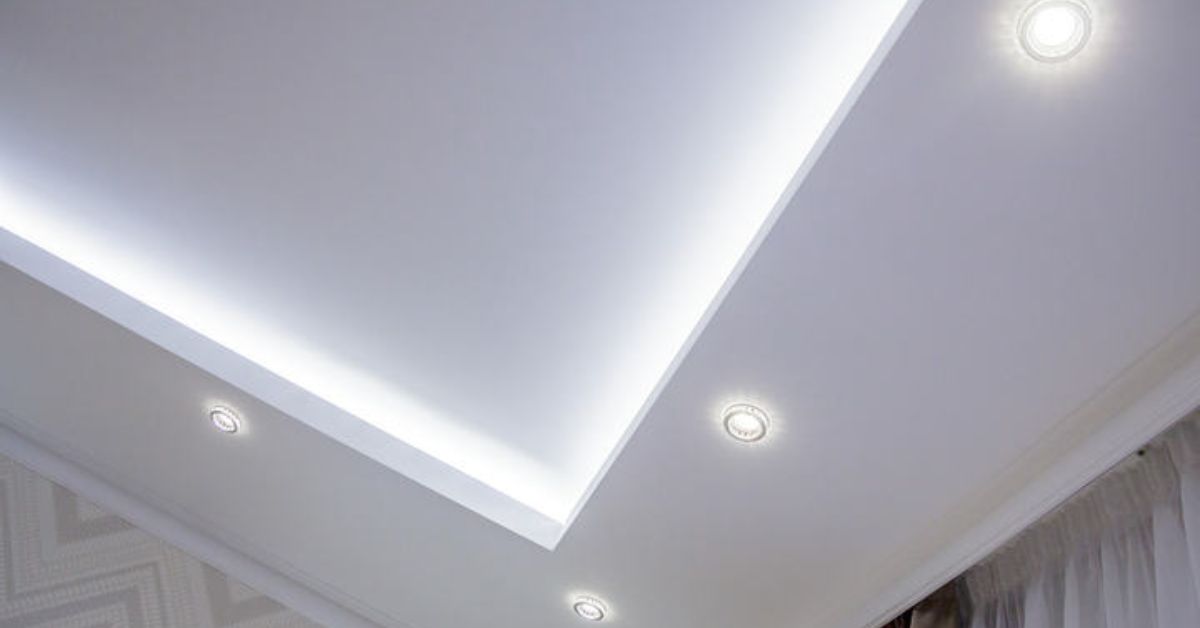
If you’re researching Built in Lighting in Delhi, you want lighting that disappears into the architecture, looks clean, and gives excellent task and ambient light without visual clutter. Built-in lighting — commonly known as recessed, flush-mount, or concealed lighting — is widely used in modern homes, showrooms, offices, and hospitality spaces across Delhi because it creates clean sight-lines and flexible lighting layers. This guide walks a new buyer through everything practical and product-oriented: types of built-in fixtures, technical specs to demand, lumens and placement rules, IP and safety rules for Indian conditions, trusted product categories, local buying tips in Delhi, installation and maintenance, ROI, and a checklist you can paste into an RFP.

What exactly is built-in lighting?
“Built-in lighting” refers to fixtures that are integrated into ceilings, walls, floors, or furniture so the visible part of the luminaire is minimal — often just a trim, bezel, or diffuser. The most common form is the recessed downlight (also called can light), but built-in solutions also include cove strips, linear recessed profiles, step lights, and in-floor accent lamps. Recessed fixtures usually consist of three parts: the hidden housing above the ceiling, the trim, and the light engine (LED module).
Because the housing sits behind the ceiling plane, built-in fixtures deliver a sleek aesthetic and are used where a minimal look is desired without losing control of light distribution.
Why choose Built in Lighting in Delhi? (top practical benefits)
- Clean, modern aesthetics: Built-in lights sit flush with surfaces and are visually unobtrusive — perfect for contemporary Delhi interiors.
- Layered lighting made easy: Use recessed downlights for ambient, linear cove for indirect uplight, and adjustable built-in spots for accenting artwork or shelves.
- Energy-efficient LED options: Modern built-in LED fixtures deliver high lumen output at low wattage, reducing operating costs.
- Long-term flexibility: Replaceable LED modules and driver access (on good products) mean you can upgrade without replacing the whole fitting.
- Suitability for tight spaces: Slim-profile built-in fixtures work well with shallow false ceilings common in many Delhi apartments.
Common Types of Built-in Lighting
- Recessed Downlights / Round & Square Downlights: The classic choice for general ambient lighting and task illumination. Use fixed trims for wash lighting or adjustable trims for accenting.
- Slim/Surface Recessed Panels: Ultra-thin panels that sit nearly flush — used in offices and retail showrooms for even illumination.
- Linear Recessed Profiles: Long, continuous recessed channels with LED strips or modular modules — great for corridors or cove effects.
- Cove & Soffit Lighting (Built-in Linear LED): Hidden in soffits to provide soft indirect light on ceilings and walls.
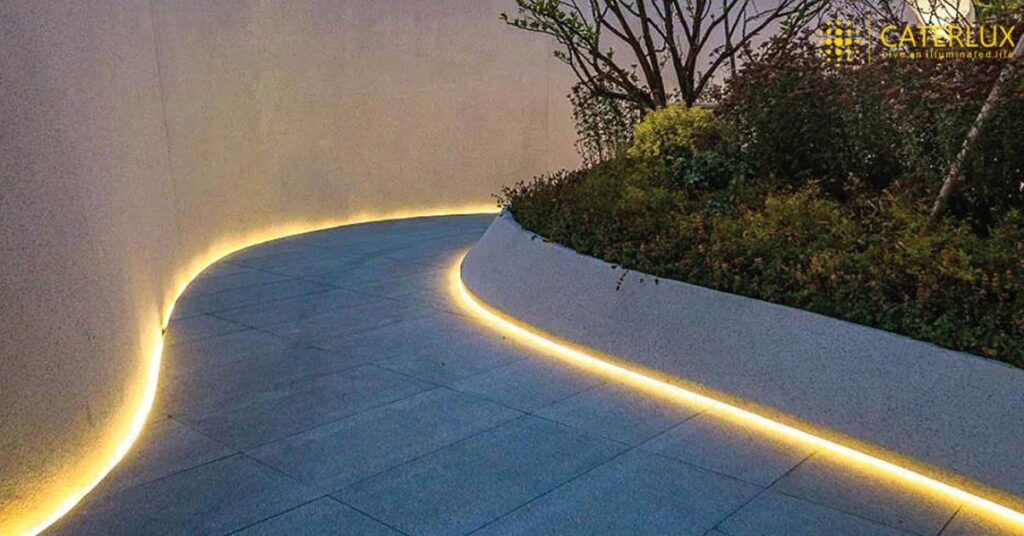
- Wall-Recessed Accent & Step Lights: Low-level built-ins for safety and mood lighting in stairways and corridors.
- IP-Rated Shower & Bathroom Recessed Lights: Specially rated fixtures for wet zones — use IP44/IP65-rated built-ins near showers or outdoor soffits.
The technical checklist — what specs to insist on
When comparing quotes for Built in Lighting in Delhi, these are the product specs that matter — not just brand names or wattage.
- Delivered Lumens (lm): Ask for delivered lumens, not just wattage. Delivered lumens = how much usable light reaches the space.
- Luminous Efficacy (lm/W): Higher lm/W means better efficiency — modern built-in LED fixtures commonly deliver 80–140 lm/W depending on quality.
- Correlated Color Temperature (CCT): Choose 2700–3000K for warm residential ambience, 3000–4000K for living rooms/kitchens, and 4000–5000K for tasks or retail. Be consistent across a room to avoid mixed color temperatures.
- Color Rendering Index (CRI): For most residential & commercial spaces, choose CRI ≥ 80; for showrooms, hospitality, or retail where true colour is essential, choose CRI ≥ 90.
- Beam Angle & Optics: Narrow beams (15–30°) are for accenting; medium (35–60°) for task and general areas; wide (>60°) for ambient wash. Ask for photometric files (IES/LDT) to verify beam spread.
- IP Rating: For bathrooms, balconies, and outdoor soffits, use IP44 or higher; exposed outdoor fixtures should be IP65+. IP guidance for LED fixtures is important in Delhi’s dusty and monsoon seasons.
- Driver Quality: Choose fixtures with branded or proven SMPS drivers with surge and thermal protections — drivers are the most common point of failure.
- Lumen Maintenance (L70) & Test Reports: Request LM-80/L70 data or, at a minimum, manufacturer L70 hours (e.g., 50,000 hrs) to estimate useful life.
- Warranty & After-Sales: Verify whether the warranty covers LED modules, drivers, and labor — and whether the supplier offers local service in Delhi/NCR.
Sizing and lumen planning — simple rules of thumb
Space planning for Built in Lighting in Delhi starts with the target lux level for the activity and then distributing lumens accordingly.
Room-by-room rough targets (common practice):
- Living room/lounge: 100–200 lux (ambient)
- Kitchen/task counters: 300–500 lux at work surface
- Bedroom: 100–150 lux
- Bathroom mirrors: 300–500 lux for grooming tasks
- Hallways/corridors: 100–150 lux
A practical way to size recessed downlights: calculate the room area (m²) × target lux = total lumens required. Then divide by per-fixture delivered lumens to estimate the number of fixtures. Use a modest allowance for losses (furniture, paint reflectance) and always verify with an IES lighting layout for important projects. Practical lumen calculators and guidance are commonly used by lighting professionals.
Placement & Spacing — avoid the common mistakes
- Avoid over-lighting with too many downlights: Too many recessed cans create a “teddy bear” ceiling full of holes. Aim for visual balance.
- Spacing rule (starting point): For general ambient downlights, use spacing roughly 1 to 1.5 times the ceiling height. For example, with a 3m ceiling, start spacing at 3–4.5m between centers — adjust for beam angle and fixture lumen output.
- Align with furniture/layout: Place lights relative to furniture and activity zones; avoid centering a single downlight above a sofa unless intentional.
- Use dedicated task lighting: Over kitchen counters or reading areas, combine built-in ambient with under-cabinet strip lighting or adjustable spot modules.
- Maintenance plan: Ensure trim and driver access is possible after installation; ask whether the fixture needs the ceiling opened for driver replacement.
Built-in lighting for Indian conditions — dust, heat & monsoon
Delhi’s climate means fixtures are exposed to dust, humidity, and temperature swings. Choose products and installation practices that account for local conditions:
- IP & sealing: For semi-exposed soffits, balconies, and bathrooms, select IP44 or better; for outdoor or wash-down areas, choose IP65. Dust ingress reduces lumen output and life.
- Surge protection: Install SPD at the distribution for sensitive LED drivers — lightning and switching surges are common and damage drivers.
- Thermal management: Poorly ventilated ceiling cavities trap heat; prefer fixtures with good heat-sinking and select drivers rated for higher ambient temps.
- Quality finishes: Powder-coated trims or anodized bezels resist corrosion and staining in polluted urban air.
Which product types to buy for specific Delhi spaces
- Apartments & Residences: 3–4” to 6” recessed downlights with CRI ≥ 80 for ambient, LED strips in coves, and IP44-rated downlights for bathrooms. Choose dimmable drivers for ambience control.
- Retail & Showrooms: High-CRI (≥90) adjustable built-in spots or high-output downlights to highlight merchandise, paired with linear recessed for general illumination.
- Offices & Conference Rooms: Flush slim panels for general lighting and adjustable recessed for task-specific zones; consider flicker-free drivers and compatibility with DALI/1–10V dimming.
- Hospitality & Restaurants: Combine warm CCT (2700–3000K) recessed ambient with accenting adjustable spots for feature walls and artwork. Use dimming to create mood transitions.
- Bathrooms & Outdoors: Only use fixtures rated for wet zones — IP44 for general bathroom zones and IP65 for shower or open soffit exposures.
Trusted brands & where to buy built-in lighting in Delhi
India’s lighting market has many established brands that sell built-in LED products and have local distributor networks: Philips, Havells, Syska, Crompton, Wipro, Bajaj, and several specialist commercial lighting brands. For local sourcing in Delhi, you’ll find recessed and built-in fixtures in wholesale hubs and lighting showrooms across Karol Bagh, Nehru Place, Lajpat Nagar, and Chandni Chowk (electrical markets and specialised lighting dealers). Online electrical distributors also stock many models, but for sample approval, it’s best to visit a showroom.
If you’re a commercial buyer, request product samples, IES files, and local service commitments from the dealer. For larger projects, ask vendors for a site survey and photometric layout rather than accepting simple “watt-to-lumen” claims.
Installation: what to expect and contractor brief points
- Pre-installation: Confirm ceiling cavity depth and insulation proximity; identify driver locations, and plan cable routing and earthing.
- Cutouts & mounting: Use the correct cutout template for each trim size and verify insulation contact (IC) rating if the fixture will touch insulation. Non-IC housings must keep clearance from insulation.
- Driver placement: Prefer accessible driver placement (attic/plenum or accessible panel); sealed LED modules with remote drivers make future servicing simpler.
- Testing & commissioning: After installation, test each circuit, check dimming compatibility, verify CCT and CRI across all fixtures, and measure lux levels at task planes.
- Health & safety: For installations at height, ensure proper scaffolding and that all electrical work is performed by an electrician familiar with local regulations.
Maintenance & lifecycle — keep them performing
- Cleaning: Dust and grime on trims and diffusers reduce delivered light — schedule periodic cleaning.
- Driver checks: Drivers typically fail earlier than LEDs; maintain a small stock of spare drivers and matched LED modules.
- Lumen depreciation: Expect gradual lumen depreciation — quality LEDs should state L70 hours (e.g., 50,000 hrs). Check manufacturer data.
- Spare strategy: For large builds, procure a small matched batch of spare trims, modules, and drivers to maintain colour and output consistency over the years.
Buying checklist — paste this into an RFP or hand it to a supplier
- Exact product name & SKU.
- Trim size & cutout dimensions.
- Delivered lumens per fixture (lm).
- Luminous efficacy (lm/W).
- CCT (K) and CRI value.
- Driver brand, dimming protocol (DALI/0–10V/Trailing edge).
- IP/IK rating (where applicable).
- LM-79 / LM-80 or equivalent photometric & reliability reports.
- Warranty: modules, drivers, labor (years).
- Local service contact and lead time.
- IES files for photometric layouts.
- Sample fixture for site approval before bulk supply.
Frequently Asked Questions
Q: Are built-in LEDs safe for bathrooms?
A: Yes — but only if the fixture has the proper IP rating (typically IP44+ for general bathroom zones and IP65 for shower areas). Always follow installation spacing rules.
Q: Can I retrofit existing halogen cans with LED built-ins?
A: Many retrofit kits allow you to replace halogen downlights with LED modules, but check ceiling depth, cutout size, and heat/IC ratings first.
Q: How do I avoid colour mismatch across fixtures?
A: Buy batches with the same CCT bin and CRI, request a sample, and if possible, order the full project quantity together to avoid batch-to-batch variation.