
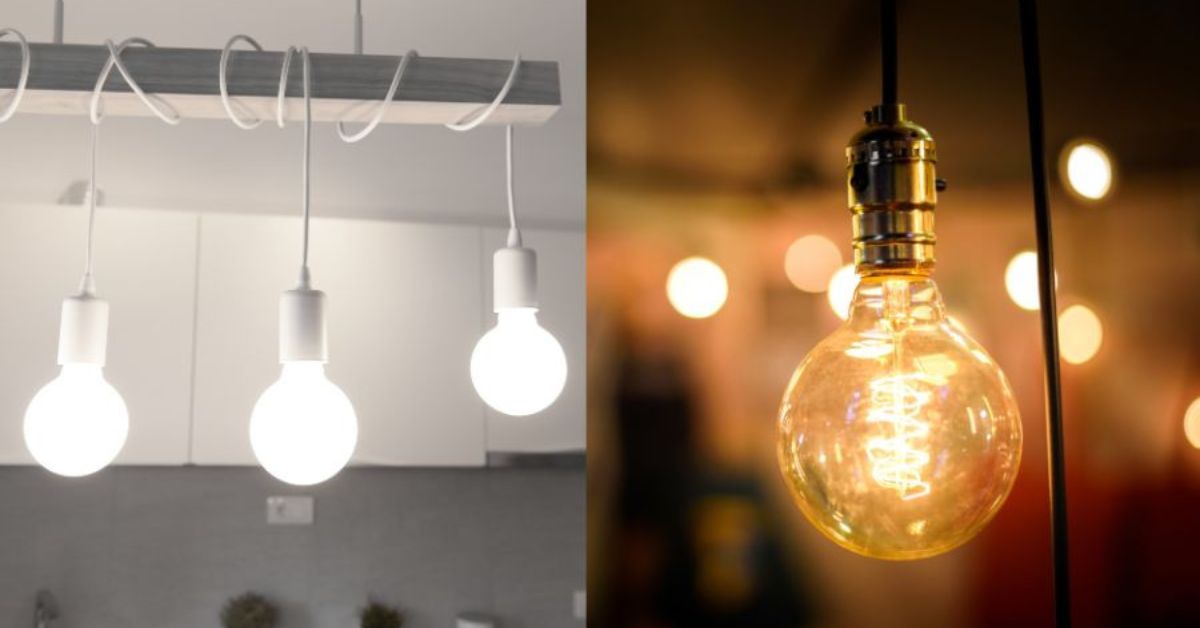
If you’re asking about the benefits of LED lights, you’re probably weighing whether to replace the bulbs in your home, upgrade fixtures, or light a whole project. Good decision — LEDs have changed the game for residential and commercial lighting. This guide covers every practical angle a buyer needs: what LEDs do better, how to read spec sheets, how to size and pick LED products, exact energy and payback math (step-by-step), dimming and control tips, buying and installation checklists, environmental considerations, and common myths — all written in plain language with product-oriented advice so you can shop with confidence.
Below, you’ll get enough detail to brief suppliers, compare models, and avoid the usual mistakes people make when they chase the benefits of LED lights without a plan.
Quick summary — the top benefits of LED lights (in one list)
Before the deep dive, here are the headline benefits of LED lights you’ll care about:
- Huge energy savings — far fewer watts for the same light (lumens).
- Long life — tens of thousands of hours (L70 ratings).
- Better light quality — wide CCT choices and high CRI options.
- Instant on and frequent switching OK — no warm-up like CFLs.
- Smaller, flexible form factors — strips, downlights, integrated fixtures.
- Lower heat output — safer, reduces cooling load.
- Better controllability — dimming, tunable white, smart control.
- Lower maintenance & total cost of ownership — fewer replacements means lower labour and downtime.
- Environmental benefits — no mercury, reduced energy-related emissions.
- Rapid performance improvements and wide availability — prices have fallen, and options abound.
Each of these is a real, measurable advantage. Below, we unpack them and show how they matter in practice.
1) Energy savings — the headline benefit of LED lights
LEDs deliver much higher lumens per watt (lm/W) than incandescent, halogen, or CFL lamps. That means you get the same visible light output while consuming far less electricity.
Real-world example — step-by-step math
Compare a 60 W incandescent vs an LED that produces the same light (about 800 lm) at 9 W. We’ll do careful arithmetic so the savings are unmistakable.
- Incandescent power = 60 W = 0.060 kW.
- LED power = 9 W = 0.009 kW.
- Power saved per hour = 0.060 − 0.009 = 0.051 kW.
- Hours per day (assumed) = 4 → annual hours = 4 × 365 = 1,460 hours.
- Annual energy saved = 0.051 kW × 1,460 h. Compute step-by-step:
- 0.050 × 1,460 = 73.0 kWh.
- 0.001 × 1,460 = 1.46 kWh.
- Sum = 73.0 + 1.46 = 74.46 kWh.
- If electricity costs ₹10 / kWh, annual money saved = 74.46 × 10 = ₹744.60.
Multiply that per bulb saving across many fixtures, and you see why the benefits of LED lights show up on your energy bill quickly.
2) Longer life & lower maintenance
LED modules commonly carry L70 lifetimes of ≥ 25,000 to 100,000 hours depending on product quality. L70 means the light output reaches 70% of the initial output after that many hours.
- For a light used 4 hours/day: 25,000 hours / 1,460 hours/year ≈ , 17 years.
- Because LEDs last much longer, you replace them less often — a big benefit in commercial, institutional and hard-to-reach fixtures.
This reduces not only the cost of bulbs but also labour (ladder time, electrician call-outs) — a major part of the total lifecycle cost.
3) Light quality: CCT, CRI and consistency
LEDs are available across a wide range of CCT (colour temperature) from warm 2,700 K to crisp daylight 6,500 K. More importantly, you can choose high CRI (Colour Rendering Index) LEDs — CRI ≥ 90 — that make colours and food look natural.
- Choose CRI ≥ 90 for kitchens, retail, galleries and anywhere colour accuracy matters.
- Choose 2,700–3,000 K for warm lounges and bedrooms; 3,500–4,000 K for task-focused kitchens and offices.
This is a major benefit of LED lights: you’re not stuck with one colour; you can specify the exact CCT and CRI for the use case.
4) Instant on, frequent switching & no warm-up
Unlike CFLs, LEDs reach full output immediately and tolerate frequent on/off switching without significant life impact. That makes them ideal for motion-sensor control and adaptive lighting strategies — another practical benefit of LED lights.
5) Form factor freedom — strips, panels, chips
LEDs are tiny light sources. That allows designers to create new fixture styles: ultra-slim downlights, continuous linear cove lighting, flexible strips, and integrated architectural fixtures. For buyers, this means more options that fit modern interiors while delivering the benefits of LED lights.
6) Lower heat output — safer & reduces HVAC load
LEDs convert more energy to light and less to heat. Two direct benefits:
- Safer to touch and reduces fire risk in recessed fixtures.
- Reduces air-conditioning load in warm climates because less heat is added by lighting.
When you scale across many fixtures, reduced cooling needs amplify the energy savings.
7) Better controllability: dimming, tunable white, smart
Modern LEDs support:
- Smooth dimming (with compatible drivers/dimmers).
- Tunable-white (change CCT through the day for circadian support).
- RGB and RGBW for coloured accent lighting.
- Smart control (mesh networks, DALI, 0–10 V, etc.).
These capabilities are core to the benefits of LED lights in modern homes and commercial spaces: lighting that adapts to activity and time.
8) Total cost of ownership: bulbs, drivers, labour
When you calculate TCO, include capital, energy, and maintenance. LEDs often win over their lifetime despite a higher upfront price.
Sample TCO sketch
Imagine 10 fixtures replaced from halogen to LEDs:
- Upfront LED premium: say extra ₹1,000 per fixture → extra ₹10,000.
- Annual energy saving: if each fixture saves ₹744.60 (from earlier example) → 10 × ₹744.60 = ₹7,446 per year.
- Payback time on the premium ≈ 10,000 ÷ 7,446 ≈ is 1.34 years. After that, lower maintenance and energy carry on as profit.
That’s why one of the top benefits of LED lights is measurable payback in many common scenarios.
9) Environmental benefits & recyclability
LEDs consume less energy and, unlike CFLs, they contain no mercury. Less energy consumption reduces CO₂ emissions from power generation. At the end of life, LEDs are electronic devices — they should be recycled through e-waste channels. Choosing efficient, long-lived LEDs reduces the overall material and energy footprint.
10) Rapid product improvements & broad market availability
LED technology and driver electronics improved quickly; today, you can buy high-quality, efficient LEDs at many price points. Global manufacturers and reputable local suppliers produce fixtures and retrofits that meet standards, giving buyers reliable choices.
If you want to research suppliers, start with established companies like Philips (for robust product datasheets), IKEA (for convenient smart options), or drivers from Mean Well. For energy programs and efficiency guidelines in India, consult the Bureau of Energy Efficiency. (See product datasheets and test results before buying.)
What to look for on LED spec sheets — product-oriented checklist
When shopping to realise the benefits of LED lights, demand these specs:
- Lumens (lm) — how much light the product gives.
- Efficacy (lm/W) — lumens per watt; higher means lower operating cost.
- CCT (Kelvin) and CRI (≥ 90 where required).
- L70 lifetime and warranty — minimum 25,000 hours and multi-year warranty is common; premium products offer 50,000+ and 5-year warranties.
- Dimming & protocol support — triac, ELV, 0–10V, DALI, Zigbee, etc.
- Flicker metrics — flicker % and flicker index if you or occupants are sensitive or if cameras are used.
- Driver type & replaceability — serviceable drivers lower long-term replacement cost.
- Ingress rating (IP) for outdoor or wet areas.
- Thermal & ambient ratings — check Ta (maximum ambient temperature) for enclosed fittings.
This checklist helps you select products that deliver the advertised benefits of LED lights reliably.
Dimming & compatibility — practical tips to avoid headaches
Dimming quality depends on the driver and the dimmer pair. When you plan to use dimmers:
- Confirm the driver lists the dimmer models it’s been tested with.
- For large zones or professional installs, use DALI or 0–10V control for consistent results.
- For retrofit home installs, keep a sample lamp and test with the actual dimmer before bulk purchasing.
- Avoid mixing dimming protocols on the same circuit.
Good dimming preserves the perceived quality of LED light and is a significant part of the practical benefits of LED lights.
Installation & safety notes
LEDs are often integrated into fixtures. Keep these installation tips in mind:
- Use correctly rated ceiling boxes and mounting hardware — many LED fixtures are lighter, but some large panels need proper support.
- Ensure driver ventilation — trapped heat shortens life. Don’t bury non-IC-rated downlights in insulation.
- For retrofit MR16 or GU10 replacements, remove legacy electronic transformers (they often don’t work with LED lamps) and fit LED-compatible drivers if needed.
Correct installation is essential to capture the full benefits of LED lights.
Frequently asked questions (quick, practical answers)
Q: Will LEDs save money immediately?
A: Depends on use hours and electricity price — but many common household fixtures pay back within 1–3 years via energy and maintenance savings.
Q: Are LEDs dimmable?
A: Many are, but not all. Buy “dimmable” rated parts and verify driver/dimmer compatibility.
Q: Do LEDs contain toxic materials?
A: LEDs do not contain mercury like CFLs, but they are electronic devices and should be recycled appropriately.
Q: Are cheaper LEDs worth it?
A: Low upfront cost sometimes hides poor lm/W, low CRI, high flicker, short life, and weak warranty. Balance price with key specs.
Common myths about LED lights — busted
- Myth: All LEDs are the same.
Reality: Quality varies widely — check lm/W, CRI, L70 and warranty. - Myth: LEDs are too blue/cold.
Reality: LEDs are made in multiple CCTs; choose 2700–3000 K for warm light. - Myth: LED price is too high.
Reality: Upfront cost is higher than incandescent, but TCO is lower; payback can be rapid.
These clarifications help set realistic expectations about the benefits of LED lights.
Buying checklist — what to ask suppliers (copy-paste)
Use this RFQ template to gather comparable quotes:
RFQ — LED Downlight
Supply: 10 × recessed LED downlights, delivered lumens 900 lm, CCT 3000K, CRI ≥ 90, efficacy ≥ 95 lm/W, dimmable (triac & 0–10V), L70 ≥ 50,000 hrs, driver replaceable via ceiling void, flicker <5%, warranty 5 years. Include IES files, compatible dimmer list, installation & commissioning cost.
This forces suppliers to give the hard numbers that show the benefits of LED lights.
Environmental disposal & recycling
LEDs are electronic devices; after use:
- Recycle LEDs and drivers at e-waste facilities.
- Keep packaging and datasheets — they help with correct recycling and warranty claims.
Recycling reduces resource extraction and keeps the environmental benefits of LED lights intact.
Final checklist — capture the benefits of LED lights in your project
- Replace lighting based on lumens, not watts.
- Specify CCT and CRI per room.
- Insist on lm/W, L70 and warranty.
- Test dimming behaviour with your chosen dimmer.
- Choose serviceable drivers or accessible junction boxes.
- Plan for spare parts and recycling.
- Do the energy payback math locally (use the actual electricity tariff).
When you follow this checklist, you lock in the practical benefits of LED lights: lower bills, better light, and less maintenance.
Conclusion
The benefits of LED lights are real and measurable: energy savings, long life, improved light quality, reduced heat and better control. The trick is to buy thoughtfully: read spec sheets, check CRI and lm/W, test dimming, insist on serviceable drivers, and account for lifecycle costs. LEDs are now the practical and sustainable standard for modern lighting — pick the right products, and they’ll repay the investment many times over.