
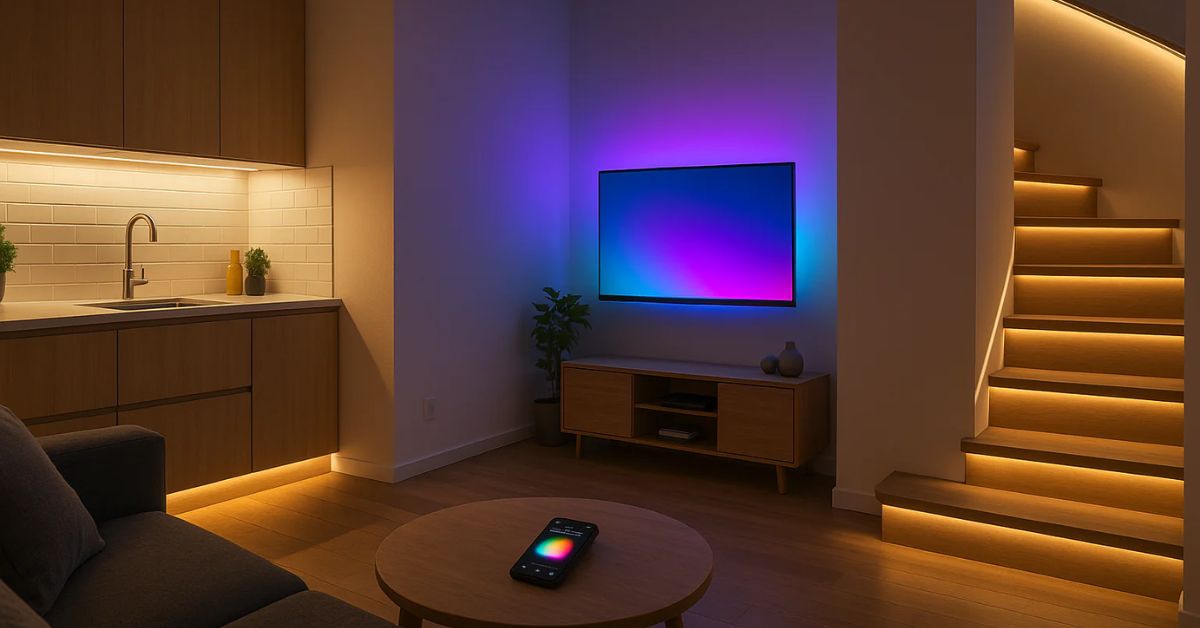
If you want to know everything a new buyer needs to choose dimmable LED lights, you’re in the right place. This guide is written for people who want real, usable advice — not marketing fluff. It explains how dimmable LED lights work, the different dimming methods (triac/phase-cut, 0–10V, DALI, PWM, mesh), how to match dimmers and drivers, installation steps, detailed troubleshooting, product specs to demand, energy & lifetime math, and copy-paste RFQ lines you can send to suppliers. I’ll also show exactly how to test and verify a sample before you buy in bulk, so you never end up with buzzing, flickering, or limited dimming range.
Throughout, I’ll be product-oriented: what numbers to compare, what to ask for from manufacturers, and what to include on quotes — all in plain English.
Quick summary — the 30-second answer
If you only read one thing about dimmable LED lights, remember:
- Dimming quality depends on the driver + dimmer pair, not the lamp label alone.
- Choose drivers and bulbs that explicitly list compatible dimmer models and flicker specs.
- For the smoothest experience in modern homes, prefer DALI or 0–10V for wired systems, or high-quality mesh (Zigbee/Bluetooth) for smart setups.
- Always test one fixture with your actual dimmer before placing large orders.
Now let’s unpack how to do all of that — carefully and completely.
How dimmable LED lights actually work (plain explanation)
LEDs are semiconductors that run on DC. A dimmable LED light contains (or is paired with) a driver that converts AC mains to a controlled DC and regulates output. Dimming happens in one of two ways:
- Amplitude control (analogue) — the driver reduces current/voltage smoothly (examples: 0–10V, analog dimmers).
- Pulse control (digital/PWM) — the driver rapidly turns LEDs on/off at high frequency; perceived brightness changes with duty cycle. High-quality drivers manage PWM at frequencies that the eye (and camera) won’t notice.
When the dimmer and the driver don’t “speak the same language”, you get flicker, buzzing, or restricted dim range. That’s why dimmable LED lights need careful specification.
Dimming protocols — what they are and when to use them
Below are the major dimming methods you will encounter when buying dimmable LED lights, and when each is appropriate.
Trailing-edge (ELV) and leading-edge (Triac / phase-cut)
- Where used: Legacy residential circuits, wall dimmers.
- How it works: The dimmer chops part of the AC waveform (phase cutting).
- Good for: Simple retrofit with dimmable lamps and compatible driver lists.
- Caveats: Old triac dimmers designed for incandescent lamps often misbehave with LEDs. Always use LED-rated triac or ELV dimmers and check compatibility with the specific dimmable LED lights you buy.
0–10V (analogue)
- Where used: Commercial & premium residential projects.
- How it works: A separate low-voltage control cable adjusts dimming level (0 = off, 10 = full).
- Good for: Smooth dimming and daylight harvesting integration with controllers.
- Caveats: Requires extra wiring and compatible drivers.
DALI / DALI-2 (digital addressable lighting interface)
- Where used: Professional installations, hotels, smart homes.
- How it works: A two-way digital bus that addresses individual luminaires, allows scenes, diagnostics, and colour control.
- Good for: Flexible control, commissioning, remote diagnostics — ideal when you specify many dimmable LED lights in a zone.
- Caveats: Higher initial cost and need for a DALI gateway/hub.
PWM (Pulse Width Modulation)
- Where used: Integrated LED fixtures, especially tunable white and RGBW devices.
- How it works: High-frequency switching of current to vary perceived brightness.
- Good for: Compact fixtures and precise control.
- Caveats: Low PWM frequency causes visible flicker or camera artifacts; demand a high PWM frequency or flicker metrics.
Wireless mesh (Zigbee, Bluetooth Mesh, Thread)
- Where used: Smart lighting in homes where running extra wires is impractical.
- How it works: Control commands over a wireless mesh network; some systems still use local drivers.
- Good for: Retrofit smart scenes without heavy rewiring.
- Caveats: Choose systems with local scene execution (not cloud-only) for reliability; ensure strong mesh coverage.
Product specs to demand when buying dimmable LED lights
Ask for these numbers. If a supplier can’t provide them, walk away.
- Total lumens (lm) and efficacy (lm/W) — real brightness and efficiency.
- CCT (Kelvin) and CRI — colour temperature and colour fidelity (CRI ≥ 90 where it matters).
- Dimming protocol(s) supported — e.g., triac, ELV, 0–10V, DALI, PWM, Zigbee.
- Dimmable range — 0–100%? 5–100%? Some drivers can’t reach very low light without flicker.
- Flicker metrics — flicker percentage and flicker index (demand measured numbers; <5% flicker is a good target).
- PWM frequency (if applicable)>5 kHz recommended to avoid camera artifacts.
- Driver replaceability & location — can you replace the driver without removing ceilings?
- L70 lifetime and warranty — LEDs: 35,000–100,000 hours; drivers often 3–5 years warranty.
- Dimming compatibility list — tested dimmers and hubs.
- EMC/EMI and surge protection info if you live in areas with unstable mains.
These data points transform a vague product listing into a usable spec pack for dimmable LED lights.
How to choose the right dimmer for your dimmable LED lights
Match the dimmer to the driver and the use case:
- For retrofits on existing walls: use LED-rated triac or ELV dimmers with minimum load specs that match your driver or lamp. Prefer models that specify compatibility with LED loads.
- For new installations: consider 0–10V or DALI for centralised control and future flexibility.
- For smart homes without rewiring: Zigbee, Thread, or Bluetooth Mesh hubs paired with compatible drivers are ideal.
- For large or mixed loads: prefer DALI or addressable drivers to avoid uneven dimming and group issues.
Always request a dimmer compatibility list from the lamp/driver manufacturer and test one sample before bulk buying.
Wiring and installation tips (safety first)
- Turn off the circuit at the breaker and verify with a non-contact voltage tester before work.
- Use the correct cable gauge for runs and avoid long, thin runs that cause voltage drop — low voltage control (0–10V) needs careful routing.
- Label circuits and document dimmer types and firmware (for smart hubs) in the handover pack.
- For mixed lighting zones, put fixtures with different dimming protocols on separate circuits to avoid interaction.
- Place drivers in accessible locations (service voids, accessible junction boxes). Don’t bury drivers behind sealed ceilings if they might need replacement.
If you’re not confident with mains wiring, always hire a licensed electrician.
How to test a dimmable LED lights setup before bulk buying
Testing one sample in situ is the most important step to avoid post-purchase grief:
- Install a single fixture and connect it to the same dimmer and wiring you plan to use for the whole run.
- Dim from 100% down to the minimum and observe: smoothness, noise (buzz), and any visible flicker.
- Test under different loads: switch other nearby circuits on/off to see if the dimming is stable.
- If using smart control, test local scene recall and confirm scenes work without the internet (local execution).
- For camera-sensitive areas (video calls, content creation), film the LED under typical camera settings to detect strobing bands.
This test will protect you from the most common failures with dimmable LED lights.
Troubleshooting common problems with dimmable LED lights
Here are typical issues and how to fix them:
Flicker or strobe
- Likely cause: incompatible dimmer/driver or low PWM frequency.
- Fix: switch to a tested LED-rated dimmer, replace driver with low-flicker spec, or use DALI/0–10V.
Buzzing sound from the dimmer
- Likely cause: mismatched dimmer type or poor quality dimmer.
- Fix: replace with an LED-rated dimmer listed on the lamp/driver compatibility sheet.
Limited dimming range (can’t go to very low light)
- Likely cause: driver design, minimum load, or dimmer minimum-load requirement.
- Fix: use drivers with an extended dim range or replace the dimmer with one supporting lower loads; add a load device only as a last resort.
Uneven brightness across the group
- Likely cause: mixed drivers or wiring voltage drop.
- Fix: group identical driver/fixture models on the same circuit; check wire gauge & distribution.
Smart bulbs dropping off the network
- Likely cause: weak mesh coverage or Wi-Fi congestion.
- Fix: add repeaters or a dedicated lighting hub (Zigbee/Thread) and avoid heavy Wi-Fi reliance.
Energy & lifetime math for dimmable LED lights
Dimming saves energy — here’s a practical example with careful calculation.
Scenario: Replace a 50W halogen with a 10W dimmable LED (equivalent light), run 4 hours/day, electricity cost ₹10/kWh.
- Power saved per hour = 50 W − 10 W = 40 W = 0.040 kW.
- Annual hours = 4 × 365 = 1,460 h.
- Annual kWh saved = 0.040 × 1,460 = 58.4 kWh. (Compute: 0.04 × 1460 = (0.04 × 1,000) + (0.04 × 460) = 40 + 18.4 = 58.4.)
- Annual saving = 58.4 × ₹10 = ₹584 per lamp.
If dimming reduces average luminous output by 30% during the evening scenes, savings increase — dimming multiplies the efficiency advantage of LEDs.
Buying checklist & RFQ text you can use right now
Copy this into supplier emails when sourcing dimmable LED lights:
RFQ — Dimmable LED Downlights (example)
Supply 20 × recessed downlights, 900 lm each, 3000K, CRI ≥ 90, efficacy ≥ 90 lm/W, dimmable (triac & 0–10V), flicker <5% (provide test report), L70 ≥ 50,000 hrs, driver replaceable in ceiling void, compatible dimmer list included. Provide IES files, installation quote, warranty terms, and lead time.
Use this to get precise, comparable quotes and to force vendors to disclose compatibility and flicker data.
Maintenance, spares & long-term tips
- Keep one spare driver per luminaire family on site for the first two years.
- Record driver model numbers and batch codes in the handover pack.
- Test dimming and scenes after firmware updates on hubs or smart drivers.
- Replace drivers (not fixtures) when electronics fail; it’s cheaper and greener.
A small spares policy avoids disruptive downtime for dimmable LED lights.
Where to try models and whom to trust
For reliable product data and showroom testing, start with reputable lighting manufacturers and suppliers. Examples to visit or research include Philips for professional-grade LED modules and technical datasheets, and IKEA for approachable smart options and lamp formats. For drivers and power supplies, consider vendors like Mean Well. If you’re in India and want energy labeling and efficiency guidance, consult the Bureau of Energy Efficiency.
(See fixtures lit at scale in the showroom and request a live dimming demo with your preferred dimmer type.)
Frequently asked questions
Q: Are all LED lights dimmable?
A: No. Only LED lights labeled “dimmable” with the appropriate driver and protocol support will dim correctly. Always check specs.
Q: Can I use smart bulbs and wall dimmers together?
A: Not recommended. Smart bulbs expect the switch to remain on; a mechanical wall dimmer may cut power and break the bulb’s network. Use smart switches or keep switches always on for smart bulbs.
Q: What’s the safest dimming system for a mixed home?
A: For mixed homes with new wiring, DALI or DALI-2 offers the most predictable, high-quality dimming across many dimmable LED lights.
Final checklist — buy with confidence
- Tested one sample fixture with your chosen dimmer/hub.
- The product datasheet includes the flicker % and the dimmer compatibility list.
- The driver is serviceable and accessible.
- Dimming protocol chosen (triac/0–10V/DALI/mesh) and documented.
- Installer certified for electrical & control system work.
- Spare drivers and a simple maintenance plan were purchased.
Follow this checklist, and you’ll avoid the classic dimming headaches.
Closing
Dimmable LED lights are flexible, efficient, and essential for modern living — but good dimming requires the right combination of drivers, dimmers, and installation practice. Demand measurable specs (lumens, flicker, dimmer compatibility), test a real sample in your home, and choose a control protocol that fits your long-term plans.