
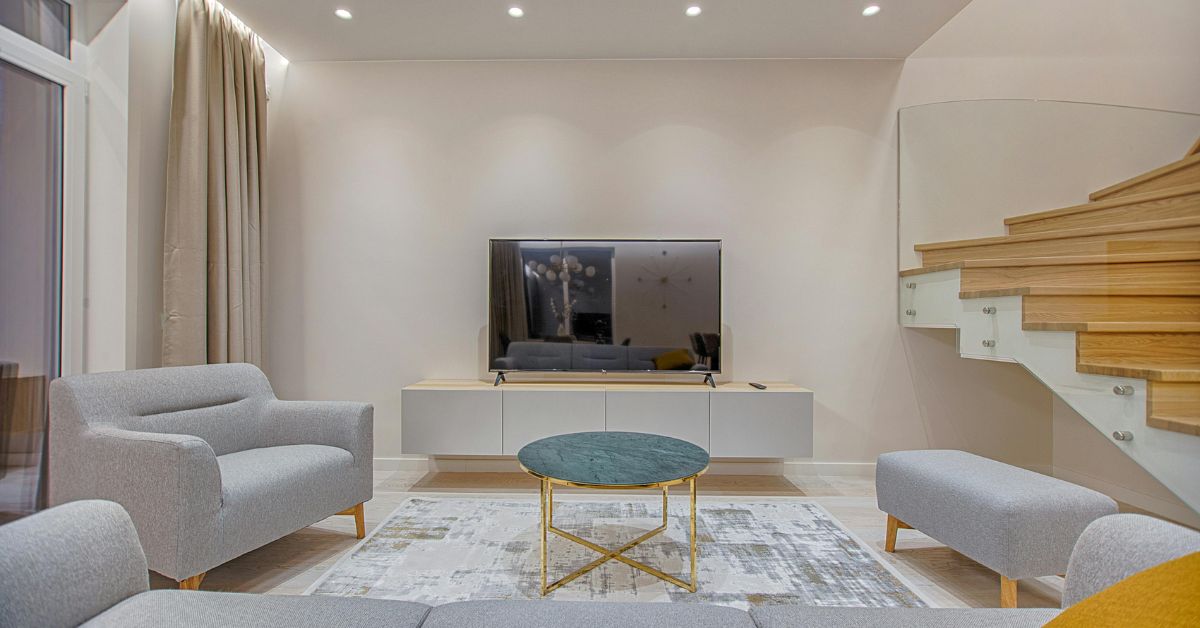
If you’re searching for Living Room Lighting Ideas, you want two things: a space that looks beautiful and lighting that actually supports how you use the room. This guide is written for buyers — not installers — and covers everything you need to choose fixtures, compare products, and brief suppliers or electricians confidently. Expect room-by-room recipes, product specs to demand (lumens, CCT, CRI), smart control suggestions, a realistic budget guide, and RFQ lines you can copy-paste.
Throughout, you’ll find real-world, product-oriented advice so your living room looks the way you want and performs the way you need.
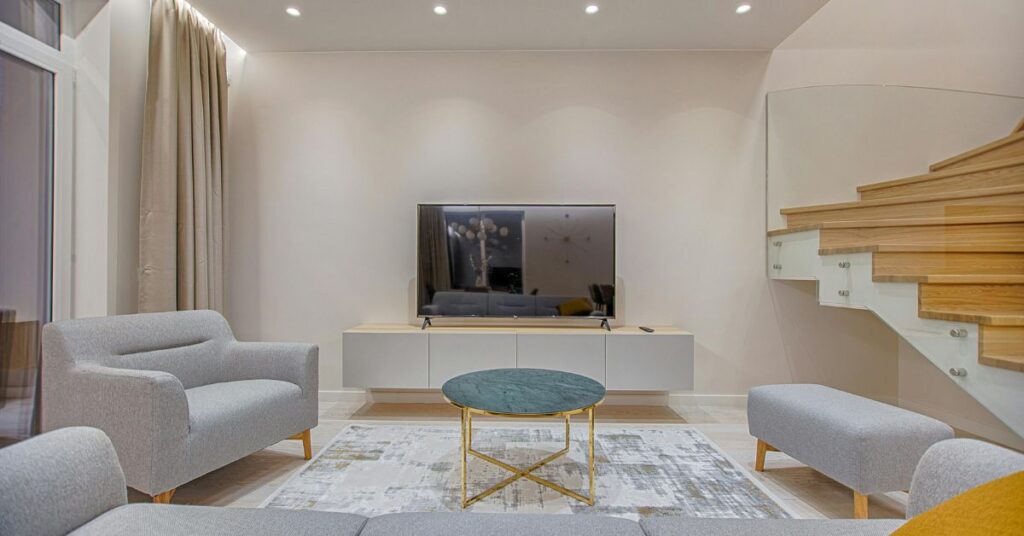
Why lighting matters in the living room
Great Living Room Lighting Ideas do more than illuminate. They:
- Create layered scenes for reading, watching TV, entertaining, and relaxing.
- Protect eyes by reducing glare and ensuring correct contrast levels.
- Improve color and texture rendering for furniture, art, and fabrics.
- Save money with efficient LEDs and smart controls.
A living room needs flexible lighting: ambient light for overall comfort, task lights for reading or hobbies, and accent lights to highlight art or architectural detail. Good design combines these into scenes you can recall with a tap.
The core numbers every buyer must know
When comparing fixtures, ask vendors for numbers — not adjectives. The following are the core specs you should demand when researching Living Room Lighting Ideas:
- Lux target (illuminance): For living rooms, aim for 150–300 lux at the seating plane for general activities; reading areas should be 300–500 lux.
- Lumens (lm): Fixtures list lumens. To estimate required lumens for a room, multiply the room area (m²) by the desired lux and factor for losses — see calculation example below.
- CCT (color temperature): Measured in Kelvin (K). For living rooms, choose 2700K–3000K for a warm, cozy feel; 3000–3500K for a slightly more neutral look.
- CRI (color rendering index): Aim for CRI ≥ 90 for premium finishes and art. CRI 80–90 is acceptable for general rooms.
- Efficacy (lm/W): Higher lumens per watt means lower running cost — look for efficient LED fixtures (≥90 lm/W is good).
- UGR / Glare control: If fixtures are visible (e.g., pendant clusters, downlights), check for low-glare optics or UGR <19 to keep TV viewers comfortable.
- Flicker & dimming: Look for low flicker (<5%) and dimming compatibility (triac, 0–10V, DALI, or Zigbee/Bluetooth for smart bulbs).
Example lumens calculation (do the math, carefully)
If your living room is 20 square metres and you want 200 lux average:
- Area = 20 m².
- Desired lux = 200 lux (lumens/m²).
- Required lumens on plane = Area × Lux = 20 × 200.
- 20 × 200 = 4,000 lumens.
- Account for losses (reflectances, fixture efficiency). Typical maintenance factor + fixture losses = 0.7 (i.e., divide by 0.7).
- Adjusted lumens = 4,000 ÷ 0.7 = 5,714 lumens (approx).
So to reach ~200 lux across the room, you need around 5,700 total lumens of installed light. Spread that across ambient fixtures, task lamps, and accents.
Fixture types & how they fit into Living Room Lighting Ideas
Different fixture families do different jobs. A layered mix is the hallmark of good Living Room Lighting Ideas.
Ambient (general) lighting
- Options: ceiling-mounted fixtures (flush/semi-flush), recessed downlights, LED panels, or a central pendant.
- Spec guidance: Provide the bulk of your lumens. For a 20 m² room aiming for 200 lux, ambient might deliver 3,000–4,000 lm of the total. Use diffusers or soft lenses to avoid harsh shadows.
Task lighting
- Options: adjustable floor lamps, table lamps, reading sconces, and directional recessed or track lights.
- Spec guidance: Aim for 300–500 lux at reading surfaces. Use directional optics and look for CRI 90 for book or craft work.
Accent lighting
- Options: spotlights, picture lights, LED strips in coves, and wall-washers.
- Spec guidance: Accent lights should be 1.5–4× brighter than ambient in their immediate area to create depth and focus.
Decorative lighting
- Options: chandeliers, statement pendants, sculptural fixtures.
- Spec guidance: Decorative fixtures are about style and focal points — choose integrated LEDs or bulbs rated for the fixture and ensure they are dimmable if used in scenes.
Cove & indirect lighting
- Options: linear LED strips hidden in coves or behind pelmets.
- Spec guidance: Use for soft background glow, especially in TV zones, to reduce eye strain. Aim for lower lumen density and warm CCT.
Smart bulbs & integrated modules
- Options: tunable white fixtures, RGBW accent bulbs, and smart drivers.
- Spec guidance: For full flexibility, choose tunable-white downlights or smart bulbs that allow warm-to-cool transitions and scene programming.
Layout recipes: three common living room types
1) Cozy lounge (small living room, 12–18 m²)
- Ambience: 2700K warm white.
- Fixtures: 4 recessed downlights (8W each, 700 lm each) spaced evenly + 1 floor lamp at reading chair (800 lm) + 1 cove strip behind TV (300 lm).
- Why it works: Recessed main light for evenness, floor lamp for task, cove for mood.
2) Family room with TV (20–25 m²)
- Ambience: 2700–3000K main, dim-to-warm option.
- Fixtures: 6 downlights (10W each, 900 lm each) on dimmer, two wall sconces by sofa for reading, one pendant or chandelier over coffee table for style, cove lighting for background glow.
- Why it works: Dimmable zones to control contrast for TV and socializing.
3) Open-plan living-dining (30+m²)
- Ambience: zoned CCT — 2700K living, 3000–3500K dining, work area.
- Fixtures: Linear suspended over dining table (tunable), pendant cluster in living, task lamps, track spotlights for art, and centralized DALI lighting controls for zoning.
- Why it works: Separate lux and scenes for each activity zone while maintaining visual cohesion.
You can use these as templates and scale lumens per the calculation shown earlier.
Product selection: what to buy and what to avoid
When shopping for the fixtures in your Living Room Lighting Ideas, use this product checklist:
- Lumens & Efficacy: Choose fixtures that list both lumens and lm/W. Higher is better for long-term bills.
- CCT & CRI: For living rooms, 2700–3000K with CRI ≥ 90 is ideal for premium looks.
- Dimming compatibility: If using an existing wall dimmer, confirm bulbs/fixtures are marked compatible with that dimmer model. If unsure, plan for LED-compatible dimmers (triac dimmers or 0–10V/DALI for retrofit).
- Flicker spec: For reading and screen use, look for flicker <5% or flicker-free claims.
- Warranty & replaceability: Prefer products with at least a 3-year warranty and replaceable drivers/modules.
- Finish & scale: Visit showrooms to check finishes — the same pendant can look different under daylight vs showroom light.
Avoid cheap bulbs without component specs, unknown-brand “RGB” fixtures with poor CRI, and fixtures that claim dimmable but do not list compatible dimmers.
Smart control & scenes for living rooms
Smart features make the best Living Room Lighting Ideas usable day-to-day:
- Scenes: Pre-program “Movie”, “Dinner”, “Reading”, “All On”, and “Night” scenes.
- Tunable white scheduling: Ramp color temperature in the evening to warmer tones to support winding down.
- Occupancy & daylight: Use occupancy sensors for hallways and daylight sensors to adjust perimeter lighting.
- Physical controls: Keep at least one obvious wall switch or a scene button — guests should never need your phone to operate the lights.
- Local vs cloud: Prefer systems that allow scene execution locally (works even when the internet is down). Zigbee, Thread, or DALI-based systems with local hubs are good choices.
A practical smart plan keeps control simple — one tap for the right mood.
Installation & layout tips — avoid common mistakes
- Don’t rely on a single central light. Layer lighting for depth.
- Test before finalizing finishes. Bring fabric samples to showrooms.
- Avoid direct light into the TV viewing angles. Put the ambient behind or above eye level and use bias lighting behind the TV.
- Mind the scale. Small pendants over a large sofa flatten the space; a cluster or larger diameter is often better.
- Maintenance plan. Ensure drivers and bulbs are accessible without ceiling demolition.
Small layout changes during installation save rework later.
Maintenance & lifetime thinking
- Clean fixtures every 3–6 months. Dust reduces output.
- Keep spare bulbs/drivers from the same batch to avoid color mismatch later.
- Check dimmers periodically for buzzing or heat — incompatible dimmers are a common failure cause.
- Document warranties and installation notes for quicker service calls.
LED fixtures last long, but good maintenance keeps them looking fresh.
FAQs (quick answers)
Q: What color temperature should I pick for a combined living-dining space?
A: Choose one ambient CCT across the combined zone (e.g., 3000K) and use a tunable or slightly different CCT for specific tasks (e.g., 2700K pendants over the dining table).
Q: How many downlights do I need?
A: Calculate by lumens. For a 20 m² room targeting 200 lux, we estimated ~5,700 lumens total earlier. Divide by lumens per fixture to find the count.
Q: Are smart bulbs worth it?
A: Yes for flexibility and scenes, but for whole-room installs, consider integrated smart downlights or retrofit drivers for better optics and reliability.
Final checklist before you buy
- Have you defined target lux for ambient and task zones?
- Did you calculate the total lumens needed and plan the distribution?
- Are CCT and CRI specified for each fixture?
- Have you tested dimming compatibility and smart control in a mock-up?
- Is the warranty clear, and is driver access confirmed?
- Are spares and maintenance plans discussed with the supplier?
Conclusion
Great Living Room Lighting Ideas are a combination of thoughtful layout, correct technical specs, and well-chosen fixtures. Focus on lumens, CCT, and CRI, layer ambient-task-accent light, add smart scenes for daily convenience, and demand clear product specs when you request quotes. With the templates, calculations, and RFQ lines here, you can confidently brief suppliers, compare offers, and create living room lighting that feels beautiful, works reliably, and fits your budget.